Good insulation performance depends on more than the insulation material itself.
The building envelope also needs carefully designed airtightness, vapour control and external windtightness so that uncontrolled air movement does not bypass the insulation or transport excessive moisture into sensitive parts of the construction.
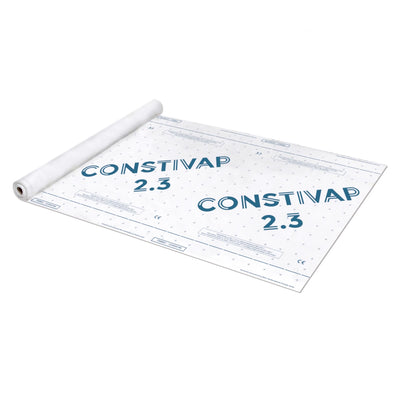
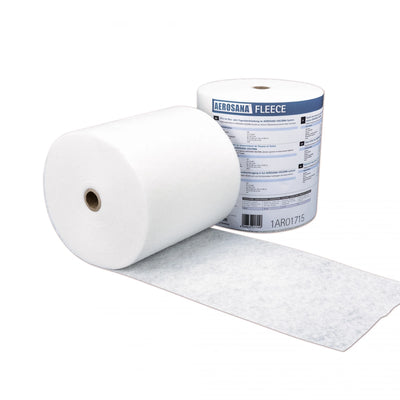
Membranes, tapes, adhesives and junction details should therefore be considered as one complete system.
What Is Airtightness?
Airtightness is the control of unintended air movement through gaps, cracks and junctions in the building fabric.
Common leakage points include:
- membrane overlaps;
- wall-to-roof junctions;
- windows and doors;
- service penetrations;
- electrical cables;
- pipes and ducts;
- floor junctions;
- and connections between different construction materials.
Creating a continuous airtight layer can reduce draughts and uncontrolled heat loss and can also limit moisture transport by air leakage into insulated constructions.
What Is Windtightness?
Windtightness normally refers to the external protective layer around insulation.
An external windtight membrane helps prevent outside air from moving through or around fibrous insulation, a process commonly referred to as wind washing.
This helps the insulation perform closer to its intended thermal performance while also protecting the construction from wind-driven weather.
External windtight membranes are generally designed to remain highly vapour permeable so that moisture within the construction retains outward drying potential.
Airtightness vs Vapour Control
Airtightness and vapour control are related but they are not the same thing.
Airtightness controls air movement through gaps and junctions.
Vapour control influences water-vapour diffusion through the construction layers.
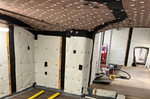
An internal membrane can perform both functions, but only when it is installed continuously and all junctions and penetrations are sealed correctly.
This distinction is important because a membrane with an appropriate vapour resistance cannot provide effective airtightness if air can simply pass around its edges or through unsealed penetrations.
Internal Vapour-Control Membranes
Internal vapour-control membranes are normally installed on the appropriate internal side of insulation.
Their purpose is to help limit excessive moisture entering the construction while also forming part of the airtight layer.
Roundtower supplies both fixed vapour-control membranes and humidity-variable intelligent membranes, allowing the system to be selected according to the wall or roof build-up.
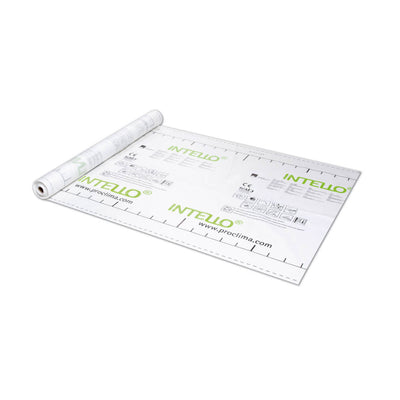
Pro Clima INTELLO PLUS
Pro Clima INTELLO PLUS is a reinforced humidity-variable airtightness and vapour-control membrane for use with fibrous insulation.
Its diffusion resistance changes according to surrounding humidity conditions.
Pro Clima states a humidity-variable Sd range of approximately 0.25m to greater than 25m.
This allows the membrane to provide substantial vapour control under typical winter conditions while increasing drying potential under appropriate seasonal conditions.
What Is an Intelligent Membrane?
An intelligent or humidity-variable membrane changes its resistance to water-vapour diffusion according to environmental conditions.
During periods when stronger vapour control is required, the membrane becomes more resistant to diffusion.
Under suitable drying conditions its diffusion resistance reduces, increasing the potential for moisture within the construction to dry towards the interior.
This can provide greater drying reserves than a membrane with one permanently high vapour resistance, although the complete construction still needs to be designed appropriately.
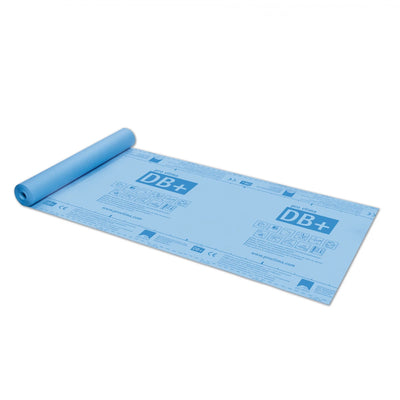
Pro Clima DB+
Pro Clima DB+ is a paper-based reinforced vapour-control and airtightness membrane designed for use with suitable fibrous insulation systems.
It is particularly relevant where a paper-based membrane and humidity-responsive vapour-control strategy are preferred.
As with INTELLO PLUS, correct junction sealing remains essential to the performance of the complete airtightness layer.
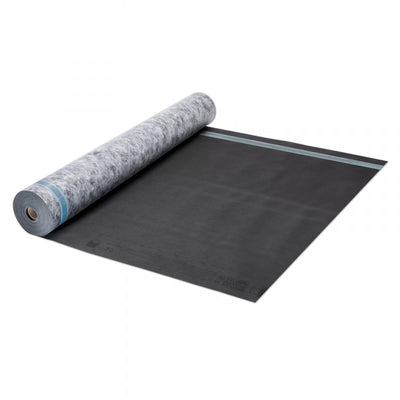
STEICOmulti membra 5
STEICOmulti membra 5 is a fixed vapour-control membrane for internal roof, wall and ceiling construction.
STEICO states an Sd-value of approximately 5m.
This makes it useful where the wall or roof design calls for a stable internal vapour-control layer rather than a strongly humidity-variable membrane.
Renovation Membranes
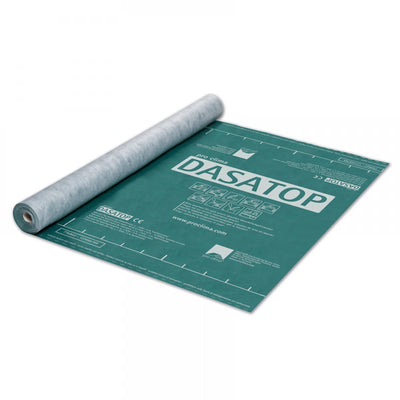
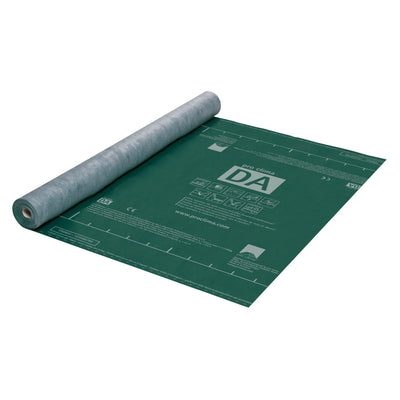
Roof refurbishment can create particular airtightness challenges where the existing internal ceiling is being retained.
Products such as Pro Clima DASATOP, Pro Clima DA and STEICOmulti renova provide specialist solutions for selected renovation arrangements.
The correct membrane depends on where the airtightness layer can physically be installed and on the surrounding roof build-up.
External Breather Membranes
External membranes have a different role from internal vapour-control membranes.
They typically provide:
- windtightness;
- secondary weather protection;
- protection against wind-driven rain;
- and high outward vapour permeability.
The external membrane should protect insulation from weather and wind while allowing moisture within the construction to dry outward.
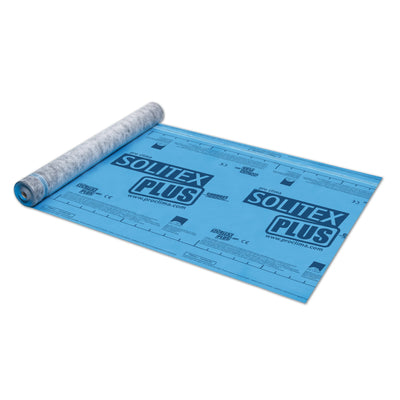
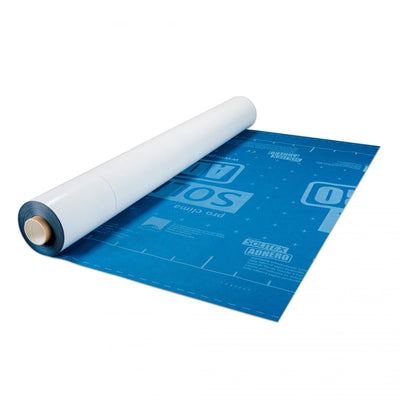
Pro Clima SOLITEX Membranes
The SOLITEX range includes specialist membranes for roofs and façades.
Different products are available for:
- roof underlays;
- closed façades;
- open-jointed façades;
- adhered external weather protection;
- and specialist façade constructions.
The specific SOLITEX product should therefore be selected according to the location and construction rather than treating all external membranes as interchangeable.
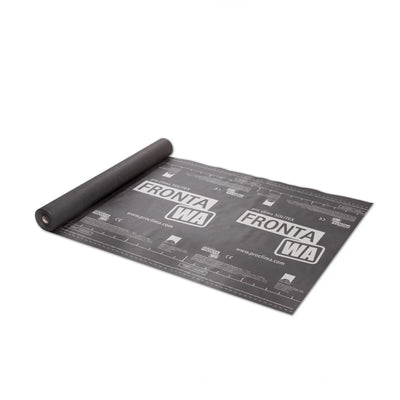
SOLITEX FRONTA
The SOLITEX FRONTA range is intended primarily for façade applications.
For example, SOLITEX FRONTA WA is designed as a weather-resistive breather membrane behind closed façades, while FRONTA QUATTRO is designed for open-jointed façade systems.
Open-jointed façades require membranes specifically designed for the increased UV and weather exposure behind the cladding joints.
STEICOmulti UDB
STEICOmulti UDB is an external vapour-permeable windtight membrane designed for suitable roof applications.
It forms part of the STEICO sealing system and is intended to provide external weather and wind protection while retaining high vapour permeability.
Airtight Tapes
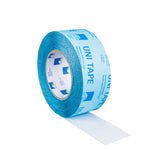
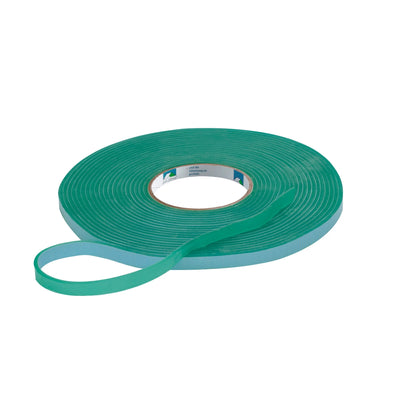
Membrane overlaps and junctions require compatible airtight tapes.
Roundtower supplies products including TESCON VANA, TESCON No.1, CONTEGA window tapes, TESCON PROFIL and other specialist Pro Clima sealing products.
Different tapes are designed for different substrates and details, so selection should respond to the actual junction rather than simply using one tape everywhere.
Airtight Window & Door Connections
Windows and doors are common weak points in the airtightness layer.
The connection between the frame and adjoining wall or membrane should remain continuous around the full opening.
Specialist tapes can provide:
- internal airtight connections;
- external windtight and weather-resistant connections;
- plasterable transitions;
- and controlled detailing around corners.
The internal and external side of the window normally perform different functions and should be detailed accordingly.
ORCON Airtight Adhesives
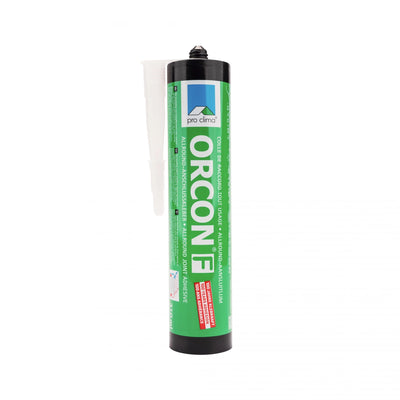
Pro Clima ORCON F is an all-round elastic adhesive sealant used for airtight connections between membranes and suitable adjoining surfaces.
It can be particularly useful where membranes connect to masonry, plaster, rough timber or other irregular substrates where tape alone may not provide the most suitable junction.
Pro Clima describes ORCON F as suitable for interior and exterior connection details and as remaining permanently elastic.
Primers
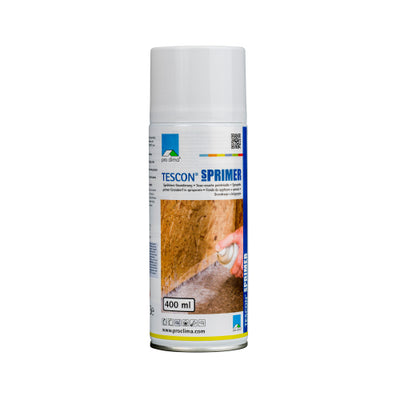
Dusty, porous or difficult substrates can reduce tape adhesion.
A compatible primer such as TESCON SPRIMER can prepare selected wood, wood fibre and mineral surfaces before airtight tape is installed.
Primer is not automatically required for every connection; its use depends on the substrate and the chosen tape.
Liquid Airtightness
Some junctions are too complex for conventional membrane tape alone.
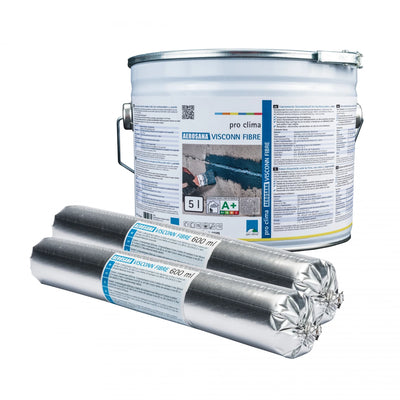
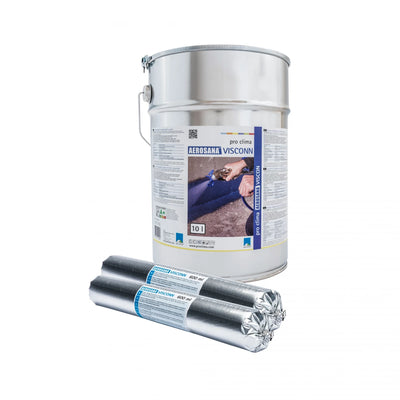
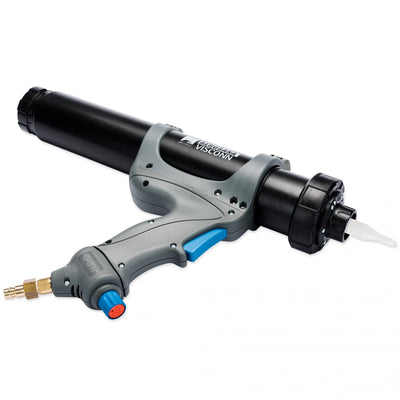
Products such as AEROSANA VISCONN provide a liquid-applied airtightness layer that can be useful around irregular junctions, penetrations and difficult geometries.
Liquid airtightness products should be viewed as specialist detailing tools within the wider airtightness system rather than as replacements for conventional membranes everywhere.
Airtightness & Wood Fibre Insulation
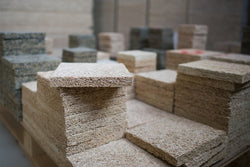
Wood fibre systems are often designed to retain good vapour permeability and drying potential.
This does not mean that airtightness can be ignored.
In framed walls and roofs, uncontrolled air leakage can transport moisture into the insulation and adjoining timber structure.
A suitable internal airtightness and vapour-control layer combined with an external windtight layer can therefore form an important part of a robust wood fibre construction.
Airtightness in Traditional Buildings
Traditional buildings can also benefit from improved airtightness where the intervention is carefully designed.
The objective should be to reduce uncontrolled air leakage without unnecessarily restricting the drying behaviour of the original fabric.
Particular care is required around:
- timber joist ends;
- roof-to-wall junctions;
- historic ceilings;
- suspended floors;
- internal insulation;
- and existing solid masonry.
The complete moisture strategy should be considered before introducing new membranes into a traditional building.
Airtightness & Internal Wall Insulation
Internal wall insulation introduces new junctions between insulated walls, floors, roofs, windows and internal partitions.
These junctions need to be carefully considered if the proposed build-up includes an airtightness or vapour-control membrane.
Not every capillary-active internal wall insulation system requires a conventional vapour-control membrane.
The appropriate approach depends on the specific insulation system and wall construction.
Does Airtightness Prevent Condensation?
Airtightness can reduce moisture transport by uncontrolled air leakage and therefore forms an important part of moisture-safe construction.
However, it does not by itself guarantee that interstitial or surface condensation cannot occur.
Condensation risk also depends on:
- indoor humidity;
- ventilation;
- insulation;
- vapour resistance;
- thermal bridges;
- external climate;
- rain exposure;
- and the complete construction build-up.
Airtightness & Ventilation
As uncontrolled air leakage is reduced, a building needs a deliberate strategy for maintaining good indoor air quality and controlling humidity.
The appropriate ventilation system depends on the building and project requirements.
This may involve natural, extract, demand-controlled or mechanical ventilation, including heat-recovery systems where appropriate.
Airtightness should therefore be considered together with ventilation rather than assuming that random leakage through the building fabric provides reliable ventilation.
Airtightness Testing
Airtightness testing can be used to assess the completed building envelope and identify significant leakage.
Testing during construction can also be particularly valuable because leaks are easier to repair while membranes and junctions remain accessible.
Careful installation remains as important as the membrane specification itself.
Designing the Complete System
A good airtightness specification should identify:
- the principal airtight layer;
- the vapour-control strategy;
- the external windtight layer;
- membrane overlaps;
- windows and doors;
- service penetrations;
- wall-to-roof connections;
- wall-to-floor connections;
- primers;
- tapes;
- adhesives;
- and ventilation.
Each junction should connect logically to the next so that the airtight layer remains continuous around the building envelope.
Frequently Asked Questions
What is the difference between airtight and windtight?
Airtightness controls unintended air movement through the building envelope, usually from the internal side.
Windtightness protects insulation externally from wind penetration and weather exposure.
Is an airtight membrane the same as a vapour barrier?
No.
Many airtight membranes are vapour-control layers rather than true vapour barriers.
Some, such as INTELLO PLUS, actively vary their resistance to water-vapour diffusion according to humidity conditions.
What is an intelligent airtightness membrane?
It is a humidity-variable vapour-control membrane whose diffusion resistance changes according to environmental conditions.
What is the Sd-value of INTELLO PLUS?
Pro Clima states a humidity-variable Sd range of approximately 0.25m to greater than 25m.
What is the Sd-value of STEICOmulti membra 5?
STEICO states an Sd-value of approximately 5m.
Do I need to tape membrane overlaps?
Yes.
Where a membrane forms part of the airtight or windtight layer, the overlaps and junctions need to be sealed using appropriate compatible products.
Do I always need a vapour-control membrane?
No.
The requirement depends on the construction.
Many insulated framed roofs and walls use an internal vapour-control membrane, while some direct-bond capillary-active solid-wall insulation systems use a different moisture-management approach.
Are external breather membranes airtight?
They can form a sealed external air-control layer when installed and taped appropriately, but their principal building-envelope role is normally windtightness and weather protection rather than controlling air leakage from the occupied interior.
Does making a building airtight mean it cannot breathe?
No.
Airtightness controls bulk air leakage.
Water-vapour diffusion through suitable construction layers is a different transport mechanism.
A construction can therefore be both highly airtight and designed with good vapour permeability and drying potential.
Do airtight buildings require ventilation?
Yes, a suitably designed ventilation strategy remains necessary.
The type of ventilation depends on the building, occupancy and project requirements.
Can Roundtower help design an airtightness system?
Yes.
If you provide the proposed wall or roof build-up, Roundtower Lime can help identify appropriate membranes, tapes, primers and airtight connection products for the project.
Need Help with Airtightness Detailing?
If you are developing an airtight roof, timber wall, wood fibre system or renovation build-up, contact Roundtower Lime with drawings or details of the proposed construction.
Our technical team can help identify suitable internal and external membranes together with the tapes, adhesives and primers required to complete the system.