Choosing the Right Lime Product
Lime has been used as a binder in mortars, plasters and renders for centuries, but there is no single type of lime that is appropriate for every building or application.
The correct product depends on factors such as the existing masonry, original mortar, degree of exposure, required strength, joint or coat thickness and the way moisture needs to move through the construction.
Roundtower Lime supplies both raw lime binders and ready-mixed lime-based products, allowing materials to be selected for pointing, bedding, rendering, plastering, insulation and specialist conservation work.
Natural Hydraulic Lime
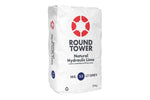
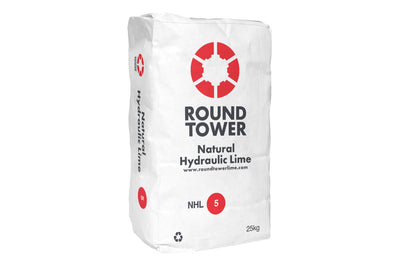
Natural Hydraulic Lime (NHL) develops an initial hydraulic set through reaction with water and continues to carbonate over time.
Natural Hydraulic Limes are classified as NHL 2, NHL 3.5 and NHL 5.
These classifications relate to the performance of the lime binder and should not be interpreted simply as good, better and best.
A stronger hydraulic lime is not automatically more appropriate for an older building.
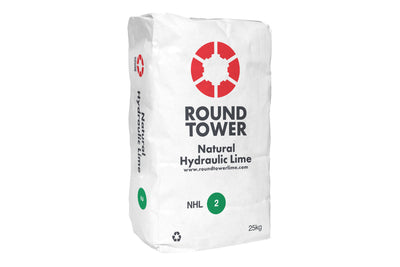
NHL 2
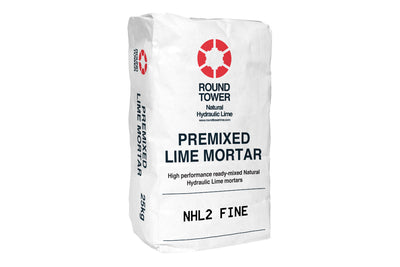
NHL 2 develops lower strength than NHL 3.5 and NHL 5 and can be useful where a relatively soft hydraulic lime mortar or plaster is required.
It may be considered for selected traditional masonry, softer brick or stone and applications where compatibility and lower strength are important.
The actual mortar specification should still consider exposure, aggregate and the characteristics of the existing masonry.
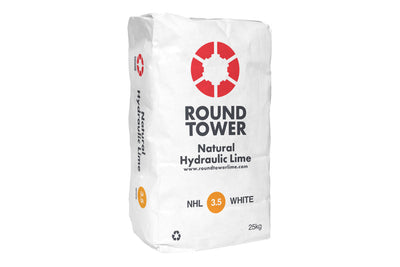
NHL 3.5
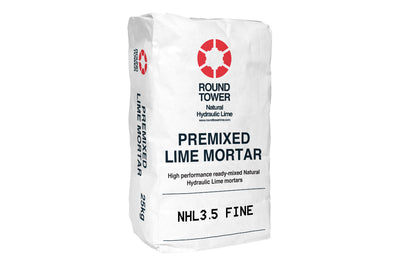
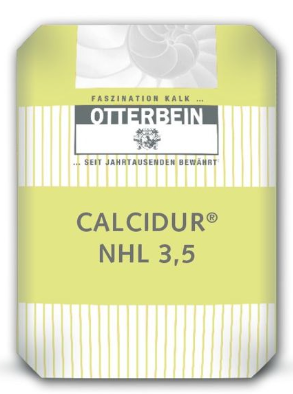
NHL 3.5 is commonly used for pointing, bedding, rendering and general lime masonry work.
It provides a greater hydraulic set than NHL 2 and can be useful where additional early strength or weather resistance is required.
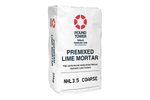
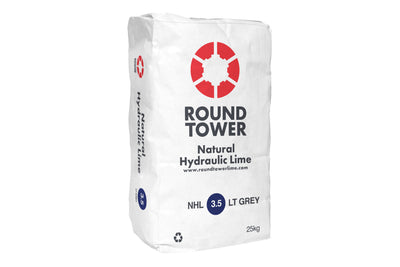
Roundtower supplies NHL 3.5 binders as well as ready-mixed NHL 3.5 mortars and renders.
NHL 5
NHL 5 develops the greatest hydraulic strength of the three NHL classifications.
It may be appropriate for selected higher-demand applications where greater early strength and resistance to challenging conditions are required.
Because it produces a stronger mortar, NHL 5 should not automatically be specified for traditional masonry simply because a building is highly exposed.
Material compatibility remains important.
Non-Hydraulic Lime
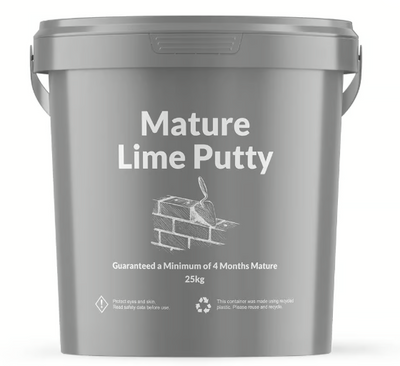
Non-hydraulic lime, including matured lime putty, hardens primarily through carbonation.
It is valued for its high workability, softness and vapour permeability and can be particularly appropriate for traditional plastering, fine finishing, pointing and conservation repairs.
Non-hydraulic lime should not be viewed simply as an “internal lime”. It has a long history of external use, although exposure, mortar design, curing and workmanship become especially important.
Lime Mortars
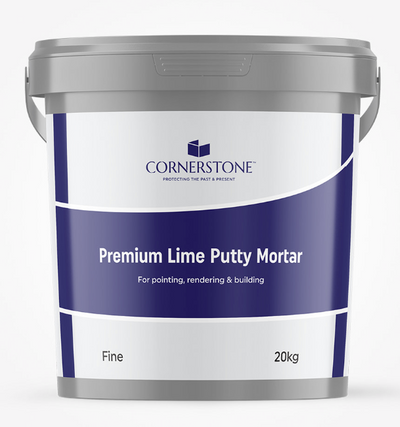
Lime mortar is used for pointing, bedding stone and brick, masonry repair and other traditional building work.
Choosing the correct mortar involves more than selecting between NHL 2 and NHL 3.5.
The original masonry, historic mortar, exposure, joint dimensions and aggregate grading should all influence the specification.
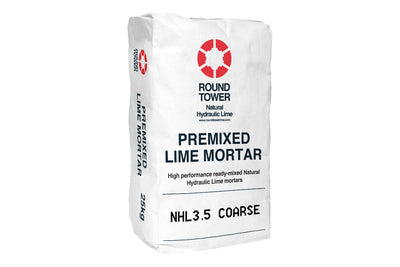
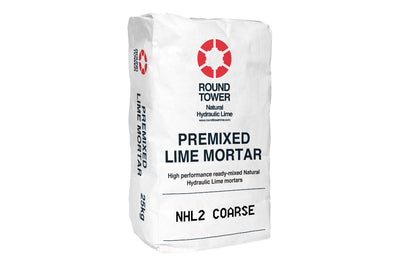
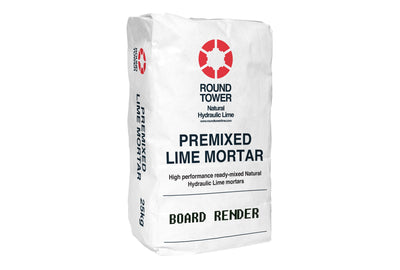
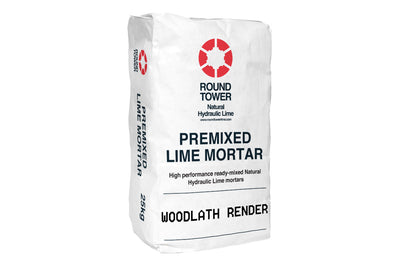
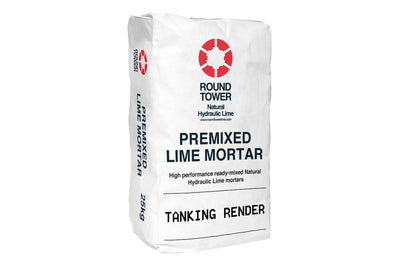
Roundtower supplies ready-mixed lime mortars where the lime and aggregate are factory proportioned to improve consistency between batches.
Lime Plasters & Renders
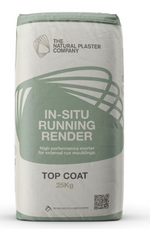
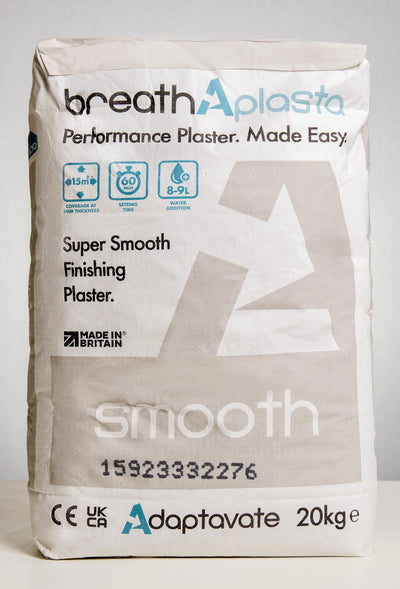
Lime-based plasters and renders can be used on both historic masonry and suitable modern mineral backgrounds.
Their relatively low vapour resistance can be particularly valuable in traditional solid-wall buildings, where moisture management should be considered across the complete wall construction.
Different products are available for base coats, levelling coats, external renders, fine finishes and specialist backgrounds.
The correct build-up should be selected according to the substrate and required finish.
Insulating Lime Plasters
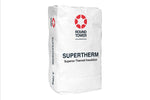
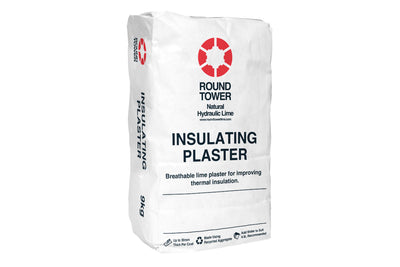
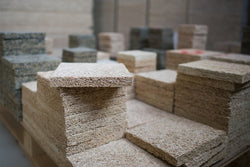
Insulating lime plasters combine the characteristics of a lime-based plaster with lightweight aggregates that reduce thermal conductivity.
They can be particularly useful on irregular solid masonry walls, where fitting rigid insulation boards may be difficult or where maintaining a continuous mineral plaster system is preferred.
Roundtower offers insulating plaster systems for different thermal, substrate and application requirements.
Lime Putty & Fine Finishes
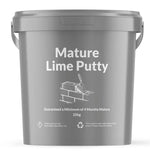
Mature lime putty can be used as a binder for traditional mortars, plasters and limewash.
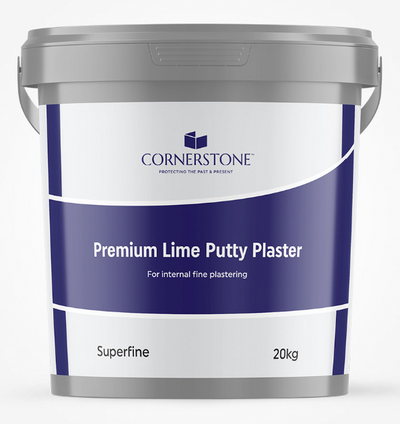
Roundtower also supplies ready-made non-hydraulic finishing products for applications where a fine lime finish is required.
Products such as Heritage Finish and Heritage Lime Skim allow traditional lime-putty technology to be used in controlled ready-mixed formulations.
Lime for Historic Buildings
Older buildings should not be specified solely according to age.
Stone type, brick strength, original mortar, wall thickness, exposure and previous repairs can all influence the most appropriate lime.
In important conservation work, examining the existing mortar can provide valuable information before selecting a replacement.
Roundtower also provides Mortar Analysis and Specification Support where additional technical guidance is required.
Lime & Moisture Management
Lime products are frequently described as “breathable”.
In practical building physics, this involves more than water-vapour diffusion alone.
Traditional masonry can also manage moisture through capillary transport, evaporation and redistribution of liquid water within its pore structure.
For this reason, choosing compatible mortars, plasters and finishes across the complete wall system is generally more useful than relying on a single product being described as breathable.
Lime vs Cement
Lime and cement behave differently and each has appropriate applications.
In many historic solid-wall buildings, a relatively soft and vapour-open lime mortar can be more compatible with the surrounding stone or brick than a dense, high-strength cement mortar.
The purpose is not simply to make the weakest possible mortar, but to specify one that is sufficiently durable while allowing the masonry to remain the more durable component of the wall.
Ready-Mixed vs Site-Mixed Lime Products
Site mixing provides flexibility over aggregate and binder selection and can be appropriate where a bespoke mortar is required.
Factory-premixed products offer greater control over binder-to-aggregate ratio, grading and consistency between batches.
Whichever approach is used, water addition, mixing, application, protection and curing still have a major influence on the finished result.
Curing Lime
Fresh lime work requires appropriate protection during its early curing period.
Rapid drying, direct sunlight, strong wind, frost and heavy rain can all adversely affect fresh mortar or render.
The required protection depends on the particular lime product, weather and application.
Hessian and other suitable protective measures may be used where required to help control drying and protect newly applied work.
Frequently Asked Questions
What type of lime should I use?
The correct lime depends on the masonry, application and exposure.
NHL 2, NHL 3.5, NHL 5 and non-hydraulic lime all have different characteristics, and the strongest product is not automatically the most appropriate.
What is the difference between NHL and lime putty?
Natural Hydraulic Lime develops a hydraulic set through reaction with water as well as subsequent carbonation.
Lime putty is non-hydraulic and hardens primarily through carbonation.
Which NHL is best for old buildings?
There is no universal NHL grade for old buildings.
The correct binder should be chosen according to the masonry, original mortar, exposure and required performance.
In some situations a non-hydraulic mortar may be more appropriate than an NHL.
Can lime be used for external work?
Yes.
Lime mortars and renders have a long history of external use.
The appropriate binder, aggregate, detailing and curing need to be selected according to the degree of exposure.
Is lime breathable?
Lime mortars and plasters generally have relatively low resistance to water-vapour movement compared with many dense cement-based materials.
Their pore structure can also influence liquid-water transport and drying.
The moisture behaviour of the complete wall build-up should therefore be considered.
Is lime suitable for modern buildings?
Yes.
Lime-based mortars, renders and plasters can be used in appropriate modern construction as well as traditional buildings.
The product and specification should suit the substrate and required performance.
Do you sell ready-mixed lime mortar?
Yes.
Roundtower supplies premixed lime mortars as well as Natural Hydraulic Lime binders for site mixing.
Can Roundtower help me choose the correct lime?
Yes.
Roundtower Lime can assist with lime selection, mortar specifications, plaster and render systems and more detailed services such as mortar analysis and building-fabric specification support.
Need Help Choosing a Lime Product?
If you are unsure whether you require NHL 2, NHL 3.5, NHL 5, lime putty, premixed lime mortar, lime plaster or an insulating lime system, contact Roundtower Lime with details of your building and proposed work.
Our technical team can help identify an appropriate lime product and build-up for traditional, conservation and breathable construction.