Choosing Sand for Lime Mortar
The aggregate makes up a large proportion of a lime mortar, so choosing the correct sand is just as important as selecting the lime binder.
Aggregate influences the appearance, workability, texture, shrinkage, pore structure and mechanical behaviour of the finished mortar.
For conservation work, the aim should not simply be to use a generic “lime sand”. The grading and character of the new aggregate should suit both the application and the existing masonry.
Why Aggregate Grading Matters
A well-graded aggregate contains a useful distribution of different particle sizes.
Smaller particles fill some of the spaces between larger particles, helping create an efficiently packed mortar while still retaining the pore structure needed for good lime-mortar performance.
An aggregate containing only very fine particles generally requires more binder and water to coat the increased particle surface area and may be more susceptible to shrinkage.
Very coarse aggregates, on the other hand, may be unsuitable for thin coats or narrow joints.
The grading should therefore be appropriate to the joint width or plaster/render coat thickness.
1mm Wexford Sand
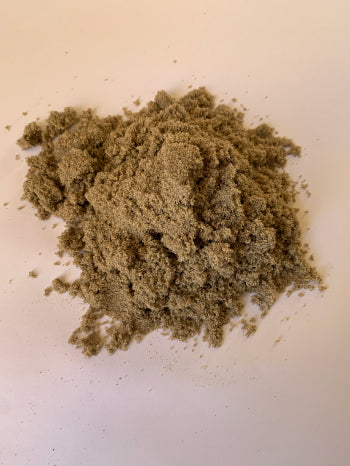
1mm Wexford Sand is the finest sand within the Roundtower range.
Its fine grading makes it particularly useful where a refined texture is required, including:
- fine lime finishing work;
- narrow pointing joints;
- decorative lime work;
- and selected fine plaster applications.
Because very fine aggregates produce a different mortar structure from coarser sands, the aggregate should still be matched to the thickness and function of the mortar rather than selected solely because a smooth finish is desired.
3mm Wexford Sand
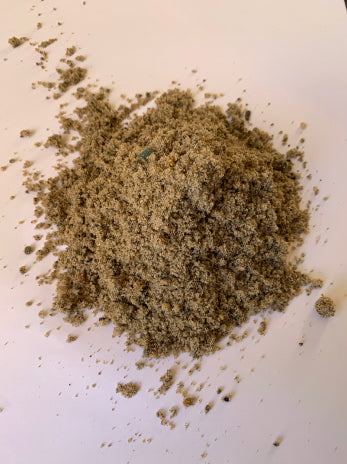
3mm Wexford Sand provides a useful intermediate grading for a wide range of lime work.
Typical applications can include:
- lime pointing;
- general lime mortar;
- plastering;
- rendering;
- and traditional masonry repairs.
Its coarser grading compared with 1mm sand can provide more visible aggregate texture and may be better suited to many general-purpose pointing and render applications.
5mm Wexford Sand
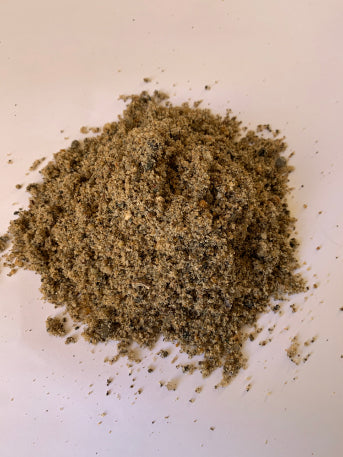
5mm Wexford Sand provides the coarsest grading within the Wexford Sand range.
It can be particularly useful for:
- wider masonry joints;
- coarser render work;
- base or backing coats;
- bedding mortars;
- and traditional work where a more pronounced aggregate texture is required.
The maximum particle size should always be considered in relation to the joint or coat thickness.
Fine vs Coarse Sand
A finer sand does not automatically produce a better mortar.
Fine sands can produce smooth finishes and allow detailed work in narrow joints, but they also have a greater surface area that needs to be coated by the binder.
Coarser and well-graded sands can reduce binder demand, provide texture and help create a more open mortar structure.
The correct choice depends on the application.
Sand for Lime Pointing
When selecting sand for pointing, consider:
- joint width;
- joint depth;
- masonry type;
- original mortar texture;
- desired finished appearance;
- and degree of exposure.
For historic work, aggregate colour is only one part of mortar matching.
Particle size, shape and mineral composition can be equally important to the final appearance.
Sand for Lime Rendering
Render aggregates should be selected according to the thickness and purpose of each coat.
Base and backing coats can accommodate coarser aggregate than very fine finishing coats.
A coarse, well-graded aggregate can also help create the texture and pore structure required in a substantial lime render.
The final aggregate grading should suit the specific render mix rather than applying one sand specification to every coat.
Sand for Lime Plaster
Internal lime plaster can also use different aggregate gradings through the plaster build-up.
Coarser aggregates are generally associated with thicker base or levelling coats, while finer aggregates can be used where a smoother final texture is required.
Where a proprietary Roundtower plaster or finish is being used, the aggregate is already incorporated into the product and additional sand should not be added unless the product specification specifically requires it.
Aggregate Shape
Particle shape influences how a mortar behaves during mixing and application.
More angular particles can interlock and provide a different mortar texture from very rounded particles.
The best aggregate is not necessarily the sharpest possible sand; the grading, particle shape and mineral character should work together to produce the required mortar.
Washed Sand & Fine Material
Excessive clay, organic contamination or unwanted fine material can adversely affect mortar consistency and performance.
Using a controlled washed and graded aggregate provides greater consistency between batches..
Sand Colour & Mortar Matching
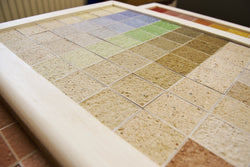
The final colour of a lime mortar is influenced strongly by the aggregate.
Once a relatively pale lime binder has carbonated, the individual sand particles often make up much of the visible character of the joint.
Historic mortars can contain aggregates with a mixture of:
- quartz;
- limestone;
- sandstone;
- shell;
- brick fragments;
- and other locally sourced minerals.
A close conservation match may therefore require more than choosing one standard sand colour.
Mortar Analysis
Where a building is historically significant or a close mortar match is required, Mortar Analysis can help develop a better understanding of the original material.
Analysis can provide information about the existing binder and aggregate and can assist when selecting the grading and appearance of the replacement mortar.
Trial mixes and sample panels should then be used to assess the proposed repair before large areas are completed.
Matching Aggregate Grading
Matching the maximum particle size alone is not enough.
Two sands described as “3mm” can still have very different distributions of particles below that maximum size.
For conservation work, the overall grading curve and visual character are more informative than the maximum particle size in isolation.
Lime Binder & Aggregate Ratio
The correct lime-to-aggregate ratio depends on the binder, aggregate and intended application.
Traditional ratios such as 1:2 or 1:3 can provide useful starting points, but they should not be treated as universal specifications.
Changes in aggregate grading can alter the amount of lime required to adequately coat and bind the particles.
A well-designed mortar should contain enough binder to perform effectively without becoming unnecessarily binder-rich.
NHL & Non-Hydraulic Lime
Wexford Sand can be used with both Natural Hydraulic Lime and suitable non-hydraulic lime binders.
However, changing the binder changes the behaviour of the mortar.
An NHL mortar develops a hydraulic set as well as carbonation, while a lime-putty mortar hardens predominantly through carbonation.
Aggregate selection should therefore be considered together with the binder and application.
Harling & Dash Aggregates
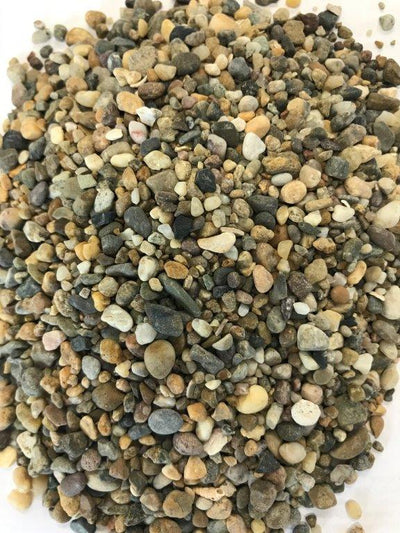
Traditional harling and dashed finishes use a coarser aggregate or stone chip to create a textured external surface.
Roundtower's 3–6mm Chip is intended for lime harling and dashing applications.
The finished appearance depends on the chip size, colour, application technique and underlying render.
A trial panel is particularly useful where the appearance of an existing traditional finish needs to be replicated.
Storage of Sand
Aggregate should be stored in a way that limits contamination and uncontrolled mixing with soil, debris or other sands.
Where consistent mortar colour is important, material for the complete project should ideally be sourced and stored consistently because natural aggregates can show some variation.
Bulk sand should also be protected from excessive contamination during site storage.
Frequently Asked Questions
What sand should I use for lime mortar?
The correct sand depends on the joint width, mortar type, masonry and required finish.
A well-graded sand appropriate to the scale of the joint or coat is generally preferable to choosing purely by colour.
What is the difference between 1mm, 3mm and 5mm Wexford Sand?
The numbers refer to the approximate maximum aggregate size.
1mm provides the finest texture, 3mm is useful for many general lime applications and 5mm provides a coarser grading for wider joints, thicker coats and more textured work.
Which sand is best for lime pointing?
There is no single grading for every pointing project.
Narrow joints may require finer aggregate, while wider stone joints can accommodate coarser material.
Matching the original mortar should also influence the selection.
Is sharp sand always best for lime mortar?
Not necessarily.
Particle shape is important, but so are grading, mineral composition and the amount of fine material.
A controlled, well-graded aggregate is more important than simply choosing the sharpest available sand.
Can Wexford Sand be used with NHL?
Yes.
The Wexford Sands can be incorporated into appropriately designed Natural Hydraulic Lime mortars.
Can Wexford Sand be used with lime putty?
Yes.
Suitable aggregate can also be used with non-hydraulic lime putty mortars, with the grading and proportions chosen for the particular application.
What aggregate should I use for harling?
A coarse decorative aggregate or chip is normally used to create the characteristic textured surface.
Roundtower supplies 3–6mm Chip for traditional lime harling and dashing applications.
Can Roundtower match my existing mortar?
Yes.
Roundtower's Mortar Analysis service can help assess the existing mortar and assist with selecting an appropriate binder, aggregate grading and visual match.
Need Help Choosing Sand or Aggregate?
If you are unsure whether your project requires 1mm, 3mm or 5mm Wexford Sand, or a coarse aggregate for harling, contact Roundtower Lime with details or photographs of the masonry and existing mortar.
Our technical team can help identify an appropriate aggregate or advise whether Mortar Analysis would be useful before the repair specification is finalised.