Why Build with Clay?
Clay is one of the oldest building and finishing materials and continues to provide a practical solution for modern natural construction, renovation and traditional buildings.
Internally, clay can be used as:
- a backing plaster;
- a levelling plaster;
- a reinforced plaster system;
- a decorative finish;
- or a rigid drylining board.
This allows the material to be incorporated into both traditional wet-plaster construction and modern drylining systems.
The Roundtower Clay Range
The Roundtower Clay range brings together five principal products:
Clay Plaster — coarse clay plaster for backing, levelling and general internal plastering.
Clay Decorative Plaster — fine decorative clay finish for natural internal surfaces.
Clay Adhesive & Reinforcing Mortar — for bonding suitable boards, embedding reinforcement mesh and forming reinforced basecoats.
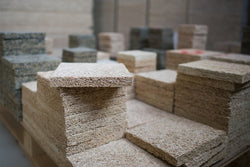
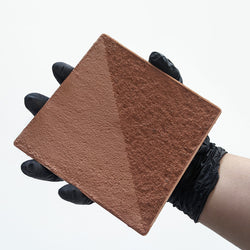
Heavy Clay Building Board — dense clay lining board providing greater surface mass.
Lightweight Hemp-Clay Building Board — lighter clay board incorporating hemp for easier handling and installation.
Together, these products allow a clay wall or ceiling system to be developed according to the background, construction method and required final appearance.
Clay Plaster
Clay Plaster is the principal coarse plaster within the range.
It is designed for internal walls and ceilings and can be used for:
- backing coats;
- levelling;
- covering suitable masonry;
- compatible wood fibre systems;
- reed mats;
- lightweight clay substrates;
- and other appropriate mineral backgrounds.
The coarse structure gives the plaster sufficient body for useful build-up while providing a natural substrate for subsequent clay finishing layers.
Clay Plaster Thickness
Clay Plaster can typically be applied at approximately 5mm to 15mm per coat.
Multiple layers can be used where additional build-up is required.
Where thicker clay plaster systems are installed, suitable drying conditions should be maintained before subsequent finishes are applied.
Hand or Machine Application
Clay Plaster can be applied manually or using suitable plastering machinery.
This makes it practical for both smaller renovation projects and larger areas where machine application can significantly improve productivity.
The substrate should always be appropriately prepared before plastering begins.
Clay Decorative Plaster
Clay Decorative Plaster provides the fine decorative finish within the Roundtower Clay range.
Rather than simply covering the clay with a conventional paint, Decorative Plaster allows the clay itself to become the finished visible surface.
Depending on the application technique, it can create:
- smooth finishes;
- softly clouded surfaces;
- gently textured finishes;
- or more expressive decorative effects.
This makes clay relevant not only as a technical building material but also as a high-quality interior finish.
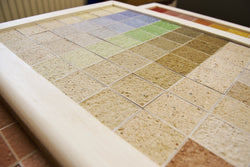
Natural Colour & Texture
Clay finishes have a different visual character from highly uniform modern painted surfaces.
Natural mineral variation can create subtle differences in tone, texture and depth across the finished wall.
The final appearance can also be influenced by the finishing technique, allowing designers and homeowners to create interiors ranging from restrained and contemporary to more traditional and textured.
Clay Adhesive & Reinforcing Mortar
Clay Adhesive & Reinforcing Mortar is the bonding and reinforcement component within suitable Roundtower clay systems.
It can be used for:
- bonding compatible building or insulation boards;
- embedding reinforcement mesh;
- reinforcing board joints;
- creating thin reinforced basecoats;
- and preparing surfaces for subsequent clay plaster.
It is typically applied in relatively thin layers and provides the transition between the board system and final clay finish.
Reinforcement Mesh
Where reinforcement is required, mesh is embedded within the Clay Adhesive & Reinforcing Mortar.
Reinforcement is particularly useful across:
- board joints;
- changes in substrate;
- corners;
- openings;
- and other locations where local stresses can occur.
The mesh should be fully embedded within the reinforcement layer rather than simply fixed onto the surface.
Clay Building Boards
Clay building boards allow clay to be incorporated using a dry construction method.
Instead of creating the entire wall lining from wet-applied plaster, rigid boards are installed onto a suitable supporting structure or background before receiving compatible reinforced clay finishes.
This can be particularly useful for:
- timber-frame construction;
- stud partitions;
- wall linings;
- ceilings;
- sloping roofs;
- renovation;
- and natural drylining.
Heavy Clay Building Board
Heavy Clay Building Board provides a dense and substantial internal lining.
Its higher surface mass can be particularly useful where a solid-feeling internal wall finish is preferred.
The Heavy Clay Board is available in different thicknesses to accommodate different supporting structures and fixing centres.
It also offers strong reaction-to-fire performance, although fire resistance should always be considered at the level of the complete wall or ceiling assembly.
Lightweight Hemp-Clay Building Board
Lightweight Hemp-Clay Building Board combines clay with hemp fibres and shives to create a lighter internal lining board.
Its lower weight makes it particularly attractive where:
- easier handling is important;
- boards need to be installed overhead;
- self-build installation is being considered;
- or a lighter drylining system is preferred.
The board retains clay as a major part of the internal surface system while making installation considerably more manageable.
Heavy vs Lightweight Clay Board
Neither board is universally better.
The most appropriate option depends on the project.
Choose Heavy Clay Building Board where:
- greater surface mass is desirable;
- a dense internal lining is preferred;
- the supporting structure can easily accommodate the weight;
- or enhanced reaction-to-fire characteristics are important.
Choose Lightweight Hemp-Clay Building Board where:
- easier handling is a priority;
- overhead installation is required;
- a lighter drylining system is preferable;
- or hemp-clay construction is desired.
Clay Boards Are Not Primarily Insulation Boards
Clay building boards should not be confused with dedicated thermal insulation boards.
Their principal role is to provide an internal lining and substrate for clay finishes.
Where significant thermal improvement is required, a dedicated insulation material such as wood fibre can be incorporated separately within the wall or roof construction.
The clay board can then provide the internal lining.
Clay & Wood Fibre Insulation
Clay and wood fibre can complement each other particularly well in suitable internal systems.
Wood fibre provides the principal thermal insulation, while clay can provide:
- the internal plaster system;
- reinforcement layer;
- surface mass;
- moisture buffering;
- and decorative finish.
The exact build-up should follow the requirements of the selected wood fibre board and the overall wall specification.
Clay & Timber-Frame Construction
Clay products are also well suited to timber-frame and framed internal construction.
Insulation can be installed within the timber structure while clay building boards form the internal lining.
The clay surface then adds mass and moisture-buffering capacity to what would otherwise be a relatively lightweight wall.
The wall still requires an appropriate airtightness and vapour-control strategy where it forms part of the external thermal envelope.
Moisture Buffering
One of clay's most useful internal properties is its ability to buffer changes in relative humidity.
When indoor humidity rises, exposed clay can temporarily adsorb water vapour.
As the surrounding air becomes drier, some of this stored moisture can subsequently be released.
This can help moderate short-term changes in indoor humidity.
The effect depends on the amount of exposed clay, the thickness of the system and the wider indoor environment.
Moisture Buffering Is Not Damp Treatment
Clay should not be presented as a cure for damp.
Its moisture-buffering behaviour relates principally to water vapour within the indoor environment.
It does not correct sources of liquid moisture such as:
- leaking gutters;
- penetrating rain;
- plumbing leaks;
- groundwater;
- high external ground levels;
- or defective drainage.
Significant moisture problems should be investigated before clay boards or plaster are installed.
Vapour-Open Construction
Clay products generally provide relatively low resistance to water-vapour diffusion and can therefore form part of a vapour-open construction.
This can be particularly useful alongside compatible materials such as:
- wood fibre;
- lime plaster;
- traditional masonry;
- and other mineral building materials.
However, vapour permeability is only one part of moisture behaviour.
Liquid-water movement, drying potential, airtightness and the wider construction should also be considered.
Vapour Permeability & Airtightness
A vapour-open wall can still be airtight.
These are different properties.
Vapour permeability relates to water-vapour diffusion through materials.
Airtightness relates to uncontrolled movement of air through gaps and junctions.
Where clay products form part of an insulated external wall or roof, a suitable airtightness strategy should still be incorporated into the overall construction.
Drying Clay Plaster
Clay plaster develops its finished properties through drying rather than hydraulic setting.
Adequate ventilation is therefore particularly important following application.
This becomes increasingly important where thicker plaster coats are used.
The plaster should be allowed to dry adequately before subsequent layers or decorative finishes are applied.
An Advantage of Clay During Application
Because clay plaster does not rely on a rapid chemical set, mixed material can remain workable for an extended period when appropriately stored and protected from drying.
This can provide useful flexibility during installation and reduce waste when compared with materials that become unusable once a chemical set has begun.
Clay for Renovation
Clay can be particularly useful in renovation projects where natural internal finishes are desired.
Possible applications include:
- replastering existing masonry;
- lining timber partitions;
- upgrading ceilings;
- lining sloping roofs;
- finishing wood fibre insulation;
- and creating new natural internal surfaces.
The existing background should still be assessed before work begins.
Clay in Traditional Buildings
Clay can complement traditional materials particularly well where an internal mineral finish with useful moisture-buffering characteristics is required.
However, product selection should still respond to:
- the existing substrate;
- historic significance;
- moisture condition;
- previous finishes;
- and the wider construction.
Clay should not automatically be considered suitable simply because a building is old.
Clay in Contemporary Interiors
Clay is equally relevant to contemporary construction and interior design.
Decorative clay plaster can create refined surfaces with subtle natural variation, while clay building boards allow these finishes to be incorporated into modern framed construction.
This makes clay suitable for projects where natural materials and contemporary design are equally important.
Clay Walls & Ceilings
Clay products can be used across both walls and ceilings.
For wet plaster systems, the background and required build-up determine the appropriate preparation.
For clay board ceilings, the board thickness, weight, supporting structure and fixing centres need to be considered carefully.
The manufacturer's requirements should always be followed for overhead applications.
Clay Finishes
Once a clay system has been completed, the final surface can be treated in several ways.
Options can include:
- Clay Decorative Plaster;
- suitable clay paint;
- compatible mineral paint;
- or an appropriately finished exposed clay plaster surface.
Where moisture buffering is a design objective, the final coating should not unnecessarily restrict the interaction between the clay surface and the indoor environment.
Clay vs Lime
Clay and lime are both traditional mineral building materials, but they behave differently.
Clay develops its finished condition primarily through drying and provides particularly useful moisture-buffering capacity internally.
Lime develops strength through carbonation and/or hydraulic reactions depending on the binder and can be used in both internal and external applications.
Clay is therefore particularly suited to internal wall and ceiling systems, while lime remains the more appropriate material for many externally exposed applications.
The correct choice depends on the location, substrate and required performance.
Can Clay Be Used Externally?
Clay plaster and clay building boards should generally be considered internal building materials.
Persistent exposure to driving rain can damage unprotected clay.
External walls normally require an appropriate weather-resistant render, cladding or other external protection system.
Choosing Between Clay Plaster & Clay Boards
The choice depends largely on the existing construction.
Choose a wet-applied Clay Plaster system when:
- plastering directly onto a suitable background;
- levelling an existing mineral surface;
- working with suitable wood fibre or plaster carriers;
- or retaining a traditional wet-plaster construction.
Choose Clay Building Boards when:
- creating a stud partition;
- lining a timber frame;
- drylining walls or ceilings;
- reducing the amount of wet plaster required;
- or creating a consistent new internal substrate.
Both approaches can ultimately provide a compatible clay-finished internal surface.
Typical Clay Plaster Build-Up
A simple plaster system may include:
Suitable prepared background
→ Clay Plaster
→ Clay Decorative Plaster or compatible final finish
The exact number and thickness of coats depends on the condition of the background and required final appearance.
Typical Clay Board Build-Up
A typical clay-board system may include:
Suitable supporting structure or prepared background
→ Clay Building Board
→ Clay Adhesive & Reinforcing Mortar
→ reinforcement mesh
→ Clay Plaster and/or Clay Decorative Plaster as required
The final build-up should follow the requirements of the selected board and application.
Frequently Asked Questions
What is clay plaster?
Clay plaster is an internal mineral plaster made principally from clay and graded aggregates.
It can be used for backing, levelling and decorative internal finishes.
What are clay building boards?
Clay building boards are rigid internal lining boards containing clay and natural reinforcing materials.
They allow clay to be incorporated using a drylining method.
What is the difference between clay plaster and clay boards?
Clay plaster is applied wet onto a suitable surface.
Clay building boards are mechanically fixed or appropriately bonded to form a dry internal lining before the final reinforced clay finish is applied.
Does clay regulate humidity?
Clay can absorb and release water vapour as indoor humidity changes, providing useful moisture-buffering capacity.
Is clay breathable?
Clay products generally have relatively low resistance to water-vapour diffusion and can form part of a vapour-open construction.
Is clay suitable for damp walls?
Clay should not be used to hide an unresolved source of damp.
Any significant water ingress or building defect should be investigated before the new internal system is installed.
Can clay be used with wood fibre?
Yes.
Clay plaster and reinforcing mortars can be used within appropriate wood fibre systems where the complete build-up is compatible.
Are clay building boards insulation?
Not primarily.
Their main purpose is internal lining and finishing rather than providing high levels of thermal insulation.
Can clay be used on ceilings?
Yes.
Both clay plaster and suitable clay building boards can be used on ceilings where the substrate, board thickness, support spacing and fixing method are appropriate.
Can clay plaster be applied by machine?
Yes.
Roundtower Clay Plaster can be applied manually or using suitable plastering machinery.
Can clay be used externally?
The Roundtower clay range is principally intended for internal construction and finishing.
Suitable lime or other weather-resistant mineral systems should normally be used externally.
What is Clay Adhesive & Reinforcing Mortar used for?
It is used for bonding suitable boards, embedding reinforcement mesh and creating a reinforced mineral base for subsequent clay plaster finishes.
What is Clay Decorative Plaster?
Clay Decorative Plaster is a thin finishing plaster used to create natural decorative clay surfaces with different textures and visual effects.
Can Roundtower Help with a Clay System?
If you are considering clay plaster, clay building boards or a complete natural internal wall system, contact Roundtower Lime with details of the proposed construction.
We can help identify the appropriate board or plaster system, reinforcement layers and final clay finish for the project.