Cleaning Historic Stone & Masonry
Cleaning traditional masonry requires a different approach from cleaning modern hard surfaces.
Historic stone, brick, lime render and decorative finishes can be porous, weathered or fragile, so aggressive acids, high-pressure washing and abrasive cleaning can cause permanent damage.
The cleaning method should therefore respond to the substrate, type of staining, condition of the surface and significance of the building.
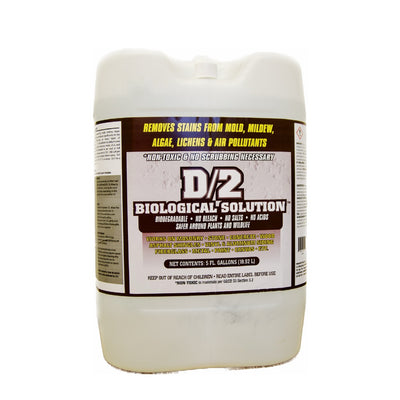
D/2 Biological Solution
D/2 Biological Solution is a ready-to-use cleaner developed for removing biological and atmospheric staining from masonry and architectural surfaces.
It is particularly effective against staining associated with:
- algae;
- mould;
- mildew;
- lichen;
- biological growth; and
- airborne environmental pollutants.
D/2 is supplied ready to use and should normally be applied undiluted.
What Surfaces Can D/2 Be Used On?
D/2 can be used on a broad range of suitable architectural materials including:
- limestone;
- sandstone;
- granite;
- marble;
- slate and similar natural stone;
- brick and masonry;
- terracotta;
- concrete;
- stucco and render;
- and other compatible architectural surfaces.
Historic surfaces can vary considerably in condition, so a small test area should always be completed first, particularly where stone is friable, previously treated or heavily weathered.
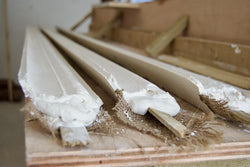
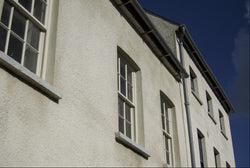
D/2 & Lime Render
D/2 can be useful for removing biological staining from sound lime-rendered surfaces.
Care should still be taken where the render is weak, friable or heavily weathered.
Cleaning cannot repair a failing render, and loose or deteriorated material should be assessed before treatment.
A test area is particularly useful to confirm both cleaning effectiveness and the appearance of the finished surface.
D/2 & Limewash
Extra care should be taken on limewashed surfaces.
Limewash is a relatively soft, sacrificial mineral finish and may already be weathered or friable before cleaning begins.
Rather than assuming any cleaning product is automatically harmless to limewash, test an inconspicuous area first and avoid aggressive scrubbing.
Where the existing limewash is deteriorated, recoating may ultimately be more appropriate than attempting intensive cleaning.
How to Apply D/2
D/2 can be used using either an immediate cleaning method or a slower no-scrub/no-rinse approach.
For more immediate results, the surface is treated with undiluted D/2 and allowed to dwell for approximately 15 minutes.
The surface can then be scrubbed using a suitable non-metallic short-fibre, nylon or natural-bristle brush, lightly misted with water where required and rinsed with clean water.
A light final application of D/2 can then be applied.
Results may continue to develop after the initial cleaning.
No-Scrub / No-Rinse Method
D/2 can also be applied without immediate scrubbing or rinsing.
The surface is saturated with undiluted D/2 and the product is allowed to work gradually with natural weather exposure.
This method is particularly useful where an immediate visual result is not required.
Cleaning can continue to develop over the following weeks or months depending on the extent and type of staining.
Always Carry Out a Test Area
A test area is particularly important when cleaning historic masonry.
Stone types that appear similar can have very different porosity, surface condition and weathering characteristics.
A small trial allows the cleaning method, dwell time and finished appearance to be assessed before treating a large elevation.
This is especially important on soft limestone, sandstone, historic render, decorative masonry and previously treated surfaces.
Avoid Aggressive Cleaning
The objective when cleaning a historic building should not necessarily be to make the surface appear completely new.
Excessively aggressive cleaning can remove the weathered surface or patina of stone and may expose a more vulnerable substrate beneath.
Metal wire brushes, inappropriate acids and uncontrolled high-pressure cleaning can be particularly damaging to soft or historic masonry.
The gentlest method capable of achieving the required result is generally the preferred starting point.
Biological Growth & Moisture
Algae, mould and lichen often develop where surfaces remain damp for extended periods.
Cleaning removes the visible growth but does not necessarily remove the conditions that allowed it to develop.
Where biological staining repeatedly returns, investigate contributing factors such as:
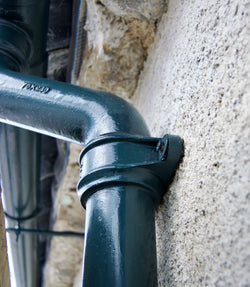
- leaking gutters or downpipes;
- overflowing rainwater goods;
- persistent shading;
- defective pointing;
- sheltered areas that dry slowly;
- vegetation close to the wall;
- and other sources of persistent moisture.
Correcting these issues can be just as important as cleaning the masonry itself.
Cleaning Before Repointing
Where masonry is being repointed, heavy biological growth may need to be removed so that the condition of the stone, brick and existing mortar can be properly assessed.
Cleaning should not, however, replace correct joint preparation.
Loose and deteriorated mortar still needs to be removed carefully and the masonry prepared appropriately before new lime mortar is installed.
Cleaning Before Painting
A sound, clean background is important before applying limewash, lime paint or mineral paint.
Biological contamination can interfere with the adhesion and appearance of a new coating.
Where treatment is required before decoration, allow the wall to become suitably clean and dry and then follow the preparation instructions for the chosen paint system.
Cleaning Gravestones & Monuments
D/2 is widely used for the cleaning of gravestones, monuments and historic stonework.
These surfaces can be particularly delicate because weathering, carving and historic inscriptions may already have weakened the stone surface.
Soft non-metallic brushes and controlled cleaning techniques should therefore be used.
Avoid aggressive scraping or pressure that could damage carved details or lettering.
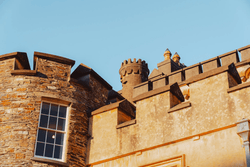
Historic & Protected Buildings
D/2 has an established history of use within architectural and monument conservation.
However, this should not be interpreted as automatic approval for every protected building or every historic surface.
For highly significant masonry, sculpture or decorative finishes, the cleaning method may need to be agreed with the relevant architect, conservation professional or authority before work begins.
Maintaining Clean Masonry
Biological staining may gradually return where environmental conditions remain favourable for growth.
Periodic light treatment can be preferable to allowing severe contamination to develop and then repeatedly carrying out intensive cleaning.
The frequency required depends on the orientation, shade, rainfall exposure, vegetation and moisture conditions surrounding the building.
Frequently Asked Questions
What does D/2 Biological Solution remove?
D/2 is designed to remove biological and atmospheric staining including algae, mould, mildew, lichen and general environmental soiling.
Does D/2 contain acid?
No.
D/2 is formulated without acids, salts or bleach.
Does D/2 need to be diluted?
No.
D/2 is normally used undiluted.
How long should D/2 be left on the surface?
For the immediate cleaning method, allow D/2 to remain on the surface for approximately 15 minutes before scrubbing and rinsing.
A no-scrub/no-rinse method can also be used where results are allowed to develop gradually.
Does D/2 need to be rinsed off?
Not always.
D/2 has both an immediate cleaning method involving scrubbing and rinsing and a no-scrub/no-rinse application method.
Can D/2 be used on limestone?
Yes.
D/2 is used on limestone and a range of other natural stone and masonry surfaces.
A test area should still be carried out before treating a large or historically important surface.
Can D/2 be used on lime render?
It can be used on suitable sound rendered and masonry surfaces, but the condition of the lime render should be assessed first.
Weak or friable finishes require particular care.
Can D/2 be used on limewash?
Limewash is a soft sacrificial coating, so a test area is strongly recommended.
Avoid aggressive scrubbing and consider whether recoating the limewash may be more appropriate where the existing finish is already deteriorated.
Will D/2 stop algae coming back permanently?
No cleaning treatment can guarantee that biological growth will never return.
If the surface remains persistently damp or shaded, periodic maintenance may be required.
Can D/2 be used on protected buildings?
D/2 is widely used in conservation and on historic structures.
For protected or highly significant buildings, the proposed cleaning method should still be appropriate to the particular substrate and project requirements.
Need Help Cleaning Historic Masonry?
If you are unsure whether D/2 is appropriate for stone, brick, lime render, a monument or another historic surface, contact Roundtower Lime with photographs and details of the existing substrate.
Our technical team can help you consider an appropriate cleaning method before treating the wider area.