Choosing a Filler for Lime & Mineral Surfaces
Repairs to lime plaster, lime render and mineral finishes should be carried out using products that are appropriate to the existing background and the type of defect being repaired.
A filler used to repair an individual crack or small hole performs a very different role from a product used to prepare an entire wall before mineral paint is applied.
The Roundtower Fillers range therefore provides two different solutions:
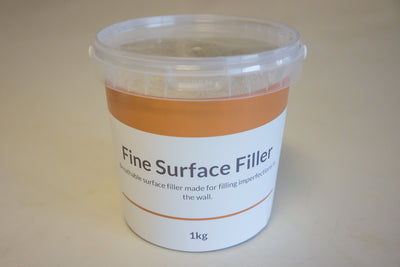
Fine Surface Filler — for localised cracks, holes and minor surface repairs.
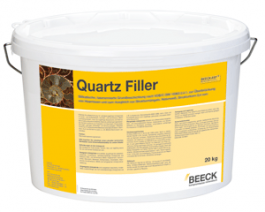
BEECK Quartz Filler — for broader surface preparation, levelling and bridging hairline cracking before mineral decoration.
Fine Surface Filler
Fine Surface Filler is a vapour-permeable repair filler suitable for localised repairs to lime plaster, lime render and compatible mineral surfaces.
It is particularly useful for:
- small cracks;
- minor holes;
- surface blemishes;
- chipped plaster;
- and local imperfections before decoration.
The product provides a convenient way of carrying out small repairs without having to replace a larger area of otherwise sound lime plaster.
What Can Fine Surface Filler Repair?
Fine Surface Filler can be used for cracks and defects up to approximately 8mm, provided the surrounding plaster or render remains sound and securely bonded.
It is intended for minor surface repairs rather than repairing large areas of failed plaster.
If the surrounding plaster sounds hollow, is loose or has detached from the wall, the underlying defect should be addressed before applying a surface filler.
Fine Cracks
Very narrow cracks can sometimes be difficult to fill properly because there is insufficient space for the filler to key into the repair.
Where appropriate, a very fine crack can be carefully opened slightly before filling.
The repair area should then be cleaned of loose material and dust before the filler is applied.
Surface Preparation
The background should be:
- clean;
- sound;
- free from dust;
- free from loose material;
- and capable of accepting the repair.
Highly absorbent lime plaster may benefit from light dampening before application so that moisture is not drawn too quickly from the fresh filler.
The surface should be damp rather than saturated.
Applying Fine Surface Filler
Fine Surface Filler can be applied using a filling knife, spatula or small trowel.
The material should be pressed firmly into the defect to achieve good contact with the surrounding plaster.
The repair can be left slightly proud of the surrounding surface and carefully finished or sanded once sufficiently dry.
Setting & Drying
Fine Surface Filler sets relatively quickly, making it useful for small decorating and repair work.
Typical setting time is approximately 45–60 minutes, depending on temperature and site conditions.
Drying time also depends on the depth of the repair and the suction of the background.
Once sufficiently dry, the surface can be carefully sanded to create a smooth transition between the repair and surrounding plaster.
Aftercare
As with other mineral repair materials, excessively rapid drying should be avoided.
On absorbent backgrounds or in warm conditions, light misting may be appropriate during the initial curing period.
The repair should not be saturated with water.
Decorating Over Fine Surface Filler
The repaired area should be allowed to cure appropriately before final decoration.
Suitable vapour-permeable finishes can include:
- limewash;
- lime paint;
- mineral paint;
- clay paint;
- and other compatible breathable decorative coatings.
The drying and curing requirements of the chosen paint system should always be followed.
Fine Surface Filler on Lime Plaster
Fine Surface Filler is particularly useful where an existing lime-plastered wall is generally in good condition but has developed occasional cracks, fixing holes or minor surface damage.
Rather than replacing sound plaster, the defects can be repaired locally before the wall is redecorated.
This makes it particularly useful during renovation, conservation work and preparation of older lime-plastered interiors.
Fine Surface Filler on Lime Render
Fine Surface Filler can also be used for suitable small repairs to external lime and mineral backgrounds.
External defects should first be checked to ensure that cracking or deterioration is not being caused by continuing moisture ingress or movement.
Where larger areas of render are failing, a proper lime-render repair will normally be more appropriate than surface filling.
BEECK Quartz Filler
BEECK Quartz Filler performs a different role from a conventional patch filler.
It is a fibre-reinforced mineral priming and levelling coat designed for larger surface areas where minor irregularities, texture differences or hairline cracking need to be evened out before mineral paint is applied.
It can be used internally or externally on suitable mineral backgrounds.
When Should I Use BEECK Quartz Filler?
Quartz Filler is particularly useful where a surface has:
- widespread hairline cracking;
- fine crazing;
- minor surface irregularities;
- differing surface textures;
- old repair marks;
- or an uneven mineral background before painting.
Instead of individually filling every very fine crack, Quartz Filler can be applied across the wider surface to create a more consistent mineral background.
Fibre-Reinforced Surface Preparation
BEECK Quartz Filler incorporates reinforcing fibres within its mineral formulation.
These fibres help bridge static hairline cracks and very fine surface defects.
This makes Quartz Filler particularly useful where the existing plaster or render remains sound but the surface requires additional preparation before decoration.
Quartz Filler Is Not a Structural Crack Repair
Quartz Filler should not be used to conceal significant or moving cracks.
Cracking that is:
- continuing to widen;
- associated with masonry movement;
- unusually deep or wide;
- accompanied by bulging;
- or present within loose render
should be investigated before the surface is decorated.
Quartz Filler is designed for hairline cracking and minor surface irregularities, not structural repair.
Quartz Filler & Vapour Permeability
BEECK Quartz Filler is highly vapour permeable, with an Sd-value of approximately 0.02m.
This makes it particularly well suited to lime, mineral and silicate finishing systems where maintaining low resistance to water-vapour diffusion is desirable.
The complete wall build-up should still be considered rather than relying on vapour permeability alone as a measure of moisture performance.
Suitable Backgrounds for Quartz Filler
Quartz Filler can be applied to suitable stable mineral substrates such as:
- lime render;
- mineral plaster;
- lime-cement render;
- masonry;
- concrete;
- and compatible existing mineral coatings.
The background should be sound and properly prepared before application.
Loose coatings, dust, contamination and unstable material should be removed.
BEECK Fixative
Depending on the substrate and required application consistency, BEECK Fixative can be used with Quartz Filler in accordance with the BEECK system specification.
BEECK Fixative forms part of the silicate mineral coating system and can also be used for suitable substrate preparation and product adjustment where required.
The exact dilution and preparation should follow the product instructions and condition of the background.
Coverage of BEECK Quartz Filler
Typical consumption is approximately 0.25–0.40kg/m².
Actual coverage depends on:
- surface texture;
- porosity;
- depth of irregularities;
- application technique;
- and the amount of material required to achieve an even surface.
Rough or heavily textured substrates will normally require more material than smooth surfaces.
Internal Use
Internally, Quartz Filler can be particularly useful where existing mineral plaster has minor crazing or uneven texture before repainting.
Once appropriately prepared and cured, the surface can receive a compatible internal mineral paint.
For suitable internal applications, BEECK Maxil Pro can provide a highly vapour-permeable mineral decorative finish.
External Use
Externally, Quartz Filler can be used as part of a mineral façade preparation system.
It can help even minor surface irregularities and hairline cracking before application of a compatible exterior mineral paint such as BEECK Renosil.
It should not be treated as the final exposed decorative finish.
Fine Surface Filler vs BEECK Quartz Filler
The easiest way to choose between the two products is to consider how much of the wall needs to be repaired.
Choose Fine Surface Filler when:
- there is an individual crack;
- there are fixing holes or isolated defects;
- a small area of plaster needs filling;
- or the surrounding lime plaster is otherwise sound.
Choose BEECK Quartz Filler when:
- hairline cracking occurs across a larger area;
- the wall has widespread fine crazing;
- different repair areas have created an uneven texture;
- or the complete surface needs preparation before mineral paint.
What If the Plaster Is Hollow?
Neither filler should be used as a substitute for repairing loose or hollow plaster.
If tapping the wall reveals hollow areas, the plaster may have lost adhesion to the underlying masonry.
The condition of the plaster should be assessed and any necessary plaster repairs carried out before the decorative filling stage begins.
What If Cracks Keep Returning?
Repeated cracking may indicate that there is movement or another unresolved issue beneath the surface.
Possible causes include:
- movement between different materials;
- structural movement;
- shrinkage;
- loose plaster;
- thermal movement;
- or moisture-related deterioration.
Simply refilling a crack will not correct an underlying cause that remains active.
Moisture-Damaged Surfaces
Where filling is required because plaster or render has deteriorated due to moisture, the moisture source should also be investigated.
Possible causes include:
- leaking gutters;
- defective downpipes;
- penetrating rain;
- damaged external render;
- plumbing leaks;
- high external ground levels;
- or persistent condensation.
Repairing the surface without addressing the moisture source may result in the defect returning.
Compatible Paint Finishes
Once repairs are complete, the decorative coating should be appropriate to the existing wall system.
On lime and mineral backgrounds, compatible finishes can include:
- limewash;
- lime paint;
- silicate mineral paint;
- clay paint;
- and other suitable vapour-permeable coatings.
Roundtower supplies BEECK mineral paints for both internal and external applications, allowing the surface preparation and decorative coating to be selected as part of a compatible system.
Frequently Asked Questions
What filler can I use on lime plaster?
Fine Surface Filler is suitable for small cracks, holes and local repairs to sound lime plaster and compatible mineral backgrounds.
Can I use Fine Surface Filler on old lime plaster?
Yes.
It is particularly useful where the existing lime plaster remains sound but has occasional cracks, fixing holes or minor surface damage.
How large a crack can Fine Surface Filler repair?
It can be used for cracks and defects up to approximately 8mm, provided the surrounding plaster remains sound.
How quickly does Fine Surface Filler set?
Typical setting time is approximately 45–60 minutes, depending on temperature and site conditions.
Can Fine Surface Filler be sanded?
Yes.
Once sufficiently dry, the repair can be carefully sanded to create a smooth finish with the surrounding surface.
Can Fine Surface Filler be used externally?
It can be used for suitable localised repairs to external lime or mineral backgrounds.
Larger areas of failing render should normally be repaired using an appropriate render system rather than filler.
What is BEECK Quartz Filler?
BEECK Quartz Filler is a fibre-reinforced mineral priming and levelling coat used to prepare larger mineral surfaces before painting.
Is Quartz Filler a normal crack filler?
Not in the conventional sense.
It is designed primarily for broader surface preparation and for bridging static hairline cracking rather than filling individual deep holes.
Can Quartz Filler bridge cracks?
It can bridge fine, static hairline cracks and minor surface defects.
It should not be used to conceal structural or actively moving cracks.
Is BEECK Quartz Filler vapour permeable?
Yes.
Quartz Filler is highly vapour permeable, with an Sd-value of approximately 0.02m.
Can Quartz Filler be used outside?
Yes.
It can be used on suitable external mineral surfaces as part of a compatible mineral façade coating system.
Can Quartz Filler be used before BEECK Renosil?
Yes, where suitable for the existing substrate and overall BEECK specification.
Quartz Filler can provide a fibre-reinforced mineral preparation layer before a compatible façade paint such as BEECK Renosil.
Can Quartz Filler be used before BEECK Maxil Pro?
On suitable internal mineral surfaces, Quartz Filler can form part of the substrate preparation before an appropriate BEECK internal mineral coating.
Which filler should I choose?
For individual cracks, holes and local damage, choose Fine Surface Filler.
For widespread hairline cracking, crazing or general surface levelling before mineral paint, choose BEECK Quartz Filler.
Need Help Choosing a Filler?
If you are repairing lime plaster, lime render or a mineral-painted surface, contact Roundtower Lime with photographs of the wall and details of the existing finish.
We can help identify whether the surface needs a local Fine Surface Filler repair or broader preparation with BEECK Quartz Filler, as well as recommend a compatible mineral finishing system.