Choosing Floor Insulation for Traditional Buildings
Insulating a traditional ground floor requires a different approach from simply installing a modern concrete slab with rigid insulation.
Older solid-wall buildings often rely on moisture being able to redistribute and dry through their walls and floors.
Changing the floor construction can therefore alter moisture conditions at the base of adjoining masonry, making the relationship between the floor, walls, ground moisture and external levels particularly important.
GLAPOR Recycled Foam Glass Gravel
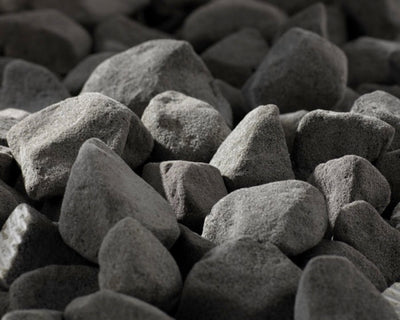
GLAPOR SG600 is a lightweight cellular-glass gravel manufactured from recycled glass.
It combines several functions within one material:
- thermal insulation;
- load-bearing fill;
- drainage;
- capillary interruption;
- frost resistance; and
- lightweight structural fill.
Within a limecrete floor, GLAPOR can therefore perform functions that would otherwise require separate hardcore and insulation layers.
Thermal Performance
GLAPOR SG600 has a thermal conductivity of approximately 0.08 W/mK.
Because the insulation is installed as a relatively deep compacted layer, useful levels of thermal resistance can be achieved beneath the floor while simultaneously providing structural support.
The required depth should be calculated from the complete floor build-up and the target U-value rather than simply selecting one standard thickness for every project.
How Does Foam Glass Stop Capillary Moisture?
GLAPOR is non-capillary.
This means liquid water is not drawn continuously upwards through the aggregate in the way that it can move through fine-pored materials.
The individual foam-glass particles contain a closed cellular structure, while the spaces between the compacted particles create a free-draining granular layer.
This combination allows GLAPOR to act as an effective capillary break beneath a floor construction.
Capillary Break vs Damp-Proof Membrane
A capillary break and a damp-proof membrane do not perform exactly the same function.
GLAPOR interrupts upward liquid-water movement through capillary action.
A conventional plastic DPM creates a highly resistant physical membrane across the floor.
In traditional limecrete construction, a non-capillary GLAPOR layer can allow a floor to be designed without the conventional impermeable DPM arrangement commonly associated with dense concrete floors.
However, groundwater conditions, radon requirements, contamination and the project specification still need to be considered separately.
GLAPOR & Limecrete Floors
GLAPOR forms the principal insulating base within the Roundtower Limecrete Flooring System.
A typical build-up includes:
prepared subsoil → geotextile → compacted GLAPOR → geotextile → optional geogrid and underfloor heating → limecrete slab → floor finish
This produces a floor in which the insulating layer, slab and final finish are selected to work together rather than treating the floor insulation as an isolated product.
Minimum GLAPOR Depth
The appropriate GLAPOR depth depends on the required thermal performance and project specification.
Within Roundtower limecrete floors, approximately 150mm compacted GLAPOR is generally treated as a practical minimum starting depth, with greater thicknesses used where improved floor U-values are required.
A project-specific U-value calculation is preferable where thermal performance is important.
Compaction
GLAPOR is installed loose and then mechanically compacted.
Compaction causes the angular particles to interlock and creates a stable load-bearing layer.
The required loose depth therefore needs to account for the specified compaction ratio.
Correct compaction is important both for structural stability and for achieving the designed floor level.
Load-Bearing Performance
Foam-glass gravel is not simply loose insulation.
When correctly installed and compacted, it provides a load-bearing base beneath floor and foundation constructions.
This allows GLAPOR to combine the functions of structural fill and thermal insulation within one layer.
The required depth and loading design should still reflect the building loads and project specification.
Geotextile Membrane
A geotextile layer is normally incorporated around the GLAPOR within the Roundtower Limecrete Flooring System.
Its principal role is as a permeable separation and filtration layer, preventing fine materials from migrating into the foam-glass aggregate while allowing water to pass through.
The geotextile should not be confused with a plastic damp-proof membrane.
Underfloor Heating
Limecrete floors can incorporate underfloor heating.
Within the Roundtower system, a geogrid can be installed over the upper geotextile to provide a stable fixing framework for the underfloor-heating pipework.
The limecrete slab is then installed around the heating system.
Because the slab provides substantial thermal mass, underfloor heating can work effectively when the complete floor build-up and heating controls are designed appropriately.
E'Grid Geogrid
Where underfloor heating is installed, E'Grid 2020 Biaxial Geogrid can provide a rigid support grid for the heating pipes.
The geogrid is positioned above the upper geotextile and the pipework can then be secured before the limecrete is placed.
The geogrid should not be confused with the geotextile; the two layers perform different functions.
Limecrete Slab
Roundtower limecrete floors typically use Natural Hydraulic Lime, suitable aggregate and reinforcing fibres to produce a vapour-permeable ground-floor slab.
Floor Finishes
The final floor finish also needs to be considered.
If the purpose of the floor design is to retain drying potential, placing a highly impermeable finish over the limecrete can alter the behaviour of the system.
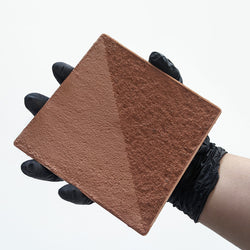
Suitable finishes can include natural stone, compatible flagstones, unglazed terracotta and other vapour-permeable floor finishes, depending on the project.
The bedding and jointing materials should also be considered as part of the complete specification.
Limecrete vs Conventional Concrete Floors
The most important difference is not simply that one slab contains lime and the other cement.
A traditional limecrete floor can be designed around a non-capillary granular base and vapour-permeable floor build-up, allowing moisture to be managed differently from a conventional floor relying heavily on impermeable membranes.
This can be particularly relevant where a new floor meets existing solid masonry walls.
Neither approach should be treated as universally correct for every building; the existing structure and moisture conditions should determine the floor design.
Moisture at the Wall-to-Floor Junction
The junction between a new floor and an existing solid wall deserves particular attention.
If moisture movement through a previously permeable floor is substantially changed, the drying conditions at the base of adjoining walls can also change.
For this reason, traditional floor refurbishment should consider:
- external ground levels;
- wall moisture;
- drainage;
- floor build-up;
- wall finishes;
- and the relationship between the new floor and existing foundations.
A breathable floor system should still be accompanied by investigation of significant sources of moisture.
Does GLAPOR Prevent Rising Damp?
GLAPOR provides an effective capillary-breaking layer, meaning liquid water cannot readily rise through the insulation by capillary suction.
It is preferable to describe this function as interrupting capillary moisture transport rather than claiming that one floor material universally “prevents rising damp”.
Moisture can still reach a building through walls, groundwater, lateral penetration, defects and other pathways.
Does a Limecrete Floor Need a DPM?
One of the principal reasons for using GLAPOR beneath limecrete is to create a non-capillary floor base without relying on a conventional polyethylene damp-proof membrane solely to interrupt capillary moisture.
However, this does not mean that every project can simply omit every membrane.
The floor still needs to satisfy the site conditions, regulations and project-specific requirements.
Radon & Gas Membranes
Radon requirements should be considered separately from damp-proofing.
In Ireland, building regulations can require radon protection within new buildings and extensions depending on the applicable risk and construction requirements.
Where a radon or gas barrier is required, it needs to be incorporated into the limecrete floor detail without confusing its gas-control function with the moisture-management function of the GLAPOR.
Roundtower can assist with project-specific limecrete and radon detailing.
GLAPOR in Existing Buildings
GLAPOR can be particularly useful when replacing inappropriate or failed ground floors in traditional buildings.
Its relatively low weight can reduce the amount of heavy aggregate introduced into the building, while its insulating and capillary-breaking properties allow several floor functions to be combined within one layer.
Existing foundations, archaeology, floor levels and thresholds should still be considered before excavation begins.
GLAPOR in New Buildings
Foam-glass gravel is not limited to conservation work.
It can also be used as load-bearing floor and foundation insulation within suitable modern and low-energy construction.
In new construction, the required thermal performance, structural design, radon protection and compliance requirements should be developed as part of the complete floor specification.
Recycled Glass
GLAPOR is manufactured from recycled glass, allowing waste glass to be converted into a durable insulation and structural-fill product.
Because the material combines several floor functions within one layer, it can also reduce the number of separate materials required in the floor build-up.
Environmental claims should nevertheless be considered using appropriate manufacturer environmental data rather than assuming that any insulation product is automatically carbon neutral.
U-Value Calculations
The thermal performance of a floor depends on more than the lambda value of the insulation.
Factors including GLAPOR depth, floor geometry, wall junctions and the other construction layers influence the final U-value.
Roundtower can provide U-value calculations to help determine an appropriate GLAPOR depth for a proposed floor.
Frequently Asked Questions
What is GLAPOR foam-glass gravel?
GLAPOR is a lightweight recycled cellular-glass aggregate used as thermal insulation, structural fill and a capillary-breaking layer beneath suitable floors and foundations.
What is the lambda value of GLAPOR?
The GLAPOR SG600 supplied by Roundtower has a thermal conductivity of approximately 0.08 W/mK.
Is GLAPOR load bearing?
Yes.
When installed and compacted correctly, GLAPOR can provide a load-bearing insulating layer beneath appropriate floor and foundation constructions.
What is the minimum depth of GLAPOR?
Within a typical Roundtower limecrete floor, approximately 150mm compacted depth is generally used as a minimum starting point.
Greater depths can be specified where improved thermal performance is required.
Does GLAPOR stop rising damp?
GLAPOR is non-capillary and therefore interrupts upward liquid-water movement through capillary action.
The overall moisture behaviour of the building still depends on the walls, ground conditions and surrounding construction.
Do I need a plastic DPM with GLAPOR?
A traditional limecrete floor using GLAPOR can be designed without a conventional polyethylene DPM solely for capillary moisture control.
Any separate requirements for radon, ground gases, groundwater or the project specification must still be considered.
Can GLAPOR be used with underfloor heating?
Yes.
Within the Roundtower Limecrete Flooring System, underfloor-heating pipework can be supported on a geogrid above the compacted GLAPOR and geotextile before the limecrete slab is installed.
Is GLAPOR suitable for old buildings?
GLAPOR can be particularly useful in traditional solid-wall buildings where a non-capillary, insulated floor build-up is required.
The existing foundations, wall moisture and significance of the building should still be assessed before the floor is altered.
Is GLAPOR made from recycled material?
Yes.
GLAPOR manufactures its foam-glass gravel from recycled glass.
Can Roundtower design a limecrete floor build-up?
Roundtower can assist with GLAPOR depth, limecrete specifications, U-value calculations, underfloor-heating detailing and project-specific floor build-ups.
Need Help with Floor Insulation?
If you are considering a limecrete floor, GLAPOR foam-glass insulation or breathable ground-floor upgrade, contact Roundtower Lime with details of the existing floor, room dimensions and proposed finished floor level.
Our technical team can help develop the floor build-up and calculate the insulation depth required for the project.