What Is Non-Hydraulic Lime?
Non-hydraulic lime is a traditional lime binder that hardens primarily through carbonation rather than through a hydraulic reaction with water.
Quicklime is produced by burning suitable limestone. When high-calcium quicklime is slaked with excess water, it forms lime putty containing calcium hydroxide.
Once incorporated into a mortar or plaster and exposed to air, the lime gradually reacts with carbon dioxide and converts back towards calcium carbonate.
For this reason, non-hydraulic lime is also commonly referred to as air lime, fat lime or lime putty, depending on the particular material and form being discussed.
Mature Lime Putty
Lime putty is produced by slaking high-calcium quicklime with excess water and storing the resulting material wet.
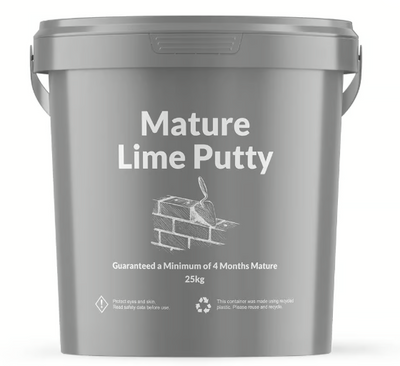
Roundtower Mature Lime Putty is matured for a minimum of four months before supply.
Maturation produces a smooth, highly workable binder that can be mixed with suitable aggregates to make traditional mortars and plasters or diluted appropriately for limewash production.
Why Use Lime Putty?
Lime putty is valued particularly for its workability, plasticity, softness and high vapour permeability.
These characteristics can be advantageous when working with older masonry, where a relatively soft and accommodating mortar or plaster may be more compatible than a dense, high-strength cement-based alternative.
Material selection should still respond to the actual masonry, exposure and function required rather than assuming that the softest lime is automatically correct for every building.
Non-Hydraulic vs Natural Hydraulic Lime
The principal difference is the way the two materials harden.
Non-hydraulic lime relies mainly on carbonation and therefore requires suitable exposure to air during curing.
Natural Hydraulic Lime (NHL) also contains naturally occurring reactive compounds that allow a hydraulic set to develop in the presence of water.
NHL generally develops early strength more quickly and can be useful where environmental exposure or construction requirements make a hydraulic set desirable.
Neither type is universally better. The appropriate lime should be selected according to the existing masonry, exposure, joint or coat thickness, required strength and original building materials.
Non-Hydraulic Lime for Pointing
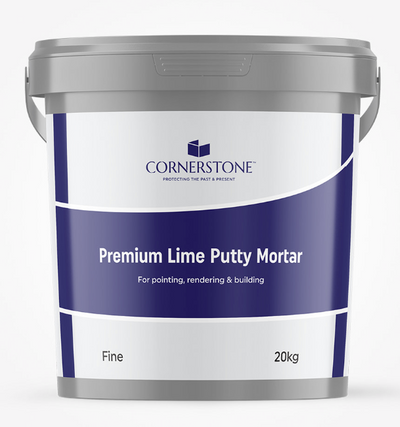
Lime-putty mortars can be particularly suitable for pointing soft brick, stone and historic masonry where a soft, workable and vapour-open mortar is required.
Aggregate selection is extremely important.
The colour, grading, particle shape and maximum aggregate size can influence the appearance, workability, moisture behaviour and durability of the finished mortar.
For conservation work, examining the original mortar and matching its physical and visual characteristics can be more appropriate than selecting a generic mix solely from the age of the building.
Non-Hydraulic Lime Plaster
Lime putty has a long history of use in traditional internal plastering.
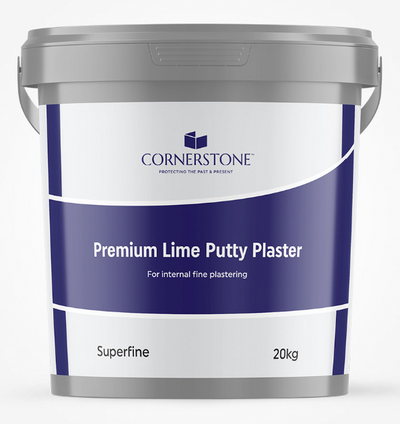
Its high plasticity makes it particularly suitable for lime plaster base coats, fine finishes, decorative work and repairs to existing lime plaster.
Background suction, coat thickness and drying conditions need to be carefully controlled because non-hydraulic lime cures more slowly than hydraulic or gypsum-based materials.
Heritage Finish 35
Heritage Finish 35 is a ready-mixed non-hydraulic lime-putty mortar manufactured using Roundtower Mature Lime Putty and carefully graded natural sands.
It can be used for pointing, general traditional masonry work and fine finishing coats, with a recommended finish-coat thickness of approximately 3mm.
Its ready-mixed format provides a consistent lime-to-aggregate combination while retaining the characteristics associated with a non-hydraulic lime-putty binder.
Heritage Lime Skim 66
Heritage Lime Skim 66 is a smooth internal finishing plaster produced from matured non-hydraulic lime putty, selected fine aggregates and chalk dust.
It is designed as the final finish over compatible lime plaster backgrounds and can be applied at approximately 2–3mm.
It provides a refined alternative where a smoother internal lime finish is required while retaining high vapour permeability.
Can Non-Hydraulic Lime Be Used Externally?
Yes, non-hydraulic lime has historically been used externally for rendering, pointing and other masonry work.
However, the suitability of a particular mortar depends strongly on exposure, detailing, season, background, coat or joint thickness and curing conditions.
On more exposed elevations or where increased early durability is required, a weak hydraulic lime or a carefully designed non-hydraulic mortar incorporating a suitable pozzolan may sometimes be more appropriate.
The choice should therefore be made for the particular building rather than applying a simple rule that all external work requires NHL.
Pozzolans & Non-Hydraulic Lime
A pozzolan is a reactive material that can be introduced into a suitable non-hydraulic lime mortar to develop a degree of hydraulic reaction.
Historically and today, materials such as calcined clay, brick dust and other reactive siliceous materials can be used for this purpose.
Adding a pozzolan changes the behaviour of the mortar and should therefore be done deliberately according to the required performance rather than simply to increase strength.
Curing Non-Hydraulic Lime
Because non-hydraulic lime depends heavily on carbonation, curing conditions are important.
Fresh work should be protected from frost, heavy rain, strong sunlight and rapid drying caused by wind or high temperatures.
Controlled moisture loss is desirable. Allowing the surface to dry too rapidly can increase the risk of shrinkage and poor curing.
Suitable protection, including hessian where appropriate, can help create better curing conditions.
Storing Lime Putty
Lime putty can be stored for extended periods when it is kept sealed, protected from contamination and prevented from drying out.
Unlike hydraulic lime, properly stored lime putty does not need to be used immediately simply because it has been slaked.
Indeed, maturation is traditionally associated with improved workability and plasticity.
Decorating Non-Hydraulic Lime Plaster
A newly applied lime plaster should be allowed to cure appropriately before decoration.
Compatible vapour-open finishes such as limewash and suitable mineral silicate paints can maintain the low vapour resistance of the plaster system.
The correct coating should be chosen according to whether the surface is internal or external, the condition of the lime plaster and the manufacturer's substrate requirements.
Frequently Asked Questions
What is non-hydraulic lime?
Non-hydraulic lime is a lime binder that hardens primarily through carbonation by reacting with carbon dioxide from the air.
In putty form, it is produced by slaking suitable high-calcium quicklime with excess water.
Is lime putty the same as non-hydraulic lime?
Lime putty is one common form of non-hydraulic lime.
The terms are often used together, although non-hydraulic lime can also exist in other forms.
What is the difference between lime putty and NHL?
Lime putty hardens mainly by carbonation.
Natural Hydraulic Lime develops both a hydraulic set and subsequent carbonation, allowing it to gain early strength differently from non-hydraulic lime.
Is non-hydraulic lime suitable for old buildings?
It can be highly suitable for many traditional buildings, particularly where soft, workable and vapour-open mortars or plasters are appropriate.
The original masonry and mortar, degree of exposure and required function should determine the final specification.
Can lime putty mortar be used outside?
Yes.
External use is possible, but exposure, weather protection, curing and mortar design need careful consideration. More exposed applications may sometimes require a weak hydraulic lime or a non-hydraulic mortar modified with a suitable pozzolan.
How long should lime putty mature?
Roundtower Mature Lime Putty is matured for a minimum of four months before supply.
Traditional guidance generally recognises that appropriate maturation improves the workability of lime putty.
How long can lime putty be stored?
Properly stored lime putty can be kept for extended periods when protected from contamination, frost and drying.
Can I use normal emulsion over lime plaster?
Where maintaining the vapour-open characteristics of the wall is important, a compatible vapour-permeable coating such as limewash or an appropriate mineral paint is generally preferable.
Check the requirements of the particular paint system and ensure the lime plaster has cured sufficiently before decorating.
Need Help Choosing a Lime?
Choosing between lime putty, non-hydraulic mortar, NHL 2, NHL 3.5 or another lime system depends on the existing masonry, exposure and application.
Roundtower Lime can help assess the project and recommend an appropriate binder, mortar or plaster system for traditional and conservation work.