Why Choose Aluminium Gutters & Downpipes?
Aluminium rainwater goods provide a practical alternative where the appearance of traditional gutters and downpipes is required without the weight and maintenance characteristics associated with cast iron.
The Alumasc Heritage range combines traditionally proportioned gutter and downpipe designs with modern aluminium construction and factory-applied protective finishes.
Typical applications include:
- period properties;
- traditional houses;
- renovation projects;
- extensions;
- traditionally detailed new homes;
- commercial buildings;
- and appropriate conservation projects.
The Alumasc Heritage Rainwater System
Roundtower supplies components from the Alumasc Heritage aluminium rainwater system.
The current Roundtower range centres on:
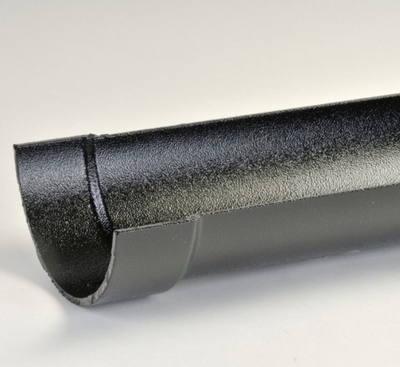
Half Round cast aluminium gutters
and
traditional circular aluminium downpipes with cast collar fittings.
Matching system components include:
- gutter outlets;
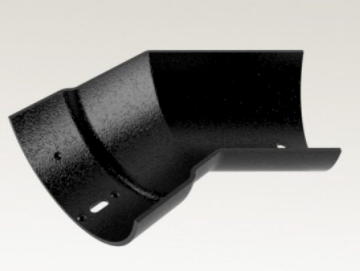
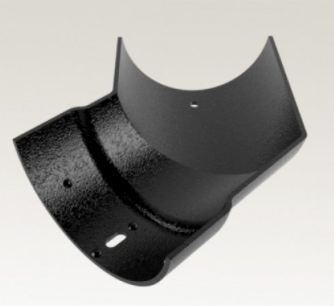
- 90° and 135° gutter angles;
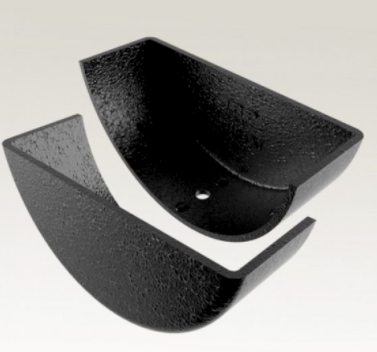
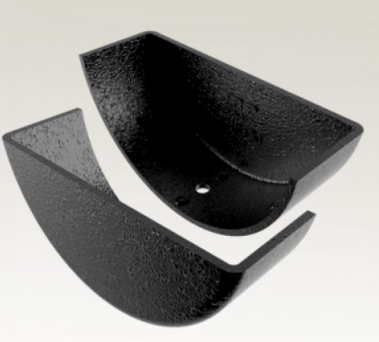
- stop ends;
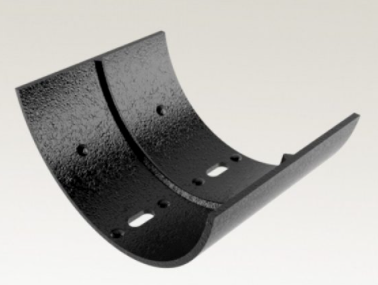
- gutter connectors;
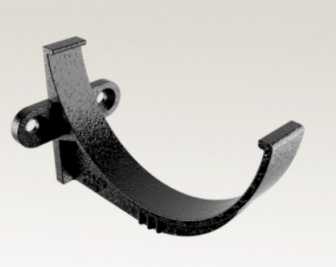
- fascia brackets;
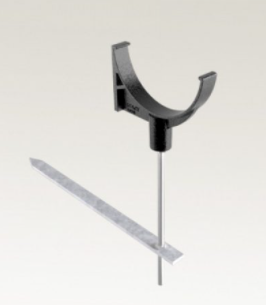
- rise-and-fall brackets;
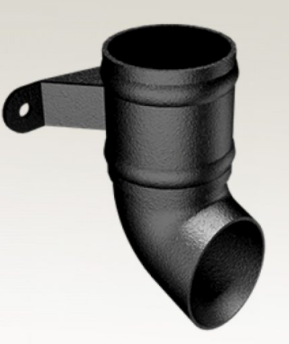
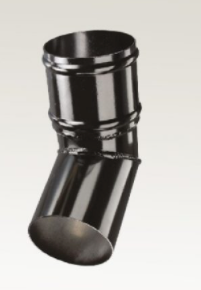
- circular downpipe bends;
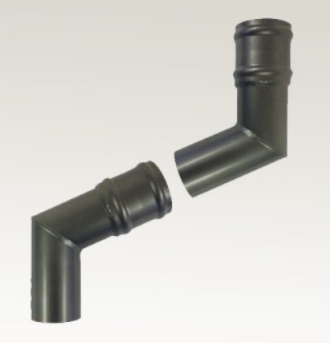
- projection offsets;
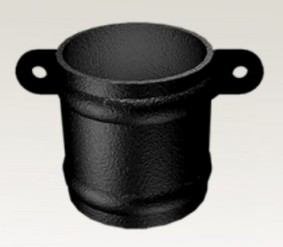
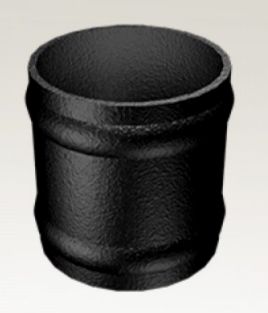
- collars;
- shoes;
- and associated fittings.
This allows the principal components of a coordinated rainwater installation to be selected from one compatible system.
Traditional Appearance
One of the main reasons for specifying the Heritage range is its traditional appearance.
The gutter and pipe profiles have been developed for buildings where standard lightweight modern rainwater goods would look visually inappropriate.
This can make aluminium particularly useful where a project requires traditional proportions and detailing but genuine cast iron is not essential.
Cast Aluminium Gutters
The Heritage gutters are manufactured in cast aluminium and reproduce the substantial appearance associated with traditional metal guttering.
Roundtower's current online range focuses on the Half Round gutter profile, together with the fittings needed to create a complete installation.
Half Round is one of the most versatile traditional gutter profiles and can suit a broad range of period and traditionally detailed buildings.
Heritage Circular Downpipes
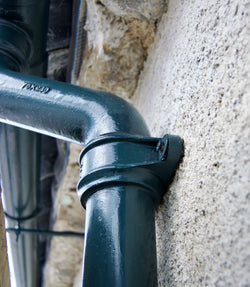
The Heritage downpipe system uses extruded aluminium pipe sections with separate cast sockets and fittings.
The sockets create the traditional collared appearance associated with older cast-metal downpipes while retaining the lower weight of aluminium.
Roundtower currently offers circular downpipe options together with matching bends, offsets, collars and shoes.
Why Use Collared Downpipes?
Traditional rainwater pipes often have clearly visible socket or collar details at each joint.
The Heritage system reproduces this appearance using separate cast sockets.
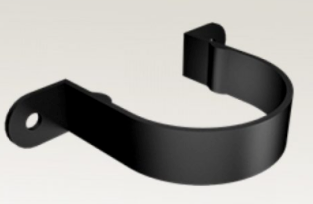
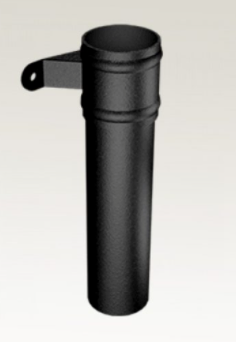
Depending on the detail required, collars can incorporate fixing ears or be used with alternative pipe clips and brackets.
This provides flexibility when matching both the appearance and projection of an existing rainwater installation.
Lightweight Construction
One of aluminium's major practical advantages is its low weight.
Compared with cast iron, aluminium rainwater components are considerably easier to:
- transport;
- lift;
- position;
- handle at height;
- and install.
This can be particularly useful on projects with restricted access or where long gutter and pipe runs need to be installed at roof level.
The supporting structure and fixings should still be appropriate for the selected system.
Corrosion Resistance
Aluminium does not rust in the same way as ferrous metals.
Its inherent corrosion resistance makes it well suited to external rainwater applications when combined with the appropriate protective finish and compatible fixings.
The complete installation should still be specified according to its environment, particularly in highly exposed or marine locations.
Powder-Coated Finish
The Alumasc Heritage system is available with a factory-applied polyester powder-coated finish.
Factory finishing provides a consistent decorative and protective surface before the components reach site.
A broad range of standard colours is available, together with additional BS and RAL colours for suitable projects.
This allows the rainwater system to be coordinated with:
- windows;
- doors;
- roof finishes;
- painted façades;
- architectural metalwork;
- and other external details.
Traditional Black Finish
Black remains one of the most popular colours for traditional rainwater systems.
Where an appearance closer to traditional cast iron is required, textured black finishing options can provide additional visual character.
Other colours can be equally appropriate depending on the architectural design of the property.
Aluminium vs Cast Iron
Both aluminium and cast iron can be excellent rainwater materials, but they offer different characteristics.
Choose aluminium where:
- lower weight is important;
- easier handling is desirable;
- reduced coating maintenance is preferred;
- corrosion resistance is a priority;
- or a traditional appearance is required without specifying genuine cast iron.
Choose cast iron where:
- authentic traditional material is particularly important;
- original cast iron is being matched;
- the substantial weight and character of cast iron is desired;
- or the conservation specification specifically calls for cast iron.
Neither material is automatically the correct choice for every traditional building.
Aluminium for Traditional Buildings
Aluminium can provide a very convincing traditional rainwater appearance.
Its suitability should still be considered in relation to the particular building.
For many renovation and traditionally designed projects, it provides an attractive balance between:
- traditional appearance;
- durability;
- relatively low weight;
- ease of installation;
- and reduced maintenance.
Where important original cast iron rainwater goods survive, retaining or matching the original material may sometimes be the preferred conservation approach.
Protected & Historic Buildings
The use of aluminium should not be described as automatically approved for every protected or listed building.
The appropriate rainwater material may depend on:
- surviving original fabric;
- architectural significance;
- planning requirements;
- conservation requirements;
- existing rainwater profiles;
- and the extent of the proposed alteration.
For significant historic buildings, the rainwater specification should therefore be considered as part of the wider conservation approach.
Half Round Gutters
The Roundtower aluminium range currently includes Half Round gutters together with the necessary fittings for forming straight runs, internal and external corners and gutter terminations.
Half Round is a classic gutter profile that works well with a wide range of architectural styles.
The appropriate gutter size should be selected according to the required drainage capacity rather than appearance alone.
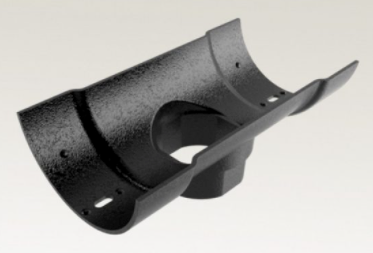
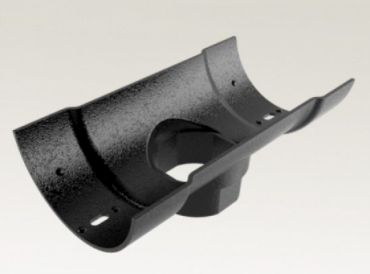
Gutter Outlets
Gutter outlets connect the horizontal gutter run to the vertical downpipe.
Roundtower supplies Half Round outlets suitable for connection into the corresponding rainwater system.
Outlet position and size can significantly affect the capacity of the overall gutter installation.
A long gutter run may require more than one outlet depending on the roof area and drainage calculation.
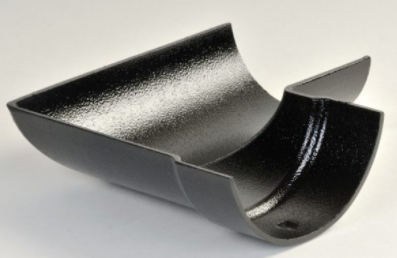
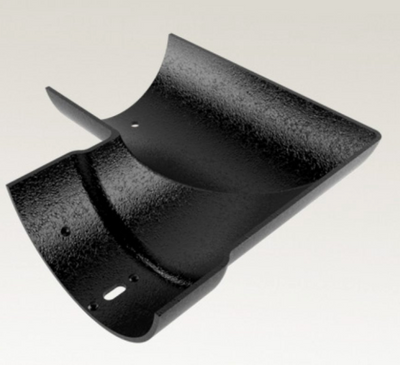
Internal & External Gutter Angles
Buildings rarely consist of a single straight gutter run.
Roundtower supplies 90° and 135° internal and external angles for the Half Round system.
These allow the gutter to follow the building perimeter while maintaining a coordinated system.
Correct falls and jointing remain important around changes in direction.
Stop Ends
Stop ends close the open ends of a gutter run.
The Roundtower range includes left-hand and right-hand external stop ends for the Heritage Half Round gutter system.
Correct orientation should be confirmed when ordering to ensure the appropriate fitting is selected.
Gutter Joint Connectors
Joint connectors allow gutter sections and fittings to be joined while accommodating the requirements of the Heritage system.
Joints should be completed using the specified jointing and sealing method.
Correct joint preparation is essential to reducing the risk of leakage during service.
Fascia Brackets
Fascia brackets support the gutter from an appropriate fascia or fixing surface.
Correct bracket spacing is important to maintain:
- gutter alignment;
- the required fall;
- adequate support;
- and long-term stability.
The supporting background should be capable of accepting the required fixings.
Rise & Fall Brackets
Rise-and-fall brackets provide an alternative method of supporting guttering where a conventional fascia arrangement is not suitable or where traditional detailing is preferred.
They are particularly useful on some older buildings where the roof edge and eaves construction do not provide a conventional modern fascia board.
The bracket arrangement should be selected to suit both the building and gutter system.
Circular Aluminium Downpipes
Circular downpipes provide the vertical route for transferring roof water from the gutter outlet towards the ground drainage system.
The downpipe needs to be appropriately sized for the amount of water being discharged through the gutter outlet.
Roundtower's Heritage circular system includes the fittings required to deal with typical façade projections and discharge arrangements.
Downpipe Bends
Bends allow the downpipe to change direction around architectural features.
They can be particularly useful below roof overhangs and around cornices where the gutter outlet does not align directly with the required vertical pipe position.
The layout should remain as simple as practical to maintain good water flow and make future maintenance easier.
Projection Offsets
Projection offsets allow the downpipe to move around projections in the building façade while retaining the traditional pipe arrangement.
These can be useful around:
- cornices;
- eaves;
- string courses;
- rendered projections;
- and other architectural features.
The offset should be planned carefully so the downpipe remains properly supported.
Pipe Collars
The Heritage system uses cast collars to create its characteristic traditional socketed appearance.
Collars are available in different configurations, including versions with fixing ears.
These allow the pipe installation to be adapted to different wall projections and fixing arrangements.
Downpipe Shoes
A downpipe shoe can be used where rainwater is discharged from the bottom of the pipe into an appropriate open drainage arrangement.
The shoe directs the flow away from the wall.
Rainwater should not simply be discharged at the foot of traditional masonry, as repeated concentrated wetting can contribute to unnecessary moisture within the wall.
Where the pipe connects to underground drainage, an appropriate connection detail should be used instead.
Choosing the Correct Gutter Size
Gutter sizing should reflect the amount of rainwater reaching the system.
Important factors include:
- roof area;
- roof pitch;
- local rainfall intensity;
- gutter length;
- gutter profile;
- number of outlets;
- outlet size;
- and downpipe capacity.
Where roof areas are substantial or drainage arrangements are complicated, appropriate rainwater calculations should be carried out.
The Whole Rainwater System Matters
A rainwater system should be considered as a continuous drainage path:
Roof
→ Gutter
→ Outlet
→ Downpipe
→ Drainage
Increasing the size of only one component does not automatically increase the capacity of the entire system.
A restriction at the gutter, outlet, pipe or drainage connection can affect overall performance.
Aluminium Gutters on Traditional Masonry
Effective rainwater management is particularly important on solid stone and brick buildings.
Traditional masonry can absorb significant quantities of liquid water.
A leaking gutter or downpipe can concentrate roof water onto a relatively small area of wall, potentially resulting in prolonged wetting.
This can contribute to:
- saturation of masonry;
- deterioration of mortar joints;
- staining;
- frost-related damage;
- deterioration of external finishes;
- and damage to internal decorative surfaces.
Maintaining rainwater goods is therefore one of the important elements of moisture management in older buildings.
Aluminium Gutters & Lime Render
Lime render is designed to manage normal environmental wetting and drying, but it should not be expected to accommodate continuous concentrated drainage from a defective gutter.
If a rendered façade is showing localised deterioration directly beneath an overflowing gutter or leaking pipe, the rainwater defect should be addressed before the render is repaired.
Coastal & Exposed Locations
Aluminium's corrosion resistance can make it an attractive material for exposed locations.
However, coastal environments remain aggressive to external building components.
The selected:
- powder coating;
- fixings;
- joints;
- accessories;
- and maintenance regime
should therefore be appropriate to the exposure conditions.
The manufacturer's recommendations should be followed for demanding marine environments.
Maintenance
Aluminium rainwater systems require relatively little maintenance, but they should not be described as maintenance-free.
Periodic inspection should include:
- clearing leaves and moss;
- checking gutter outlets;
- inspecting joints;
- checking brackets and fixings;
- inspecting downpipes;
- and identifying any damage to the protective finish.
Regular cleaning also helps maintain the appearance of the powder-coated surface.
Leaves & Blocked Gutters
Leaves, moss and other debris can substantially reduce the effective capacity of a gutter.
This is particularly relevant to properties surrounded by mature trees.
Gutters should be inspected and cleaned periodically, with the required frequency determined by the individual site.
Blocked outlets should be cleared before overflowing water begins to affect the building façade.
Service Life
The service life of an aluminium rainwater system depends on the environment, coating, installation and maintenance.
Exposure conditions can make a significant difference, particularly between sheltered inland sites and aggressive industrial or marine environments.
For this reason, expected service life should be considered alongside the manufacturer's published guidance for the particular exposure rather than relying on a single universal lifespan figure.
Recyclability
Aluminium is recyclable and can be recovered at the end of the rainwater system's service life.
This, combined with its durability and relatively low maintenance requirements, can be a useful consideration when selecting external building materials.
Replacing Existing Gutters
When replacing an existing rainwater system, record:
- gutter profile;
- gutter dimensions;
- downpipe diameter;
- location of outlets;
- pipe projection;
- bracket arrangement;
- existing colour;
- and any important architectural details.
Photographs and measurements can help Roundtower identify the most suitable components.
Matching Cast Iron Appearance
One of the advantages of the Alumasc Heritage range is its ability to reproduce the visual character of traditional cast rainwater goods using aluminium.
Where permitted by the project specification, this can provide a useful alternative to cast iron while retaining:
- traditional gutter proportions;
- visible pipe collars;
- traditional bracket arrangements;
- and heritage-style finishes.
New Construction
The Heritage system is not limited to older buildings.
It can also be used on new construction where traditional architectural detailing is part of the design.
This includes:
- new houses;
- extensions;
- commercial developments;
- public buildings;
- and developments designed to complement an established historic setting.
Frequently Asked Questions
What aluminium gutters does Roundtower supply?
Roundtower's current online Heritage range includes Half Round cast aluminium gutters together with outlets, angles, stop ends, brackets and connectors.
What aluminium downpipes does Roundtower supply?
Roundtower supplies traditional circular Heritage aluminium rainwater pipes with cast collar fittings, together with bends, offsets, shoes and associated components.
Are the downpipes cast aluminium?
The Heritage downpipe system uses extruded aluminium pipe sections with cast sockets and fittings, creating the appearance of traditional socketed rainwater pipes.
Is aluminium lighter than cast iron?
Yes.
The significantly lower weight of aluminium generally makes components easier to handle, lift and install than equivalent cast iron rainwater goods.
Does aluminium rust?
Aluminium does not rust in the same way as iron or steel and provides good inherent corrosion resistance.
The finish and complete installation should still be appropriate to the environmental exposure.
Are aluminium gutters maintenance-free?
No.
They are relatively low maintenance, but gutters still need cleaning and inspection and damaged finishes or joints should be addressed when required.
Are aluminium gutters suitable for period buildings?
They can be particularly suitable where a traditional rainwater appearance is required while the lower weight and reduced maintenance of aluminium are desirable.
Are aluminium gutters automatically suitable for protected structures?
No.
On protected or architecturally significant buildings, the material and profile should be considered as part of the individual conservation specification.
What colours are available?
The Alumasc Heritage system is available in a wide selection of factory-applied colours, with additional BS and RAL colour options available for suitable projects.
Can aluminium look like cast iron?
Yes.
The traditional profiles, collar details and available textured finishes can create an appearance closely associated with traditional cast iron rainwater goods.
How do I choose the correct gutter size?
The required size depends on roof area, rainfall intensity, roof pitch, gutter length, number of outlets and downpipe capacity.
Larger or complicated roofs may require rainwater calculations.
Do you supply all the fittings?
Roundtower's current collection includes the principal fittings required for the Half Round gutter and circular collar downpipe system, including angles, outlets, stop ends, brackets, bends, offsets, collars and shoes.
Can aluminium gutters be used near the coast?
Aluminium has good corrosion resistance, but marine exposure remains demanding.
The complete coating, fixing and installation specification should be suitable for the site's exposure conditions.
Can Roundtower Help Select an Aluminium Rainwater System?
Yes.
If you are replacing or specifying aluminium gutters, downpipes or associated rainwater fittings, contact Roundtower Lime with photographs, dimensions and information about the building and roof arrangement.
We can help identify suitable gutters, downpipes, brackets, outlets and fittings for a coordinated Alumasc Heritage rainwater system.