Choosing Solid Wall Insulation
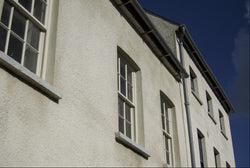
Insulating a traditional solid wall requires a different approach from insulating a modern cavity wall.
Older stone and brick walls can absorb, store, redistribute and release moisture. The insulation system therefore needs to be considered alongside the existing masonry, mortar, external exposure, internal environment and available drying routes.
The objective is to improve thermal performance and internal comfort while maintaining a robust wall construction.
Internal Wall Insulation
Internal wall insulation can significantly reduce heat loss through solid masonry and increase the temperature of the internal wall surface.
Warmer internal surfaces can improve comfort and reduce the likelihood of cold-surface condensation.
However, insulating internally also means that the original masonry generally becomes colder during winter.
This changes the temperature and moisture conditions within the wall, which is why internal insulation should be treated as a complete wall system rather than simply an insulation product.
Which Solid Wall Insulation Should I Choose?
There is no single system that is best for every building.
The most appropriate solution depends on factors including:
- wall construction;
- wall thickness;
- stone or brick type;
- masonry condition;
- existing moisture;
- driving-rain exposure;
- internal floor area;
- required thermal performance;
- window and door details;
- and the intended internal finish.
Roundtower offers several different approaches so that the insulation can be selected according to the building rather than forcing every project into one system.
Roundtower SuperTherm
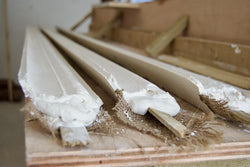
Roundtower SuperTherm is an ultra-lightweight insulating lime plaster designed for internal insulation of solid masonry.
With a thermal conductivity of approximately 0.0395 W/mK, it provides exceptionally high thermal resistance for a directly applied mineral plaster.
Because SuperTherm is applied wet directly onto the wall, it can follow irregular stone and rubble masonry without requiring battens, framing or hidden voids behind the insulation.
This can make it particularly useful for:
- irregular rubble stone;
- curved walls;
- complex room geometry;
- traditional cottages;
- historic masonry;
- and situations where maintaining a continuous insulation layer is important.
SuperTherm should be finished with the dedicated Roundtower SuperTherm Finishing Plaster, incorporating reinforcement mesh within the finishing system.
SuperTherm & Uneven Stone Walls
One of the principal advantages of an insulating plaster on historic stonework is its ability to follow the existing wall.
Traditional rubble walls are rarely perfectly flat.
Attempting to install rigid boards over a highly irregular surface can require substantial levelling work or risk leaving unintended voids behind the insulation.
A directly applied insulating plaster creates intimate contact with the masonry and can provide a more continuous thermal layer across irregular backgrounds.
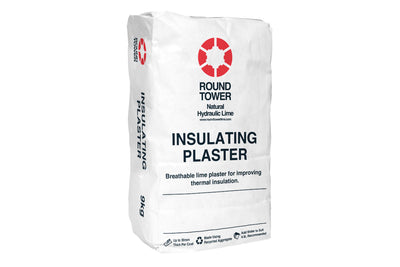
Roundtower Insulating Plaster
Roundtower Insulating Plaster is an NHL 2-based lightweight insulating and levelling plaster with a thermal conductivity of 0.095 W/mK.
It provides a useful thermal improvement while also helping to level irregular stone and brick backgrounds.
This makes it particularly useful as:
- a standalone moderate thermal upgrade;
- a levelling plaster on irregular masonry;
- a preparation coat beneath suitable wood fibre systems;
- or an internal or external insulating lime plaster.
It can typically be applied at up to approximately 30mm per pass.
Finishing Roundtower Insulating Plaster
For internal applications, Roundtower Insulating Plaster can typically be finished with:
Heritage Lime Skim 66 where a smooth internal finish is required,
or
Heritage Finish 35 where a fine traditional lime finish is preferred.
For external applications, a typical Roundtower system is:
Roundtower Insulating Plaster → Roundtower NHL 2 Coarse → Beeck Renosil.
The finishing system should always reflect whether the plaster is being used internally or externally.
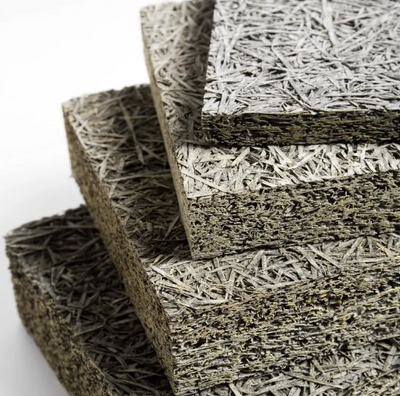
STEICO Internal Wood Fibre Insulation
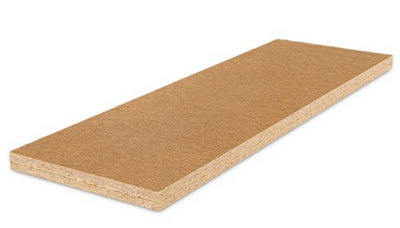
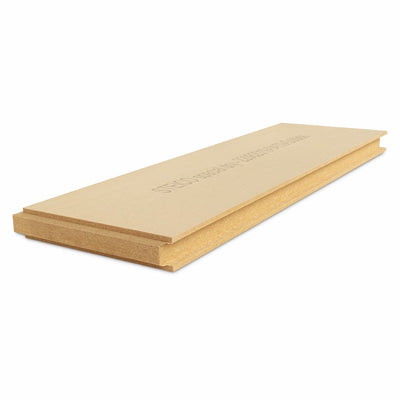
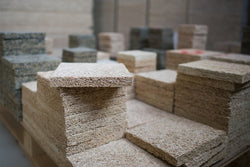
STEICO Internal is a rigid wood fibre insulation board specifically designed for internal insulation of masonry and mineral walls.
Its technical properties include:
- thermal conductivity: 0.038 W/mK;
- vapour diffusion resistance factor: μ 5;
- density: approximately 160 kg/m³;
- specific heat capacity: approximately 2100 J/kgK.
STEICO Internal combines good thermal performance with moisture-storage capacity and relatively low vapour resistance.
Preparing Walls for STEICO Internal
STEICO Internal requires a continuous, sufficiently flat and solid background.
It should not simply be fixed across highly irregular stonework while leaving significant voids behind the board.
Where the original masonry is uneven, Roundtower Insulating Plaster can be used to create an appropriate levelling coat before the wood fibre board system is installed.
This allows the insulation to remain in close contact with the wall.
Roundtower Internal Wood Fibre Board System
Rather than considering STEICO Internal as an isolated board, it is preferable to think of it as part of a complete internal insulation system.
A typical Roundtower build-up includes:
existing masonry → suitable levelling plaster where required → STEICO Internal → Roundtower Board Render → reinforcing mesh → compatible lime finish → suitable mineral decorative finish.
The exact build-up should respond to the existing wall and project requirements.
SkamoWall Calcium Silicate
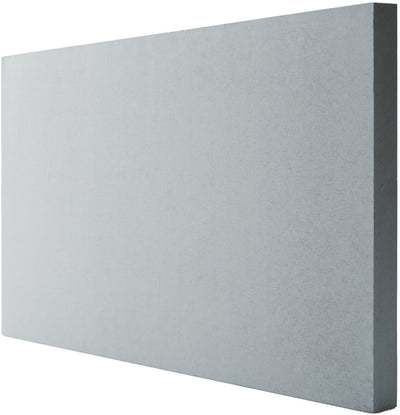
SkamoWall is a calcium silicate internal insulation system.
It has a thermal conductivity of approximately 0.068 W/mK and is classified A1 non-combustible.
Calcium silicate has a highly porous structure capable of absorbing, temporarily storing and releasing moisture.
SkamoWall can therefore be particularly useful where the design priority includes:
- increasing cold internal surface temperatures;
- moisture tolerance;
- mineral construction;
- mould-sensitive locations;
- and areas where non-combustibility is important.
Its thermal performance per millimetre is lower than SuperTherm or STEICO Internal, but thermal conductivity is not the only reason for selecting an internal insulation system.
SkamoWall Is Not a Cure for Rising Damp
Moisture-tolerant insulation should not be confused with treating the source of moisture.
SkamoWall can help manage moisture at the internal surface, but it does not repair:
- leaking gutters;
- penetrating rain;
- groundwater;
- defective drains;
- plumbing leaks;
- or other significant sources of water.
Existing moisture problems should still be investigated before insulation is installed.
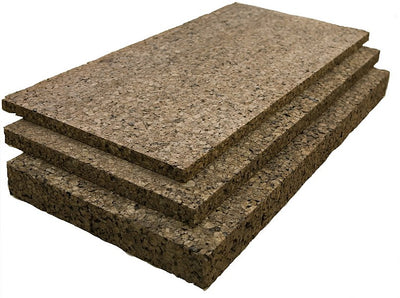
Expanded Cork Insulation
Expanded cork provides another vapour-permeable board insulation option.
Roundtower's cork boards have a thermal conductivity of approximately 0.036–0.040 W/mK and are available in a range of thicknesses.
Cork can provide:
- thermal insulation;
- acoustic benefits;
- vapour permeability;
- dimensional stability;
- and resistance to biological degradation.
It can be used as part of suitable internal or external wall systems.
As with wood fibre, the complete fixing, reinforcement and finishing system should be considered rather than treating the board in isolation.
Thermal Conductivity vs U-Value
Thermal conductivity, or lambda value, describes how readily heat passes through the insulation material itself.
The U-value describes heat transfer through the complete wall.
A lower lambda means that a material provides more thermal resistance at a given thickness, but the final wall U-value also depends on:
- insulation thickness;
- masonry thickness;
- masonry conductivity;
- internal and external plaster;
- and the other layers within the wall.
This means that insulation products should not be compared solely by their lambda values.
How Much Insulation Should I Install?
More insulation generally produces a lower U-value, but internal solid-wall insulation should not automatically be designed on the principle that thicker is always better.
Increasing insulation thickness changes the temperature profile through the wall and generally leaves the original masonry colder during winter.
It can also make junction detailing increasingly important.
The final thickness should balance:
- thermal improvement;
- moisture behaviour;
- available room space;
- window reveals;
- floor and ceiling junctions;
- architectural details;
- and project objectives.
Moisture & Solid Walls
Traditional masonry does not manage moisture solely through water-vapour diffusion.
Moisture can also move through:
- capillary absorption;
- liquid redistribution;
- evaporation;
- moisture storage;
- and rainfall penetration.
This is why the word “breathable” should not be used as the only measure of whether an insulation system is appropriate.
A low vapour resistance can support drying, but the overall moisture behaviour of the complete wall remains important.
Driving Rain
Driving-rain exposure is particularly important when insulating solid masonry internally.
An exposed wall facing prevailing weather can receive substantially more external moisture than a sheltered elevation.
Before installing internal insulation, check:
- external pointing;
- lime render;
- cracks;
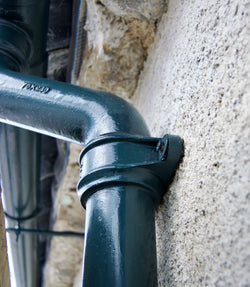
- gutters;
- downpipes;
- flashings;
- copings;
- window sills;
- roof junctions;
- and external ground levels.
Internal insulation should not be used to conceal unresolved rain penetration.
Exposed & Coastal Buildings
Highly exposed buildings may require additional assessment before substantial internal wall insulation is installed.
This is particularly relevant with:
- exposed coastal buildings;
- thick rubble stone walls;
- highly absorbent masonry;
- buildings with known historic dampness;
- and walls receiving significant wind-driven rain.
In these situations, hygrothermal assessment can help investigate how the wall may respond to different insulation systems and thicknesses.
Window & Door Reveals
Window and door reveals are common areas of thermal bridging.
If the main wall is heavily insulated while the reveal remains uninsulated, the reveal may become the coldest internal surface.
Where possible, a thinner insulation layer can be returned into reveals to improve thermal continuity.
The correct reveal insulation depends on the principal wall system and the available space around the frame.
Floor & Ceiling Junctions
Internal wall insulation should also be considered at:
- suspended timber floors;
- intermediate floors;
- ceilings;
- internal partitions;
- roof junctions;
- and embedded timber.
These junctions can remain significant thermal bridges even where the main wall has been well insulated.
Continuity of insulation should therefore be considered during the design stage rather than after the main wall has already been completed.
Embedded Timber
Timber joist ends embedded within solid masonry deserve particular attention when internal insulation is added.
Because the masonry becomes colder after internal insulation, the temperature and drying conditions around embedded timber can change.
Wall moisture, rain exposure and the condition of existing timber should therefore be considered as part of the retrofit assessment.
Existing Damp
Insulation should not be expected to correct an unresolved building defect.
Before insulating a damp wall, investigate possible causes including:
- leaking rainwater goods;
- open joints;
- cracked render;
- roof defects;
- plumbing leaks;
- defective drainage;
- high external ground levels;
- and persistent external water exposure.
Once correctable moisture sources have been addressed, the insulation system can be selected according to the remaining wall conditions.
U-Value Calculations
Roundtower can provide U-value modelling to compare insulation systems and thicknesses.
This can help determine how proposed insulation changes the estimated thermal performance of the existing wall and whether increasing the insulation thickness produces a worthwhile additional improvement.
U-value calculations are particularly useful when comparing alternative solid-wall insulation strategies.
WUFI Hygrothermal Analysis
For more complex projects, Roundtower can also provide WUFI hygrothermal analysis.
WUFI models heat and moisture behaviour through the construction over time using changing climate conditions and material properties.
It can be particularly useful for:
- exposed solid walls;
- unusually thick masonry;
- internal wall insulation;
- walls with elevated initial moisture;
- substantial insulation thicknesses;
- and comparisons between alternative retrofit systems.
WUFI should be regarded as a design-support tool rather than a guarantee of future building performance.
Choosing Between the Systems
As a general guide:
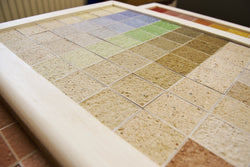
Roundtower SuperTherm — particularly useful for high thermal performance on irregular solid masonry.
Roundtower Insulating Plaster — useful for moderate thermal improvement, levelling and irregular backgrounds.
STEICO Internal — particularly suitable where a high-performance wood fibre board system can be installed onto a flat or prepared masonry surface.
SkamoWall — useful where a mineral, moisture-tolerant and non-combustible internal insulation system is required.
Expanded Cork — a versatile vapour-permeable insulation board for suitable internal and external wall systems.
The building should determine the system rather than the system determining the building.
Frequently Asked Questions
What is the best insulation for an old stone wall?
There is no single best product for every stone wall.
Wall condition, exposure, moisture, available thickness and required thermal performance should all influence the decision.
What is best for an uneven rubble stone wall?
A directly applied insulating plaster can be particularly useful because it follows the existing masonry without requiring a perfectly flat background.
Roundtower SuperTherm offers especially high thermal resistance for this type of plaster system.
Can wood fibre board be applied directly to stone?
STEICO Internal is intended for masonry insulation, but the wall needs to provide a suitable continuous and sufficiently flat background.
Irregular stonework may first require a levelling plaster.
Is SuperTherm suitable externally?
Roundtower SuperTherm is an internal insulating plaster system.
For external insulating lime plaster applications, Roundtower Insulating Plaster should be considered instead.
Does breathable insulation prevent condensation?
No.
Vapour permeability is beneficial, but condensation risk also depends on surface temperatures, indoor humidity, air leakage, thermal bridges, exposure and the complete wall build-up.
Do old walls need to breathe?
“Breathing” is useful shorthand, but traditional walls manage moisture through several mechanisms including vapour diffusion, capillary transport, storage and evaporation.
The objective is to maintain appropriate drying potential rather than simply selecting the material with the lowest vapour resistance.
How thick should solid wall insulation be?
There is no universal thickness.
The appropriate depth depends on thermal targets, wall construction, exposure, moisture behaviour, room dimensions and junction detailing.
Can I insulate a damp wall?
The source of significant dampness should be investigated first.
Some insulation systems tolerate moisture better than others, but insulation should not be used to hide an unresolved leak or rainwater defect.
What finish should be used over SuperTherm?
Roundtower SuperTherm should be finished with Roundtower SuperTherm Finishing Plaster and reinforcing mesh, followed by a compatible mineral decorative finish where required.
Can Roundtower calculate the U-value?
Yes.
Roundtower can calculate and compare the estimated U-values of proposed solid-wall insulation build-ups.
When should WUFI analysis be considered?
WUFI can be particularly useful for highly exposed, thick or moisture-sensitive solid masonry and where substantial internal insulation is proposed.
Can Roundtower help choose the insulation system?
Yes.
Roundtower can assist with system selection, insulation thickness, U-value calculations and WUFI hygrothermal analysis where required.
Need Help Choosing Solid Wall Insulation?
If you are considering insulation for a stone, brick or traditional solid masonry wall, contact Roundtower Lime with photographs, wall thickness, project location and details of the proposed work.
Our technical team can help compare the available insulation systems and develop an appropriate wall build-up for the project.