Choosing an Internal Breathable Paint
The finish applied to a traditional wall becomes part of the overall wall build-up.
Where lime plaster, solid masonry or another vapour-open construction is being used, selecting a paint with low resistance to water-vapour diffusion can help maintain the drying characteristics of the underlying materials.
The correct paint should also take account of the substrate, existing coatings, required durability, appearance and level of maintenance.
What Is a Breathable Interior Paint?
A breathable paint is generally understood as a coating that offers relatively low resistance to water-vapour diffusion.
One useful technical measurement is the Sd-value, or equivalent air-layer thickness.
The lower the Sd-value, the less resistance the coating provides to water-vapour movement.
Breathability should not, however, be confused with solving a damp problem. Persistent moisture should still be investigated and its source addressed.
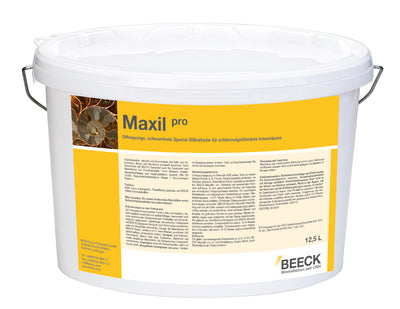
Beeck Maxil Pro
Beeck Maxil Pro is a premium interior silicate paint designed for mineral and other suitably prepared internal substrates.
It combines potassium water glass and silica sol binders with mineral pigmentation to produce a durable matt mineral finish.
Maxil Pro has an Sd-value of approximately 0.01m, meaning it offers extremely low resistance to water-vapour diffusion.
It also achieves Class 1 hiding power and Class 1 wet-scrub resistance, making it particularly useful where the breathability associated with a mineral paint is required alongside a durable and washable internal finish.
Maxil Pro on Lime Plaster
Beeck Maxil Pro can be particularly well suited to lime plaster.
New plaster should first be checked for adequate drying and strength.
Strongly absorbent lime plaster may require an appropriate Beeck Fixative treatment, while any dense sinter skin on solid lime plaster may need to be removed or treated according to the manufacturer's preparation guidance.
Correct substrate preparation is important because even a high-performance paint cannot compensate for a weak, dusty or inadequately cured plaster background.
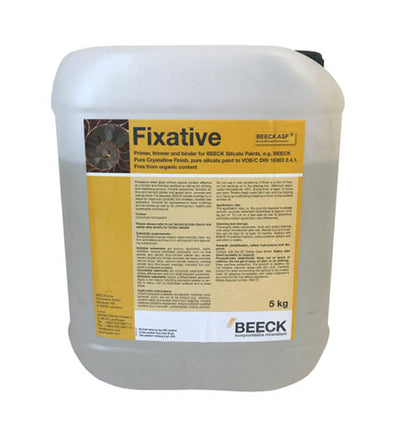
Beeck Fixative
Beeck Fixative is used as a primer, binder and dilution product within selected Beeck mineral paint systems.
On suitable highly absorbent mineral backgrounds, it can help regulate suction before the final paint is applied.
It should not automatically be applied to every wall simply because a mineral paint is being used.
The preparation required depends on the substrate and condition of the existing surface.
Roundtower Lime Paint
Roundtower Lime Paint provides a lime-based alternative where a soft mineral appearance and high vapour permeability are required.
Compared with traditional limewash, lime paint provides greater body and opacity and creates a more familiar painted finish while retaining the character associated with lime-based materials.
It can be particularly suitable for internal lime plaster and compatible mineral backgrounds where a traditional matt appearance is desired.
Limewash for Internal Walls
Limewash is one of the most traditional finishes for lime plaster and suitable mineral masonry.
Its thin application produces the subtle tonal variation and matt appearance associated with traditional interiors.
Limewash is highly vapour open and can work particularly well in historic buildings where maintaining the character and material compatibility of the original wall construction is important.
The appearance is generally less uniform than a conventional modern paint, which should be regarded as part of its character rather than a defect.
Limewash vs Lime Paint
Limewash and lime paint are related but provide different finishes.
Limewash is thinner and typically produces a softer, more translucent and naturally varied appearance.
Lime Paint has greater body and generally provides increased opacity and more uniform coverage.
Both can be appropriate over compatible lime and mineral surfaces.
The choice often comes down to the desired appearance and level of coverage.
Lime Paint vs Mineral Silicate Paint
Lime-based and silicate-based paints can both provide highly vapour-permeable finishes, but their characteristics differ.
Lime paints are particularly useful where a traditional mineral appearance is the priority.
A silicate paint such as Beeck Maxil Pro offers greater resistance to washing and abrasion, together with high opacity and a more consistent modern decorative finish.
Neither option is automatically better. The choice should reflect the substrate, appearance and performance required.
Can Maxil Pro Be Used on Gypsum Plaster?
Yes, Maxil Pro can be used on appropriately prepared gypsum plaster and plasterboard.
The preparation differs from lime plaster and can include a suitable Beeck primer where required.
The substrate must be sound, dry and stable before decoration.
This makes Maxil Pro particularly useful on projects where traditional lime-plastered walls and modern plastered surfaces occur within the same building.
Can Mineral Paint Go Over Existing Emulsion?
In some circumstances, yes.
Sound, firmly adhering matt emulsion coatings can be cleaned, assessed and prepared with an appropriate primer where required before applying Beeck Maxil Pro.
Old glossy, plasto-elastic or unsuitable synthetic coatings may need to be removed.
The important point is that existing paint should be assessed rather than automatically assumed to be compatible or automatically stripped.
Painting New Lime Plaster
Fresh lime plaster should be sufficiently cured before it is painted.
Painting too early can interfere with drying and carbonation and may contribute to inconsistent appearance or coating problems.
The required curing period depends on the lime plaster system, coat thickness, environmental conditions and chosen paint.
Always consider both the plaster manufacturer's and paint manufacturer's application guidance.
Internal Paint & Moisture
Breathable internal paint can help avoid introducing a highly vapour-resistant decorative layer over a vapour-open wall system.
However, paint alone cannot prevent condensation, penetrating damp, rising moisture, salts or plumbing leaks.
Where dampness or mould is present, the cause should be investigated rather than relying solely on the choice of decorative coating.
Internal Paint for Insulated Solid Walls
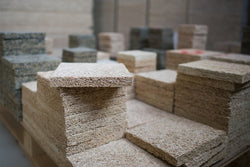
Where traditional solid walls have been internally insulated using vapour-open materials such as wood fibre, calcium silicate or insulating lime plaster, the decorative finish should be considered as part of the complete wall system.
Using a highly vapour-permeable paint can help maintain the intended low vapour resistance of the internal build-up.
The appropriate primer and paint should be matched to the final plaster substrate.
Colour & Finish
Mineral and lime paints produce a characteristically matt appearance.
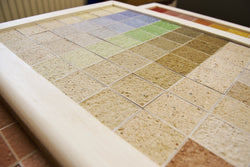
Beeck Maxil Pro is available in white and a broad range of mineral-pigment colours.
Lime-based paints can also be pigmented to produce traditional mineral tones.
For larger or visually important areas, sample panels are useful because colour can be affected by lighting, substrate texture and surrounding finishes.
Frequently Asked Questions
What is the best paint for internal lime plaster?
Limewash, lime paint and suitable mineral silicate paint can all be appropriate.
The best choice depends on the desired appearance, washability and existing substrate.
Is Beeck Maxil Pro breathable?
Yes.
Beeck Maxil Pro has an Sd-value of approximately 0.01m, indicating exceptionally low resistance to water-vapour diffusion.
Is Maxil Pro washable?
Yes.
Maxil Pro achieves Class 1 wet-scrub resistance, making it considerably more resistant to repeated cleaning than many traditional mineral finishes.
Can Maxil Pro be used over gypsum plaster?
Yes, when the gypsum surface is correctly prepared and any required primer is applied in accordance with the manufacturer's recommendations.
Can I paint Maxil Pro over emulsion?
Selected sound, firmly adhering matt emulsion coatings can potentially be retained and prepared for Maxil Pro.
Glossy, unstable or otherwise incompatible coatings may require removal.
Is limewash suitable for internal walls?
Yes.
Limewash has traditionally been used internally over compatible lime plaster and mineral masonry and provides a highly vapour-open matt finish.
What is the difference between limewash and lime paint?
Limewash is thinner and generally produces greater tonal variation.
Lime paint has more body and opacity and creates a more uniform decorative finish.
Will breathable paint stop mould?
Breathable paint should not be relied upon as a treatment for mould.
Reducing excessive humidity, condensation or other sources of moisture remains necessary.
Need Help Choosing an Internal Paint?
If you are unsure whether your wall requires Lime Wash, Roundtower Lime Paint or Beeck Maxil Pro, contact Roundtower Lime with details of the existing plaster, previous paint and required finish.
Our technical team can help identify an appropriate internal paint and preparation system.