Internal Wood Fibre Insulation for Solid Walls
Internal wood fibre insulation can provide a substantial thermal upgrade to traditional stone and brick walls while retaining a construction that is relatively vapour open and capable of storing and redistributing moisture.
The Roundtower Internal Wood Fibre Board System is designed as a complete wall build-up, rather than treating the insulation board as an isolated product.
Correct wall preparation, continuous bonding, mechanical fixing, reinforcement, finishing and junction detailing are all important to the finished system.
STEICO Internal
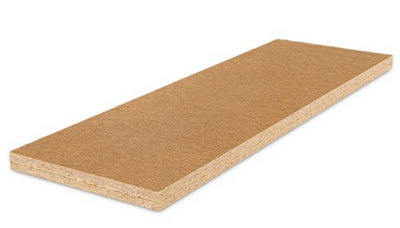
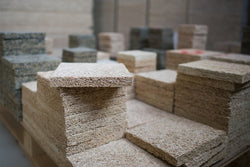
The core insulation material is STEICO Internal, a rigid wood fibre insulation board specifically manufactured for internal insulation of masonry and mineral walls.
Its principal technical properties include:
- thermal conductivity: 0.038 W/mK;
- density: approximately 160 kg/m³;
- vapour diffusion resistance factor: μ 5;
- specific heat capacity: approximately 2,100 J/kgK;
- compressive strength: 50 kPa;
- fire classification: Euroclass E.
The boards are available in a range of thicknesses, allowing the thermal upgrade to be selected according to the wall, available space and project objectives.
Why Use Wood Fibre Internally?
Wood fibre combines useful thermal performance with moisture-storage capacity and relatively low resistance to water-vapour diffusion.
This makes it particularly interesting for traditional solid masonry, where the insulation system should be considered alongside the existing wall's ability to absorb, store and release moisture.
Its relatively high specific heat capacity also adds thermal mass to the internal insulation layer.
Wood fibre should still be considered as part of the complete building-physics design rather than assuming that the material alone makes every wall moisture safe.
Preparing the Existing Wall
The insulation requires a sound, continuous and sufficiently flat mineral background.
Existing loose material, unsuitable coatings and other layers that would interfere with adhesion or capillary contact should be assessed and removed where necessary.
Highly irregular rubble stone walls should normally be levelled before the insulation boards are installed.
Good substrate preparation helps avoid unintended voids behind the insulation and provides a suitable surface for bonding the boards.
Roundtower Insulating Plaster as a Levelling Coat
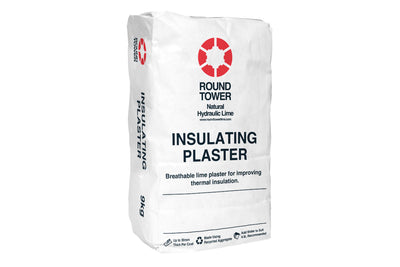
Where the masonry is uneven, Roundtower Insulating Plaster can be used to create a level and continuous background.
The plaster has a thermal conductivity of 0.095 W/mK and can typically be applied at substantial thicknesses to accommodate irregular stonework.
Using an insulating levelling plaster also adds useful thermal resistance beneath the wood fibre boards.
The levelling coat should be allowed to dry adequately before the insulation system is installed.
Why Full Contact Matters
STEICO Internal is intended to be bonded to the prepared mineral wall over the surface of the board rather than installed across substantial hidden cavities.
Maintaining close contact between the masonry, levelling layer and insulation helps create a continuous insulation layer and supports the intended moisture behaviour of the system.
Large unintended voids behind internal insulation should therefore be avoided.
Installing STEICO Internal
The wood fibre boards are bonded to the prepared wall using a compatible mineral adhesive layer.
Within the Roundtower system, Roundtower Board Render can form the bonding and reinforced plaster component of the system.
Boards should be installed tightly together with staggered joints and appropriate mechanical fixings into the masonry.
The fixing type and length should be selected according to the insulation thickness and existing substrate.
Mechanical Fixings
Mechanical fixings provide additional security once the boards have been bonded to the wall.
The fixing must penetrate sufficiently into sound masonry rather than relying on weak plaster or loose mortar.
Stone walls can vary considerably, so the fixing strategy should respond to the actual substrate.
The fixing head should sit correctly within the board so that it does not interfere with the subsequent reinforced basecoat.
Board Thickness
STEICO Internal is available in 40mm, 60mm, 80mm and 100mm primary insulation thicknesses.
A thinner 20mm reveal board is also available for window and door reveals where space is restricted.
The appropriate main wall thickness should be based on:
- existing wall construction;
- required thermal performance;
- exposure;
- moisture conditions;
- room dimensions;
- junction detailing;
- and the project objectives.
Greater thickness should not automatically be assumed to be better for every historic solid wall.
U-Value Calculations
Roundtower can provide U-value calculations to compare different STEICO Internal thicknesses and complete wall build-ups.
This allows the thermal improvement to be assessed before the insulation depth is finalised.
The existing stone or brick wall, levelling plaster, insulation thickness and finishing layers all contribute to the calculated result.
Internal Insulation & Wall Temperature
Internal insulation increases the temperature of the internal finished surface, improving comfort and reducing heat loss into the masonry.
At the same time, the original wall becomes colder during winter because less heat reaches it from the room.
This change in wall temperature is one reason why moisture exposure and drying behaviour should be considered when specifying internal insulation.
Driving Rain
External rain exposure is particularly important with internally insulated solid walls.
Before installing wood fibre insulation, check the external building envelope for:
- defective pointing;
- cracked or failing render;
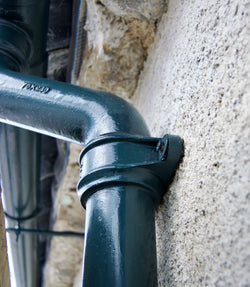
- leaking gutters;
- defective downpipes;
- roof leaks;
- poor flashings;
- damaged window sills;
- and high external ground levels.
The internal insulation system should not be used to conceal unresolved rain penetration.
Exposed Walls
Highly exposed solid walls may require additional assessment before substantial internal insulation is installed.
This is particularly relevant for:
- coastal buildings;
- prevailing-weather elevations;
- highly absorbent masonry;
- rubble stone walls;
- and buildings with elevated existing moisture.
Where the moisture behaviour is uncertain, hygrothermal modelling can provide additional information before the final system is selected.
WUFI Hygrothermal Analysis
For moisture-sensitive projects, Roundtower can provide WUFI hygrothermal analysis.
WUFI can model heat and moisture movement through the wall using changing climatic conditions and material properties.
This can help assess factors such as:
- driving rain;
- insulation thickness;
- initial wall moisture;
- drying potential;
- seasonal moisture movement;
- and alternative wall build-ups.
WUFI should be used as a design-support tool rather than as a guarantee of future performance.
Vapour Control Layers
This direct internal wood fibre system is normally designed as a vapour-open, capillary-active wall build-up rather than relying on a conventional high-resistance vapour-control membrane immediately behind the internal finish.
However, this should not be turned into a universal statement that a vapour-control layer is never required in any wood fibre construction.
The correct vapour-control strategy depends on the particular wall, insulation system and project conditions.
Airtightness
Vapour openness and airtightness are different properties.
A wall can remain relatively vapour permeable while junctions are carefully sealed against uncontrolled air leakage.
Window frames, floor junctions, ceiling connections and service penetrations should therefore be detailed carefully.
Appropriate airtightness tapes or compatible sealing materials can be used where required around windows and other junctions.
Window & Door Reveals
Window and door reveals are important because space for insulation is often limited.
The STEICO Internal range includes a 20mm reveal board that can be returned towards the window or door frame to improve thermal continuity.
Insulating the reveal helps reduce the temperature difference between the main insulated wall and the uninsulated opening.
Airtight connections around the frame should also be considered as part of the complete detail.
Floor Junctions
Where internal insulation crosses intermediate timber floors, the continuity of the insulation and the condition of embedded joist ends should be considered.
Joist ends within solid masonry can experience different temperature and moisture conditions after internal insulation is installed.
Particular attention should therefore be given to exposed façades and walls with known historic moisture problems.
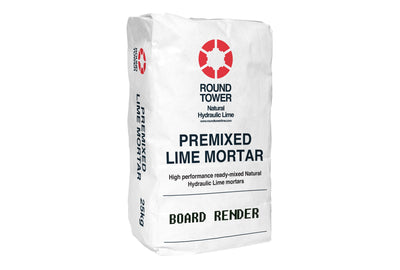
Roundtower Board Render
Roundtower Board Render is the reinforced lime-based board render used within the Roundtower wood fibre insulation system.
It can be used as part of the bonding and reinforced finishing system for the wood fibre boards.
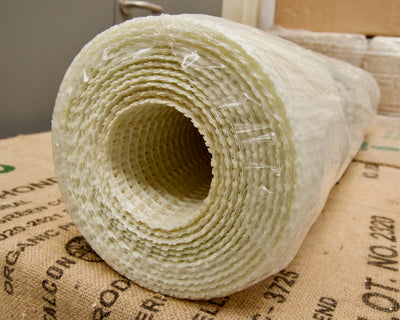
Roundtower Board Render is applied over the board surface together with alkali-resistant reinforcement mesh to create a stable plaster base for the final internal finish.
Reinforcement Mesh
Alkali-resistant mesh is embedded within the Roundtower Board Render.
The mesh helps distribute stresses across:
- board joints;
- fixings;
- corners;
- openings;
- and changes within the substrate.
It should be fully embedded within the reinforced render layer rather than simply attached to the face of the boards.
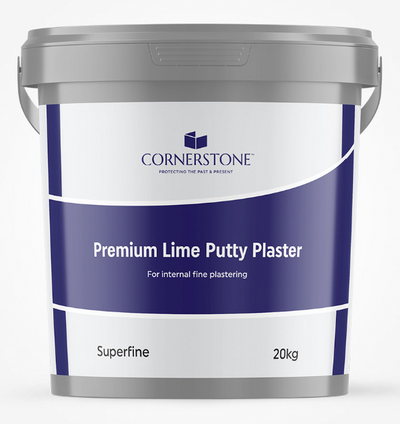
Finishing with Heritage Lime Skim 66
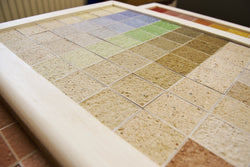
Heritage Lime Skim 66 can be used where a smooth traditional lime finish is required.
It provides a fine lime-based finishing coat over the prepared reinforced Roundtower Board Render.
The finished surface can then receive a compatible mineral decorative coating where required.
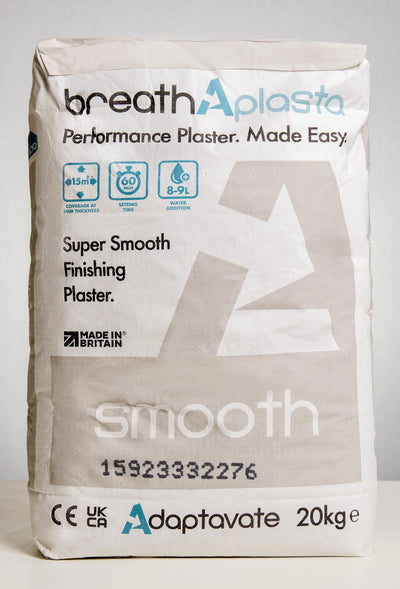
Finishing with BreathAplasta Smooth
BreathAplasta Smooth provides an alternative where a particularly smooth contemporary internal finish is preferred.
It is a lime-based fine finishing plaster designed for internal walls and ceilings and can be used over compatible breathable plaster systems.
This gives clients a choice between a more traditional lime skim and a very smooth modern mineral finish while retaining a compatible overall wall build-up.
Mineral Paint Finish
The completed system should be decorated with a compatible vapour-permeable finish.
Beeck Maxil Pro is a suitable mineral paint option over correctly prepared compatible internal mineral plaster finishes.
Using a highly impermeable decorative coating over a vapour-open insulation system would alter the drying behaviour at the internal surface.
Typical Roundtower System Build-Up
A typical build-up can be:
Existing solid stone or brick wall
→ Roundtower Insulating Plaster, where levelling is required
→ Roundtower Board Render bonding layer
→ STEICO Internal wood fibre insulation
→ appropriate masonry fixings
→ Roundtower Board Render reinforced basecoat
→ alkali-resistant reinforcement mesh
→ Heritage Lime Skim 66 or BreathAplasta Smooth
→ compatible mineral paint such as Beeck Maxil Pro
The exact build-up and thicknesses should respond to the condition of the existing wall and the requirements of the project.
Existing Damp
Internal insulation should not be used as a way of hiding unresolved dampness.
Before installation, investigate potential moisture sources such as:
- roof leaks;
- gutters and downpipes;
- external ground levels;
- damaged pointing;
- cracked render;
- plumbing defects;
- and poor external drainage.
The wall should be brought into an appropriate condition before the insulation system is installed.
Traditional & Historic Buildings
Wood fibre internal insulation can be particularly useful where the external façade needs to remain unchanged.
This can make it suitable for many traditional and historic buildings where external wall insulation would alter the appearance of stonework, brickwork or architectural details.
Suitability should still be considered project by project, particularly on protected structures or significant historic fabric.
Summer Comfort
Wood fibre has a relatively high specific heat capacity compared with many lightweight insulation products.
This allows the insulation layer to absorb and temporarily store heat, which can help moderate short-term internal temperature changes.
The actual summer performance of the room still depends on factors such as glazing, solar gains, ventilation, insulation thickness and the rest of the construction.
Acoustic Performance
The fibrous structure and density of wood fibre can also contribute to acoustic performance within suitable wall systems.
The actual sound insulation achieved depends on the complete wall build-up rather than the insulation board alone.
Acoustic performance should therefore be assessed at assembly level where specific targets need to be achieved.
Frequently Asked Questions
What is the Roundtower Internal Wood Fibre Board System?
It is an internal insulation system for solid masonry built around STEICO Internal wood fibre boards, compatible lime levelling and board renders, reinforcement mesh, mechanical fixings and mineral finishing coats.
What is the thermal conductivity of STEICO Internal?
STEICO Internal has a declared thermal conductivity of 0.038 W/mK.
What is the μ-value of STEICO Internal?
The board has a water-vapour diffusion resistance factor of μ 5.
Does the wall need to be flat?
Yes.
STEICO Internal requires a sound and sufficiently level background.
Irregular stone walls can first be levelled using Roundtower Insulating Plaster.
Can STEICO Internal be applied to rubble stone walls?
Yes, provided the masonry is suitable and a continuous level background is created before the boards are installed.
Do the boards need to be mechanically fixed?
Yes.
The boards should be bonded and mechanically secured using suitable fixings appropriate to the masonry and insulation thickness.
What thicknesses are available?
The principal STEICO Internal boards are available in 40mm, 60mm, 80mm and 100mm thicknesses, with a thinner reveal board available for window and door details.
Does this system require a vapour-control membrane?
The direct masonry system is normally designed as a vapour-open, capillary-active build-up rather than using a conventional high-resistance VCL immediately behind the finish.
Project-specific moisture conditions should still be considered.
Does wood fibre prevent condensation?
No insulation product can guarantee this by itself.
Condensation and moisture risk also depend on wall temperature, exposure, airtightness, indoor humidity, ventilation and the complete construction.
What plaster is used over the boards?
Roundtower Board Render is used as the reinforced board-render layer together with alkali-resistant mesh.
What finishing plaster can be used?
Typical Roundtower options include Heritage Lime Skim 66 or BreathAplasta Smooth, depending on the required finish.
What paint should be used?
A compatible vapour-permeable mineral paint such as Beeck Maxil Pro can be used over a suitable prepared finish.
Can Roundtower calculate the U-value?
Yes.
Roundtower can provide U-value calculations for different STEICO Internal thicknesses and wall constructions.
When should WUFI analysis be considered?
WUFI can be useful for highly exposed, thick or moisture-sensitive solid walls, particularly where substantial internal insulation is being proposed.
Need Help with an Internal Wood Fibre System?
If you are considering STEICO Internal for a stone, brick or solid masonry wall, contact Roundtower Lime with photographs, wall thickness, project location and the proposed insulation depth.
Our technical team can help develop the complete wall build-up, calculate the U-value and advise where more detailed hygrothermal assessment may be appropriate.