Choosing the Correct Marine Mortar
Marine and water-bearing masonry can place considerably greater demands on mortar than an ordinary external wall.
Depending on the location, masonry may be exposed to:
- salt spray;
- repeated wetting and drying;
- tidal movement;
- wave action;
- freshwater;
- saltwater;
- prolonged saturation;
- complete submersion;
- or polluted and chemically aggressive water.
The correct mortar should therefore be selected according to both the masonry substrate and the actual level of water exposure.
Why Marine Mortars Need Different Properties
Traditional air-lime mortars develop a substantial part of their strength through carbonation.
Where masonry is continuously wet or submerged, conditions for carbonation can be limited. Newly applied mortar in tidal locations may also be exposed to moving water before it has developed adequate resistance to washout.
The Roundtower Marine Range uses Natural Hydraulic Lime and/or Prompt Natural Cement to provide hydraulic setting characteristics suited to more demanding water-bearing conditions.
Faster-setting grades are particularly useful where contractors have a limited working period between tides.
Portland Cement Free
The Roundtower Marine Range is free from Portland cement.
Several products contain Prompt Natural Cement, which is a hydraulic binder but is fundamentally different from modern Portland cement.
LP6 and LP8 combine Prompt Natural Cement with Natural Hydraulic Lime, while the P-series mortars use Prompt Natural Cement as the principal binder.
Choosing by Exposure
A useful way to select a Marine mortar is to first consider the exposure.
Above-water masonry may principally experience rainfall, salt spray and periodic wetting.
Tidal masonry experiences repeated immersion together with the risk of fresh mortar being washed out before adequate strength develops.
Submerged masonry can remain wet for prolonged periods and requires a mortar capable of developing strength under hydraulic conditions.
Polluted or chemically aggressive water can require additional resistance beyond normal marine exposure.
The product should therefore be selected according to the actual environment rather than simply describing a project as “coastal”.
Roundtower Marine LP6
Marine LP6 combines Natural Hydraulic Lime and Prompt Natural Cement to provide a relatively low-strength mortar with an accelerated set.
It is the lower-strength of the two LP Marine mortars and is particularly useful where the host masonry requires a more sympathetic mortar while the site conditions demand faster setting than a conventional lime mortar can provide.
Typical applications include:
- historic coastal masonry;
- weaker stone and brick;
- tidal pointing;
- conservation repairs;
- freshwater masonry;
- saltwater masonry;
- and submerged repairs where reducing tidal washout is important.
At approximately 17°C, LP6 has a working time of around 74 minutes, although actual working time varies with temperature and site conditions.
Roundtower Marine LP8
Marine LP8 also combines Natural Hydraulic Lime and Prompt Natural Cement, but provides greater strength than LP6.
It is designed to provide approximately NHL5-grade mortar strength together with an accelerated set, making it particularly useful where the strength of an NHL5 mortar is appropriate but conventional hydraulic-lime setting times are impractical for the marine environment.
Typical applications include:
- tidal masonry;
- harbour and quay repairs;
- freshwater structures;
- saltwater structures;
- conservation masonry;
- and submerged repair.
At approximately 17°C, LP8 has a working time of around 72 minutes.
Roundtower Marine P10
Marine P10 is the lowest-strength pure Natural Cement mortar within the Marine P-series.
It provides a rapid set while avoiding the considerably greater strength of the higher P-series mortars.
P10 is particularly useful where increased resistance to tidal washout and water exposure is required but a very high-strength mortar would be inappropriate for the host masonry.
It can be used above or below the water level in appropriate freshwater, saltwater and tidal applications.
Its working time is approximately 55 minutes at 17°C.
Roundtower Marine P15
Marine P15 is one of the most widely used mortars within the range.
It provides a useful balance of medium strength, rapid setting and water resistance, making it suitable for many general marine and tidal masonry applications.
Typical uses include:
- sea walls;
- harbour masonry;
- quay walls;
- bridges;
- lock walls;
- canals;
- tidal masonry;
- and submerged repairs.
P15 is particularly useful where a substantial marine mortar is required but the specification does not call for a fully waterproof mortar.
Its working time is approximately 50 minutes at 17°C.
Roundtower Marine P30
Marine P30 provides greater strength and water resistance for more demanding marine exposure.
An important distinction is that P30 is water resistant rather than fully waterproof.
It therefore provides a useful intermediate step between P15 and the fully waterproof P50.
P30 is particularly relevant where masonry is exposed to aggressive tidal conditions and requires increased strength and low water absorption, but where the considerably stronger waterproof grades are not necessary.
Its working time is approximately 50 minutes at 17°C.
Roundtower Marine P50
Marine P50 is the first fully waterproof mortar within the Marine Range.
It combines rapid strength development with a fast set and is intended for demanding water-bearing masonry where a fully waterproof mortar is required.
Typical applications include:
- aggressive tidal environments;
- harbour and quay structures;
- submerged masonry;
- sea walls;
- water-bearing structures;
- and other masonry requiring very low water penetration.
Because P50 is considerably stronger than the lower grades, it should not automatically be selected simply because it offers greater resistance to water.
Compatibility with the host masonry remains important.
Its working time is approximately 48 minutes at 17°C.
Roundtower Marine P60
Marine P60 provides the highest level of performance within the range.
It combines waterproofing with increased resistance to chemical attack, including a range of acids, alkalis and pollutants.
It also provides the highest compressive strength and lowest water absorption within the Marine Range.
Typical applications include:
- polluted harbours;
- wastewater structures;
- industrial water-bearing masonry;
- sewers;
- heavily exposed infrastructure;
- and other chemically aggressive environments.
P60 is therefore a specialist product rather than the default mortar for ordinary coastal conservation work.
Its working time is approximately 45 minutes at 17°C.
Why the Strongest Mortar Is Not Always Best
Higher strength does not automatically mean greater suitability.
The mortar needs to work with the surrounding stone or brick.
Using an unnecessarily strong mortar with relatively weak masonry can alter how stresses are distributed through the wall and may place greater stress on the surrounding masonry.
The objective should therefore be to use sufficient strength and water resistance for the exposure without introducing unnecessary strength.
This is one of the principal advantages of the graded Roundtower Marine Range.
Freshwater & Saltwater
The Marine Range includes mortars suitable for both freshwater and saltwater applications.
This means the products can be considered for projects beyond exposed coastal locations, including:
- canals;
- lock chambers;
- bridges;
- culverts;
- river structures;
- and freshwater retaining masonry.
The same principles of substrate strength and exposure still apply.
Tidal Working Windows
Tidal work creates a particular challenge because newly installed mortar may have only a limited period before water returns.
If the mortar has not developed adequate strength, flowing water can damage or wash out the fresh repair.
The accelerated-setting mortars within the Marine Range help reduce this vulnerability.
Working times vary according to product and temperature, ranging broadly from around 45 minutes for P60 to around 74 minutes for LP6 at approximately 17°C.
Site temperature can significantly affect these times, so working arrangements should be planned accordingly.
Historic & Conservation Masonry
Marine exposure does not remove the need to consider conservation compatibility.
Historic sea walls, bridges, quays and harbour structures may contain relatively weak stone or brick together with traditional mortar.
Before selecting a repair mortar, consider:
- stone or brick strength;
- existing mortar;
- joint width and depth;
- exposure;
- tidal level;
- condition of the masonry;
- structural movement;
- and significance of the original fabric.
Lower-strength products such as LP6, LP8 or P10 can provide useful options where a high-strength P50 or P60 mortar would be unnecessary.
Mortar Analysis
Where significant historic mortar survives, Mortar Analysis can provide useful information before the repair specification is developed.
Analysis can help identify characteristics such as:
- binder type;
- aggregate grading;
- colour;
- texture;
- and general mortar composition.
The replacement mortar still needs to respond to the current exposure and structural requirements, particularly where the repair will be tidal or submerged.
Surface Preparation
The masonry should be sound and properly prepared before marine mortar is applied.
Loose or defective material should be removed from the repair area and joints prepared to the required depth.
Fresh work should be protected from unsuitable environmental conditions during initial curing.
Application should generally be avoided in temperatures below approximately 5°C or above 30°C, and fresh mortar should be protected from frost, heavy rain, strong sunlight and rapid drying.
Marine Mortar & Breathability
Not every marine mortar needs to be highly vapour permeable.
The required moisture properties depend partly on where the mortar will operate.
A mortar used above the waterline with weaker historic masonry may benefit from greater vapour permeability and capillary activity.
A fully submerged or waterproof structure may require a substantially different balance between strength, water absorption and permeability.
This is why the Roundtower Marine Range progresses from relatively permeable lime/natural-cement mortars through to fully waterproof specialist mortars.
Natural Colour
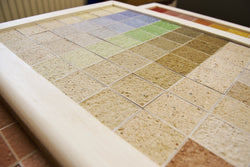
The Marine mortars use the natural colour of their binders and aggregates rather than relying on pigments.
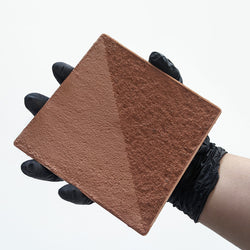
LP6 and LP8 typically provide a buff-tan appearance, while the Natural Cement P-series generally provides a natural tan finish.
As with all mineral mortars, final colour can be influenced by curing conditions, moisture and site conditions.
Frequently Asked Questions
What is a marine mortar?
A marine mortar is a mortar formulated for masonry exposed to demanding water conditions such as tidal movement, saltwater, freshwater or prolonged submersion.
Can ordinary lime mortar be used underwater?
Not every lime mortar is suitable for submerged conditions.
Where tidal washout or prolonged submersion is expected, a hydraulically setting mortar specifically suited to the exposure should be selected.
Which Marine mortar is best for weaker masonry?
LP6 provides the lowest strength within the LP rapid-set range and is particularly relevant where a fast-setting mortar is required for a weaker substrate.
LP8 provides greater strength while remaining below the higher-performance P-series products.
Which is the lowest-strength Natural Cement mortar?
P10 is the lowest-strength pure Natural Cement mortar within the P-series.
Which Marine mortar is most popular?
P15 is one of the most commonly selected products within the Marine Range and provides a useful balance of strength, fast setting and water resistance.
Is P30 waterproof?
No.
P30 is water resistant rather than fully waterproof.
Which is the first waterproof mortar in the range?
P50 is the first fully waterproof mortar within the Marine Range.
What is P60 used for?
P60 is intended for demanding water-bearing masonry requiring both waterproofing and increased resistance to chemical pollutants, acids and alkalis.
Are the Marine mortars Portland cement free?
Yes.
The range is free from Portland cement.
Several grades use Prompt Natural Cement, which is a different hydraulic binder and should not be confused with modern Portland cement.
Can Marine mortars be used in freshwater?
Yes.
Products within the range are suitable for appropriate freshwater as well as saltwater applications.
Can Marine mortars be used below the waterline?
Yes, selected products are specifically formulated for tidal and submerged masonry.
The appropriate grade should be selected according to the masonry strength, exposure and required performance.
How do I choose between LP6, LP8 and the P-series?
Start with the strength of the host masonry and the level of water exposure.
LP6 and LP8 provide lower-strength rapid-set options incorporating Natural Hydraulic Lime, while the P-series progressively provides increased Natural Cement performance, water resistance and eventually full waterproofing.
Can Roundtower help choose the correct mortar?
Yes.
Roundtower can assist with selecting an appropriate Marine mortar according to the existing masonry, exposure zone and performance requirements.
For historic masonry, Mortar Analysis and Specification Support can also be considered where more detailed assessment is required.
Need Help Choosing a Marine Mortar?
If you are working on a sea wall, harbour, bridge, canal, tidal structure or submerged masonry repair, contact Roundtower Lime with photographs and information on the masonry and exposure.
Our technical team can help identify an appropriate Marine mortar for the substrate and site conditions.Choosing the Correct Marine Mortar
Marine and water-bearing masonry can place considerably greater demands on mortar than an ordinary external wall.
Depending on the location, masonry may be exposed to:
- salt spray;
- repeated wetting and drying;
- tidal movement;
- wave action;
- freshwater;
- saltwater;
- prolonged saturation;
- complete submersion;
- or polluted and chemically aggressive water.
The correct mortar should therefore be selected according to both the masonry substrate and the actual level of water exposure.
Why Marine Mortars Need Different Properties
Traditional air-lime mortars develop a substantial part of their strength through carbonation.
Where masonry is continuously wet or submerged, conditions for carbonation can be limited. Newly applied mortar in tidal locations may also be exposed to moving water before it has developed adequate resistance to washout.
The Roundtower Marine Range uses Natural Hydraulic Lime and/or Prompt Natural Cement to provide hydraulic setting characteristics suited to more demanding water-bearing conditions.
Faster-setting grades are particularly useful where contractors have a limited working period between tides.
Portland Cement Free
The Roundtower Marine Range is free from Portland cement.
Several products contain Prompt Natural Cement, which is a hydraulic binder but is fundamentally different from modern Portland cement.
LP6 and LP8 combine Prompt Natural Cement with Natural Hydraulic Lime, while the P-series mortars use Prompt Natural Cement as the principal binder.
Choosing by Exposure
A useful way to select a Marine mortar is to first consider the exposure.
Above-water masonry may principally experience rainfall, salt spray and periodic wetting.
Tidal masonry experiences repeated immersion together with the risk of fresh mortar being washed out before adequate strength develops.
Submerged masonry can remain wet for prolonged periods and requires a mortar capable of developing strength under hydraulic conditions.
Polluted or chemically aggressive water can require additional resistance beyond normal marine exposure.
The product should therefore be selected according to the actual environment rather than simply describing a project as “coastal”.
Roundtower Marine LP6
Marine LP6 combines Natural Hydraulic Lime and Prompt Natural Cement to provide a relatively low-strength mortar with an accelerated set.
It is the lower-strength of the two LP Marine mortars and is particularly useful where the host masonry requires a more sympathetic mortar while the site conditions demand faster setting than a conventional lime mortar can provide.
Typical applications include:
- historic coastal masonry;
- weaker stone and brick;
- tidal pointing;
- conservation repairs;
- freshwater masonry;
- saltwater masonry;
- and submerged repairs where reducing tidal washout is important.
At approximately 17°C, LP6 has a working time of around 74 minutes, although actual working time varies with temperature and site conditions.
Roundtower Marine LP8
Marine LP8 also combines Natural Hydraulic Lime and Prompt Natural Cement, but provides greater strength than LP6.
It is designed to provide approximately NHL5-grade mortar strength together with an accelerated set, making it particularly useful where the strength of an NHL5 mortar is appropriate but conventional hydraulic-lime setting times are impractical for the marine environment.
Typical applications include:
- tidal masonry;
- harbour and quay repairs;
- freshwater structures;
- saltwater structures;
- conservation masonry;
- and submerged repair.
At approximately 17°C, LP8 has a working time of around 72 minutes.
Roundtower Marine P10
Marine P10 is the lowest-strength pure Natural Cement mortar within the Marine P-series.
It provides a rapid set while avoiding the considerably greater strength of the higher P-series mortars.
P10 is particularly useful where increased resistance to tidal washout and water exposure is required but a very high-strength mortar would be inappropriate for the host masonry.
It can be used above or below the water level in appropriate freshwater, saltwater and tidal applications.
Its working time is approximately 55 minutes at 17°C.
Roundtower Marine P15
Marine P15 is one of the most widely used mortars within the range.
It provides a useful balance of medium strength, rapid setting and water resistance, making it suitable for many general marine and tidal masonry applications.
Typical uses include:
- sea walls;
- harbour masonry;
- quay walls;
- bridges;
- lock walls;
- canals;
- tidal masonry;
- and submerged repairs.
P15 is particularly useful where a substantial marine mortar is required but the specification does not call for a fully waterproof mortar.
Its working time is approximately 50 minutes at 17°C.
Roundtower Marine P30
Marine P30 provides greater strength and water resistance for more demanding marine exposure.
An important distinction is that P30 is water resistant rather than fully waterproof.
It therefore provides a useful intermediate step between P15 and the fully waterproof P50.
P30 is particularly relevant where masonry is exposed to aggressive tidal conditions and requires increased strength and low water absorption, but where the considerably stronger waterproof grades are not necessary.
Its working time is approximately 50 minutes at 17°C.
Roundtower Marine P50
Marine P50 is the first fully waterproof mortar within the Marine Range.
It combines rapid strength development with a fast set and is intended for demanding water-bearing masonry where a fully waterproof mortar is required.
Typical applications include:
- aggressive tidal environments;
- harbour and quay structures;
- submerged masonry;
- sea walls;
- water-bearing structures;
- and other masonry requiring very low water penetration.
Because P50 is considerably stronger than the lower grades, it should not automatically be selected simply because it offers greater resistance to water.
Compatibility with the host masonry remains important.
Its working time is approximately 48 minutes at 17°C.
Roundtower Marine P60
Marine P60 provides the highest level of performance within the range.
It combines waterproofing with increased resistance to chemical attack, including a range of acids, alkalis and pollutants.
It also provides the highest compressive strength and lowest water absorption within the Marine Range.
Typical applications include:
- polluted harbours;
- wastewater structures;
- industrial water-bearing masonry;
- sewers;
- heavily exposed infrastructure;
- and other chemically aggressive environments.
P60 is therefore a specialist product rather than the default mortar for ordinary coastal conservation work.
Its working time is approximately 45 minutes at 17°C.
Why the Strongest Mortar Is Not Always Best
Higher strength does not automatically mean greater suitability.
The mortar needs to work with the surrounding stone or brick.
Using an unnecessarily strong mortar with relatively weak masonry can alter how stresses are distributed through the wall and may place greater stress on the surrounding masonry.
The objective should therefore be to use sufficient strength and water resistance for the exposure without introducing unnecessary strength.
This is one of the principal advantages of the graded Roundtower Marine Range.
Freshwater & Saltwater
The Marine Range includes mortars suitable for both freshwater and saltwater applications.
This means the products can be considered for projects beyond exposed coastal locations, including:
- canals;
- lock chambers;
- bridges;
- culverts;
- river structures;
- and freshwater retaining masonry.
The same principles of substrate strength and exposure still apply.
Tidal Working Windows
Tidal work creates a particular challenge because newly installed mortar may have only a limited period before water returns.
If the mortar has not developed adequate strength, flowing water can damage or wash out the fresh repair.
The accelerated-setting mortars within the Marine Range help reduce this vulnerability.
Working times vary according to product and temperature, ranging broadly from around 45 minutes for P60 to around 74 minutes for LP6 at approximately 17°C.
Site temperature can significantly affect these times, so working arrangements should be planned accordingly.
Historic & Conservation Masonry
Marine exposure does not remove the need to consider conservation compatibility.
Historic sea walls, bridges, quays and harbour structures may contain relatively weak stone or brick together with traditional mortar.
Before selecting a repair mortar, consider:
- stone or brick strength;
- existing mortar;
- joint width and depth;
- exposure;
- tidal level;
- condition of the masonry;
- structural movement;
- and significance of the original fabric.
Lower-strength products such as LP6, LP8 or P10 can provide useful options where a high-strength P50 or P60 mortar would be unnecessary.
Mortar Analysis
Where significant historic mortar survives, Mortar Analysis can provide useful information before the repair specification is developed.
Analysis can help identify characteristics such as:
- binder type;
- aggregate grading;
- colour;
- texture;
- and general mortar composition.
The replacement mortar still needs to respond to the current exposure and structural requirements, particularly where the repair will be tidal or submerged.
Surface Preparation
The masonry should be sound and properly prepared before marine mortar is applied.
Loose or defective material should be removed from the repair area and joints prepared to the required depth.
Fresh work should be protected from unsuitable environmental conditions during initial curing.
Application should generally be avoided in temperatures below approximately 5°C or above 30°C, and fresh mortar should be protected from frost, heavy rain, strong sunlight and rapid drying.
Marine Mortar & Breathability
Not every marine mortar needs to be highly vapour permeable.
The required moisture properties depend partly on where the mortar will operate.
A mortar used above the waterline with weaker historic masonry may benefit from greater vapour permeability and capillary activity.
A fully submerged or waterproof structure may require a substantially different balance between strength, water absorption and permeability.
This is why the Roundtower Marine Range progresses from relatively permeable lime/natural-cement mortars through to fully waterproof specialist mortars.
Natural Colour
The Marine mortars use the natural colour of their binders and aggregates rather than relying on pigments.
LP6 and LP8 typically provide a buff-tan appearance, while the Natural Cement P-series generally provides a natural tan finish.
As with all mineral mortars, final colour can be influenced by curing conditions, moisture and site conditions.
Frequently Asked Questions
What is a marine mortar?
A marine mortar is a mortar formulated for masonry exposed to demanding water conditions such as tidal movement, saltwater, freshwater or prolonged submersion.
Can ordinary lime mortar be used underwater?
Not every lime mortar is suitable for submerged conditions.
Where tidal washout or prolonged submersion is expected, a hydraulically setting mortar specifically suited to the exposure should be selected.
Which Marine mortar is best for weaker masonry?
LP6 provides the lowest strength within the LP rapid-set range and is particularly relevant where a fast-setting mortar is required for a weaker substrate.
LP8 provides greater strength while remaining below the higher-performance P-series products.
Which is the lowest-strength Natural Cement mortar?
P10 is the lowest-strength pure Natural Cement mortar within the P-series.
Which Marine mortar is most popular?
P15 is one of the most commonly selected products within the Marine Range and provides a useful balance of strength, fast setting and water resistance.
Is P30 waterproof?
No.
P30 is water resistant rather than fully waterproof.
Which is the first waterproof mortar in the range?
P50 is the first fully waterproof mortar within the Marine Range.
What is P60 used for?
P60 is intended for demanding water-bearing masonry requiring both waterproofing and increased resistance to chemical pollutants, acids and alkalis.
Are the Marine mortars Portland cement free?
Yes.
The range is free from Portland cement.
Several grades use Prompt Natural Cement, which is a different hydraulic binder and should not be confused with modern Portland cement.
Can Marine mortars be used in freshwater?
Yes.
Products within the range are suitable for appropriate freshwater as well as saltwater applications.
Can Marine mortars be used below the waterline?
Yes, selected products are specifically formulated for tidal and submerged masonry.
The appropriate grade should be selected according to the masonry strength, exposure and required performance.
How do I choose between LP6, LP8 and the P-series?
Start with the strength of the host masonry and the level of water exposure.
LP6 and LP8 provide lower-strength rapid-set options incorporating Natural Hydraulic Lime, while the P-series progressively provides increased Natural Cement performance, water resistance and eventually full waterproofing.
Can Roundtower help choose the correct mortar?
Yes.
Roundtower can assist with selecting an appropriate Marine mortar according to the existing masonry, exposure zone and performance requirements.
For historic masonry, Mortar Analysis and Specification Support can also be considered where more detailed assessment is required.
Need Help Choosing a Marine Mortar?
If you are working on a sea wall, harbour, bridge, canal, tidal structure or submerged masonry repair, contact Roundtower Lime with photographs and information on the masonry and exposure.
Our technical team can help identify an appropriate Marine mortar for the substrate and site conditions.