Choosing the Right Insulation Board
Insulation boards should be selected as part of the complete wall or roof construction rather than simply by comparing thermal conductivity.
Important considerations include the existing substrate, internal or external location, required insulation thickness, vapour permeability, capillary behaviour, structural support, exposure and proposed plaster or render finish.
A board designed for internal solid-wall insulation may behave very differently from a sheathing board designed for timber-frame walls or roofs.
Insulation Boards for Solid Stone & Brick Walls
Traditional solid masonry walls require particularly careful consideration when being internally insulated.
Insulation changes the temperature and moisture conditions within the existing wall, so compatibility between the masonry, insulation, adhesive or levelling coat and internal finish is important.
Capillary-active and vapour-open insulation systems can allow moisture to redistribute and dry through the construction, but this does not mean that every vapour-open board is automatically suitable for every solid wall.
The existing wall condition, rainfall exposure, orientation and insulation thickness should all be considered.
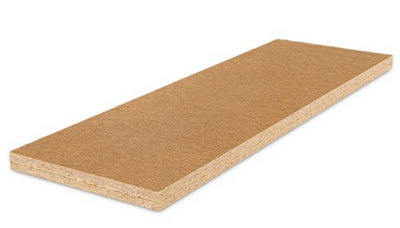
STEICO Internal Wood Fibre Board
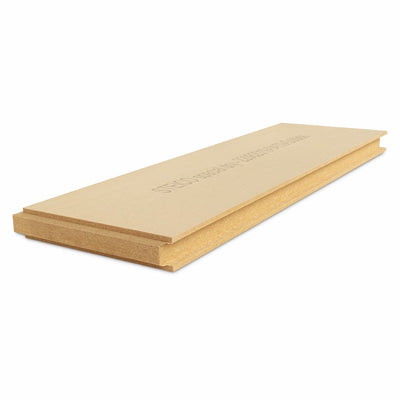
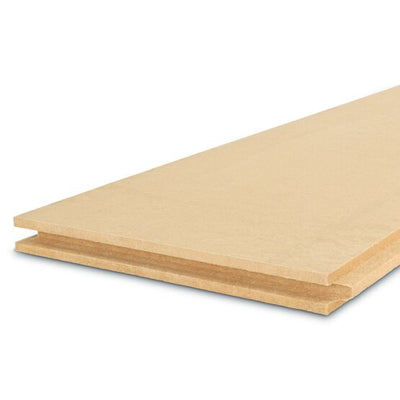
STEICO Internal is a rigid wood fibre board specifically designed for internal wall insulation on masonry and mineral wall constructions.
With a declared thermal conductivity of approximately 0.038 W/mK, it provides effective thermal insulation while remaining vapour open.
Its relatively high specific heat capacity and moisture-regulating characteristics also make wood fibre particularly useful where summer comfort and moisture buffering are considerations.
Within the Roundtower Internal Wood Fibre Board System, the board is installed as part of a complete build-up incorporating compatible lime-based levelling, reinforcement and finishing materials.
Wood Fibre Boards for External Walls & Roofs
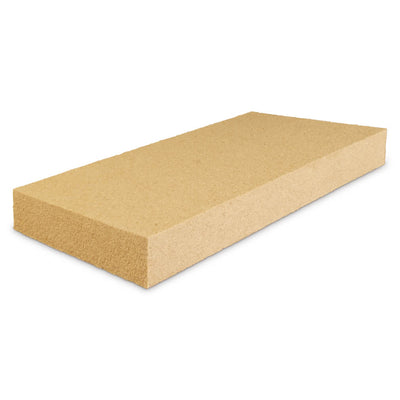
Not every STEICO board performs the same function.
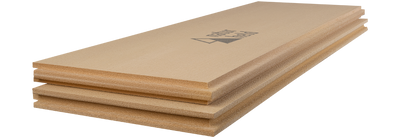
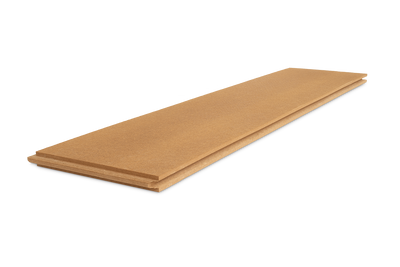
Products such as STEICO Special Dry, STEICO Universal and STEICO Universal Dry are designed primarily for external sheathing, sarking and related roof or wall applications.
Depending on the specific product and system, selected boards can also act as render carriers within approved external wall insulation build-ups.
This is why it is important to choose the correct STEICO board rather than specifying simply “wood fibre board”.
Cork Insulation Boards
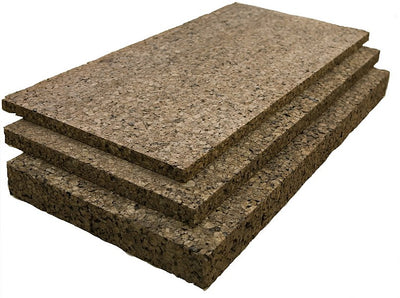
Expanded cork insulation provides a rigid, vapour-open insulation option manufactured from cork.
It can offer both thermal and acoustic benefits and can be used within suitably designed internal insulation systems on traditional masonry.
Cork has different moisture-storage, thermal and mechanical characteristics from wood fibre, so the complete adhesive, fixing and plaster system should be selected specifically for the board being used.
Calcium Silicate Boards
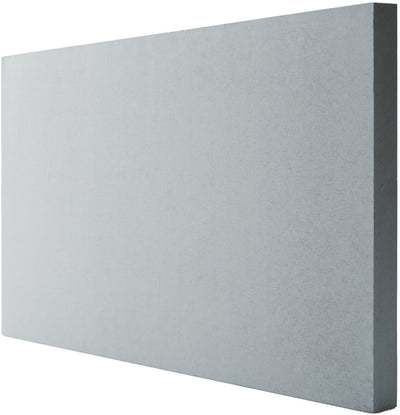
SkamoWall calcium silicate boards are mineral insulation boards designed for internal applications where surface temperature and moisture management are important.
Their high porosity and capillary-active behaviour allow them to absorb and redistribute moisture while also increasing the internal surface temperature of the wall.
This makes calcium silicate particularly useful for selected cold-wall and condensation-risk situations.
SkamoWall should be treated as a complete system using the appropriate adhesive, primer and plaster products rather than as a generic board onto which any plaster can be applied.
Wood Wool Boards
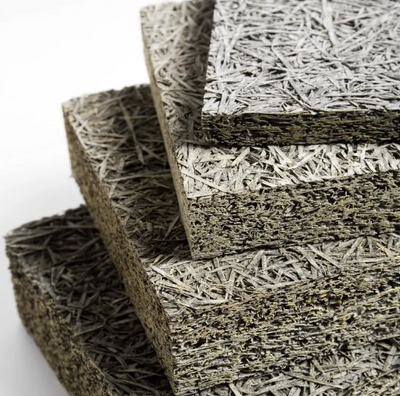
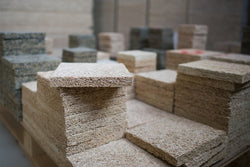
CEWOOD Wood Wool Boards are cement-bonded wood wool boards manufactured from wood fibres, cement and water.
Their open textured surface makes them useful as robust plaster carrier boards, while their fibrous structure can also contribute to acoustic absorption.
The boards provide some thermal resistance, but their principal value in many applications is as a vapour-open, durable plaster carrier and acoustic board rather than as the highest-performing thermal insulation product.
Insulation Board Thermal Conductivity
Thermal conductivity is normally expressed as a lambda value (λ) in W/mK.
A lower lambda value means that the material conducts heat less readily.
However, lambda alone does not determine the final thermal performance of a wall.
The insulation thickness, existing wall, thermal bridges, fixings and junction detailing all influence the resulting U-value.
For example, increasing the thickness of a slightly higher-lambda board may provide greater overall thermal resistance than using a thinner board with a lower lambda value.
Vapour Permeability & Moisture
Many of the insulation boards supplied by Roundtower have relatively low resistance to water-vapour diffusion.
This can be advantageous in traditional solid-wall construction, but vapour permeability is only one part of moisture behaviour.
Capillary transport, moisture storage, rainfall absorption, drying potential and surface temperature can all be important.
This is particularly relevant when adding internal wall insulation because the original masonry generally becomes colder during winter after insulation is installed internally.
Internal Wall Insulation & WUFI Analysis
Internal insulation can substantially improve comfort and thermal performance, but the optimum build-up varies from building to building.
For straightforward walls, established manufacturer systems may provide suitable guidance.
Where masonry is unusually thick, highly exposed, very damp or architecturally significant, a hygrothermal assessment such as WUFI modelling can provide additional information on moisture behaviour within the proposed construction.
Roundtower can assist with both U-value calculations and WUFI analysis where a more detailed assessment is required.
Preparing Solid Masonry for Insulation Boards
Insulation boards require an appropriate supporting background.
Before installation, defective pointing, penetrating water, leaking rainwater goods and other significant moisture sources should be addressed.
Highly uneven rubble masonry may also require a vapour-open levelling coat before rigid insulation boards are installed.
Creating continuous contact between the wall and insulation can be important because uncontrolled voids behind internal insulation may create unwanted air movement and localised moisture risks.
Plastering Over Insulation Boards
The correct plaster depends on the insulation board.
Wood fibre and cork insulation systems generally use a compatible reinforced base coat incorporating alkali-resistant mesh, followed by an appropriate vapour-open finish.
Calcium silicate systems have their own dedicated adhesives, primers and plaster products.
Wood wool boards can provide an effective mechanical key for suitable lime and mineral plasters.
The complete manufacturer or system specification should therefore be followed rather than assuming one plaster build-up is suitable for every insulation board.
Internal vs External Insulation Boards
Some boards are designed specifically for internal insulation, while others are intended for external walls or roofs.
STEICO Internal, for example, is intended for internal masonry insulation.
STEICO Special Dry and Universal Dry are primarily sheathing and sarking boards for external wall and roof construction.
Selecting the correct board for its intended exposure and application is essential.
Summer Comfort & Wood Fibre Insulation
Wood fibre insulation has a relatively high heat-storage capacity compared with many lightweight insulation materials.
This can help delay the transfer of heat through walls and roofs during warm weather and can therefore contribute to improved summer comfort.
The performance of the complete wall or roof construction still depends on insulation thickness, density, orientation and other layers within the build-up.
Frequently Asked Questions
What insulation board is best for an old stone wall?
There is no single best board for every traditional wall.
Wood fibre, cork and calcium silicate can all be appropriate depending on the wall condition, moisture exposure, required insulation level and proposed finish.
Is wood fibre suitable for internal wall insulation?
Yes.
Products specifically designed for internal masonry insulation, such as STEICO Internal, can be used within suitable vapour-open internal wall insulation systems.
What is the difference between wood fibre and calcium silicate?
Wood fibre generally provides stronger thermal insulation for a given thickness and has high heat-storage capacity.
Calcium silicate is highly mineral, porous and capillary active and can be particularly useful where surface-temperature and moisture-management considerations are important.
Can insulation boards be fixed directly to stone?
Sometimes, but the wall normally needs to be sufficiently flat and stable.
Irregular rubble masonry may require a compatible levelling plaster before rigid boards are installed.
Can all insulation boards be used externally?
No.
External suitability is product specific.
Some wood fibre boards are designed for external sheathing, roofing and rendered façade systems, while boards such as STEICO Internal and SkamoWall are intended primarily for internal applications.
Can all insulation boards be lime plastered?
Many can be incorporated within lime or mineral plaster systems, but the required build-up differs between board types.
Always follow the appropriate board/system specification.
Which insulation board has the best lambda value?
The lowest lambda value does not automatically make a product the best choice.
Board thickness, application, moisture behaviour and the complete construction should also be considered.
Do insulation boards need a vapour barrier?
Not necessarily.
The required vapour-control strategy depends on the wall or roof build-up, materials and environmental conditions.
Traditional solid-wall internal insulation should be assessed as a complete moisture-management system rather than automatically adding a conventional vapour barrier.
Can Roundtower help specify an insulation system?
Yes.
Roundtower can assist with product selection, system build-ups, U-value calculations and more detailed WUFI analysis for solid-wall and breathable insulation projects.
Need Help Choosing an Insulation Board?
If you are unsure whether your project requires wood fibre, cork, calcium silicate, wood wool or another insulation system, contact Roundtower Lime with details of the existing construction and proposed work.
Our technical team can help identify an appropriate insulation board, thickness and compatible finishing system.