Choosing a Delta Membrane
Delta membranes are used for waterproofing and damp-management applications in both existing and new buildings.
The system works differently from a conventional surface-applied waterproof coating.
Rather than attempting to stop every trace of moisture at the face of the existing wall, a Type C cavity drainage system creates a controlled space behind the membrane where water can be collected and directed towards a suitable drainage point.
The correct membrane depends on the location, level of water exposure, required drainage capacity, proposed internal finish and floor or wall construction.
What Is Type C Waterproofing?
Type C waterproofing is a drained protection system.
Studded membranes are installed internally to create a cavity between the existing structure and the finished internal surface.
Any water entering through the structure is controlled within this cavity and directed towards a suitable drainage system.
This may involve perimeter drainage channels, gravity drainage or a sump-and-pump arrangement depending on the project.
A Type C system should therefore be designed as a complete water-management system rather than treating the membrane alone as the waterproofing solution.
Delta MS 500
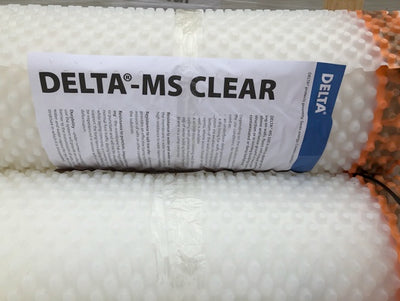
Delta MS 500 is an 8mm studded HDPE cavity drainage membrane.
It is suitable for walls, floors and vaulted ceilings and can be used above or below ground in new construction and refurbishment.
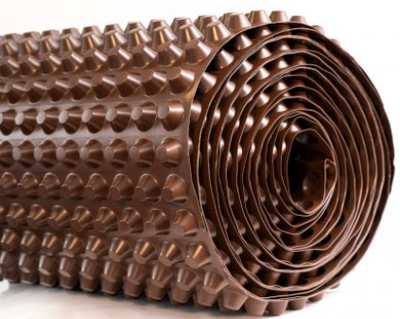
The studs create a cavity behind the membrane through which moisture or water can be controlled.
MS 500 is commonly used internally on damp or below-ground walls where a dry lining or independent internal finish will be installed in front of the membrane.
Delta MS 20
Delta MS 20 is a deeper-profile cavity drainage membrane designed where increased drainage capacity is required.
Its 20mm stud profile creates a significantly larger drainage cavity than lower-profile membranes.
It is particularly suited to demanding below-ground floor and wall applications, including basement floors and areas where greater volumes of water may need to be managed.
MS 20 should therefore not simply be regarded as an “external waterproofing membrane”. Its principal role is as a high-capacity cavity drainage membrane within an appropriately designed Type C system.
Delta FM
Delta FM is a low-profile studded membrane designed particularly for floor and refurbishment applications.
Its approximately 4mm stud profile minimises the increase in floor height while still creating a cavity between the existing damp substrate and the new internal floor construction.
It can be particularly useful over damp or contaminated floors, where rapid reinstatement is required without waiting for the existing structure to dry completely.
Delta FM can also be used on walls in appropriate damp-management applications.
Delta PT
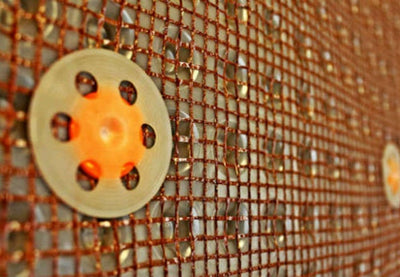
Delta PT combines a studded HDPE membrane with an attached mesh face.
The mesh provides a mechanical key for suitable plaster, render or plasterboard adhesive systems.
This makes Delta PT particularly useful where a direct finished wall surface is required over a damp or contaminated background without constructing an independent dry-lined wall in front of the membrane.
The plaster or render specification should follow the current Delta technical guidance for the particular application.
Delta PT vs MS 500
The most visible difference between the two systems is the finished surface.
MS 500 normally sits behind an independent or mechanically fixed dry lining.
Delta PT incorporates a mesh face specifically designed to accept compatible plaster, render or dab-fixed board finishes.
Both products can form part of damp-proofing or Type C waterproofing systems, but the intended internal finish will often influence which is selected.
Are Delta Membranes Breathable?
No — not in the conventional building-physics meaning of the term.
Delta HDPE membranes provide a barrier to liquid water, salts and water vapour.
Their moisture-management strategy is therefore very different from a vapour-open lime plaster, wood fibre board or breather membrane.
A Delta system manages moisture physically behind the membrane, within the cavity created by its studded profile.
This distinction is particularly important in traditional buildings.
Delta membranes can sometimes be highly useful where severe water ingress or contamination requires physical separation from the internal environment, but they should not be described as a breathable finish.
Delta Membranes & Historic Buildings
Cavity drainage systems can offer advantages in certain historic-building situations because they may allow damp or contaminated masonry to be isolated without attempting to create a fully bonded waterproof coating across the historic substrate.
They can also require less preparation of the original wall than some bonded waterproofing systems.
However, describing the installation as completely “non-destructive” or “fully reversible” is too absolute.
Mechanical fixings and junction details may still require intervention into the existing structure.
The significance of the historic fabric and the cause of moisture ingress should therefore be considered before selecting the system.
Damp Walls & Salt Contamination
Old basement and ground-contact walls can contain significant quantities of soluble salts.
As moisture evaporates from the wall, these salts may migrate towards the internal surface and damage plaster or decorative finishes.
A cavity membrane can physically separate the new internal finish from the contaminated substrate.
This can be particularly useful where the wall cannot realistically be dried or desalinated before refurbishment.
Basement Waterproofing
Basements require careful water-management design because hydrostatic pressure and groundwater conditions can change over time.
A Type C system may include:
- cavity drainage membranes;
- perimeter drainage channels;
- inspection and maintenance points;
- a sump chamber;
- pumps;
- high-level alarms;
- and backup pumping arrangements where required.
The membrane should therefore not be specified independently of the drainage strategy.
Drainage & Maintenance
One important advantage of a properly designed Type C system is that the drainage route can be made accessible for inspection and maintenance.
Drainage channels should remain serviceable so that sediment, debris or mineral deposits can be removed if necessary.
Where pumps are relied upon, servicing, alarms and backup arrangements should be considered as part of the waterproofing design.
Delta Membranes on Floors
Floor applications may use Delta FM, MS 500 or MS 20 depending on the level of moisture, drainage requirement and final floor build-up.
Delta FM provides a particularly low-profile solution.
MS 20 provides substantially greater drainage capacity.
The membrane may then support appropriate insulation, screed or other floor finishes according to the system design.
Delta Membranes on Walls
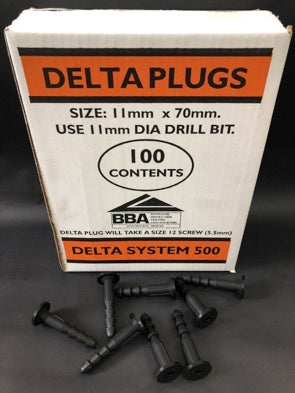
Wall membranes are mechanically fixed to the substrate using compatible Delta plugs and sealing systems.
The required membrane depends partly on the proposed internal finish.
MS 500 can be used behind dry lining systems, while PT provides a mesh face where an appropriate directly applied finish is required.
Wall and floor membranes should be connected carefully so that water cannot bypass the cavity drainage system at the junction.
Wall-to-Floor Junctions
Wall-to-floor junctions are particularly important in basement waterproofing.
The membrane system needs to maintain continuity where the vertical and horizontal waterproofing layers meet.
Products such as Delta Corner Strip, Tape and Rope are used within appropriate details to help maintain sealed connections between membranes and around junctions.
The exact detail should follow the Delta system design for the project.
Delta Corner Strip
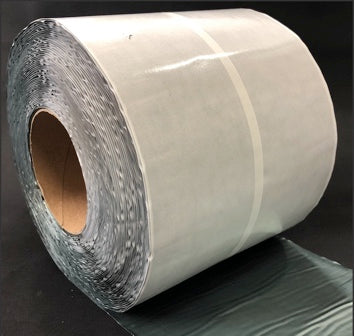
Delta Corner Strip is a flexible sealing strip used to create waterproof connections at wall-to-floor junctions, corners, returns and selected penetrations.
It can also be used for local repairs where a membrane has been punctured or where complex geometry makes an ordinary overlap difficult.
Correct substrate preparation and compatible Delta sealing products are required to achieve a reliable bond.
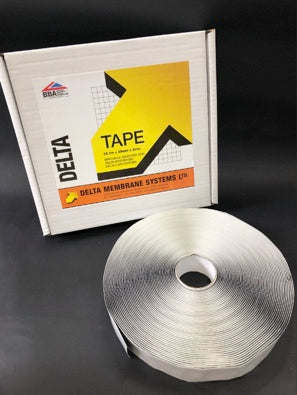
Delta Tape
Delta Tape is used for sealing suitable membrane joints, overlaps and detailing.
The correct tape and installation method depend on the membrane and type of junction.
Surfaces should be clean and prepared appropriately before the tape is applied.
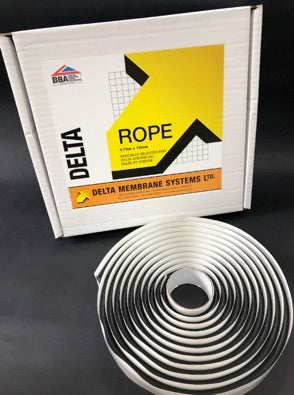
Delta Rope
Delta Rope is a flexible sealing material used around selected membrane junctions and detailing areas.
It is particularly useful where a compressible sealing material is required around corners, penetrations or other complex details.
It should be used according to the relevant Delta installation detail rather than as a general replacement for membrane tape.
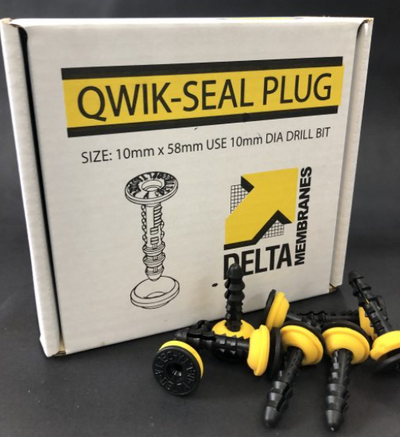
Qwikseal & Watertight Fixings
Penetrating a cavity drainage membrane with a fixing creates a potential water path.
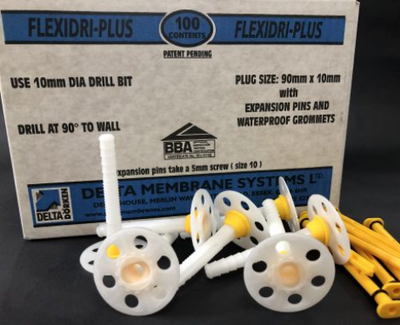
Specialist products such as Delta Qwikseal Plugs incorporate sealing components to maintain a watertight connection around the fixing.
These plugs can also provide fixing points for battens, dry lining and associated internal construction.
Correct plug spacing and membrane installation should follow the manufacturer specification.
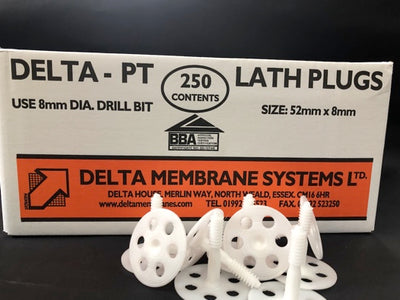
Fixing Delta PT
Delta PT requires appropriate membrane plugs and sealing details to hold the membrane securely while maintaining the required water control.
Because the membrane can receive a direct plaster or render finish, fixing layout and substrate preparation become particularly important.
The complete wall finish should follow the current Delta guidance rather than treating PT simply as a generic plaster mesh.
Waterproofing vs Damp Proofing
Waterproofing and damp proofing are not identical.
A damp floor or wall affected primarily by moisture and salts may require a different system from a basement exposed to groundwater or hydrostatic pressure.
Low-profile products such as Delta FM can be useful for damp-management applications, while a fully designed Type C drainage system may be required where significant water ingress is expected.
Understanding the source and severity of the moisture should therefore come before product selection.
Delta Membranes & Traditional Buildings
Traditional solid-wall buildings normally benefit from understanding and correcting moisture sources wherever practical.
Before installing a cavity membrane, investigate issues such as:
- defective gutters and downpipes;
- high external ground levels;
- leaking drains;
- open masonry joints;
- poor external drainage;
- water-table conditions;
- and previous impermeable repairs.
A membrane may provide a useful method of managing residual or unavoidable moisture, but it should not automatically replace investigation of the underlying cause.
Frequently Asked Questions
What is a Delta cavity drain membrane?
It is a studded waterproof membrane that creates a controlled cavity between the existing structure and the internal finish.
Water entering the cavity can then be directed towards an appropriate drainage system.
What is the difference between Delta MS 500 and MS 20?
MS 500 has an approximately 8mm stud profile and is a versatile wall and floor membrane.
MS 20 has a deeper 20mm profile and provides significantly greater drainage capacity for demanding floor and below-ground applications.
What is Delta FM used for?
Delta FM is a low-profile membrane particularly suited to damp floors and refurbishment where minimising additional floor height is important.
Can Delta FM be used on walls?
Yes, Delta FM can also be used on walls in appropriate damp-proofing applications.
What is Delta PT used for?
Delta PT has a mesh face that provides a key for compatible plaster, render or dab-fixed board finishes.
It is particularly useful where a directly finished wall is required over a damp or contaminated substrate.
Can lime plaster be applied directly to Delta PT?
Delta PT is designed to accept compatible plaster and render systems.
The exact lime or mineral plaster specification should be confirmed against the current Delta technical guidance and the requirements of the particular project rather than assuming every lime plaster is automatically suitable.
Are Delta membranes breathable?
No.
The HDPE membrane itself acts as an effective barrier to liquid water, salts and water vapour.
Moisture is managed within the cavity behind the membrane through drainage or other designed routes.
Are Delta membranes suitable for historic buildings?
They can be useful in selected historic-building applications, particularly where severe damp, salt contamination or below-ground water ingress requires physical separation from the internal finish.
The intervention should still be assessed according to the significance of the existing building fabric.
Does every Delta membrane system need a sump pump?
No.
The drainage method depends on the project.
Some systems may discharge by gravity, while others require a sump and pump.
The appropriate drainage strategy should be established as part of the waterproofing design.
Which Delta membrane should I use on a basement floor?
The choice depends on the expected water load, drainage requirements, floor levels and proposed floor build-up.
Delta FM, MS 500 and MS 20 can all have floor applications, but they provide different cavity depths and drainage capacities.
Can Roundtower help specify a Delta system?
Yes.
If you provide details of the existing structure, moisture conditions and proposed internal finish, Roundtower Lime can help identify suitable Delta membrane products and associated detailing components.
Need Help Choosing a Delta Membrane?
If you are unsure whether your project requires Delta FM, MS 500, MS 20 or Delta PT, contact Roundtower Lime with details of the wall or floor, moisture conditions and proposed finish.
Our technical team can help identify an appropriate membrane and the tapes, corner strips, plugs and sealing accessories required to complete the system.