Breathable Protection for Exposed Masonry
Traditional stone, brick and lime-rendered façades can absorb significant quantities of wind-driven rain, particularly on highly exposed elevations.
Where the masonry is fundamentally sound but remains vulnerable to excessive rain absorption, a suitable hydrophobic treatment can help reduce the amount of liquid water entering through the external surface.
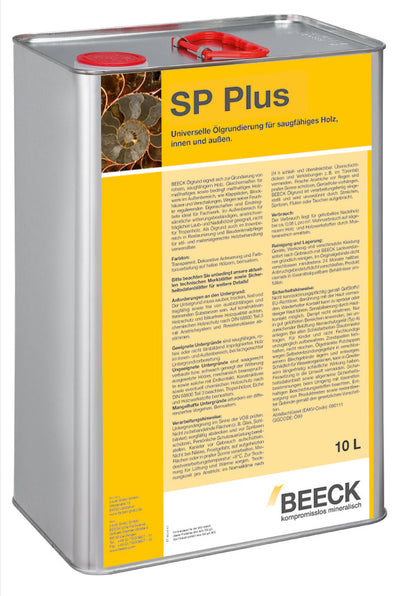
Beeck SP Plus is designed specifically for this type of application while retaining very low resistance to water-vapour diffusion.
What Is a Hydrophobic Treatment?
A hydrophobic treatment is a penetrating material used to reduce the capillary absorption of liquid water into porous mineral substrates.
Rather than forming a continuous waterproof coating over the wall, the treatment modifies the behaviour of the pore surfaces within the masonry so that they become water repellent.
This allows the material to maintain a high level of water-vapour diffusion while significantly reducing rainwater absorption.
Water Vapour vs Liquid Water
Water vapour and liquid water move through porous masonry in different ways.
This distinction is important when discussing the term “breathable”.
Beeck SP Plus is designed primarily to reduce liquid-water absorption through capillary action while retaining very low resistance to water-vapour diffusion.
The objective is therefore not to completely seal the wall, but to reduce the amount of driving rain absorbed through the external surface while retaining drying potential.
Beeck SP Plus
Beeck SP Plus is a colourless, solvent-borne hydrophobic impregnation based on silane/siloxane organosilicon technology.
It is designed for porous mineral exterior façades including suitable:
- lime render;
- mineral render;
- natural stone;
- brick;
- calcium silicate masonry;
- concrete; and
- compatible Beeck active silicate coatings.
Beeck states an Sd-value of approximately 0.03m, indicating very low additional resistance to water-vapour diffusion.
SP Plus is particularly useful where resistance to capillary rainwater absorption is required while retaining the vapour-open characteristics of the mineral substrate.
Where Can Beeck SP Plus Be Used?
SP Plus is intended primarily for vertical exterior mineral façades.
Typical applications can include:
- exposed natural stone walls;
- porous brickwork;
- lime-rendered façades;
- mineral renders;
- mineral masonry;
- and selected Beeck mineral paint systems.
The substrate needs to be sufficiently porous and absorbent for the treatment to penetrate effectively.
Beeck SP Plus & Lime Render
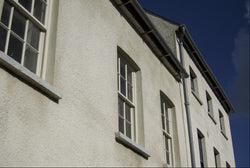
SP Plus can be particularly useful on sound and sufficiently cured lime-rendered façades exposed to significant driving rain.
The treatment penetrates into the porous mineral surface rather than creating a conventional surface film.
The render should be stable, sufficiently dry and free from significant defects before treatment.
SP Plus should not be used to compensate for cracked, detached or otherwise failing render.
Beeck SP Plus & Natural Stone
SP Plus can be used on suitable porous natural stone where reduced rainwater absorption is required.
Natural stone varies considerably in porosity.
Dense stone may absorb relatively little treatment, while weathered or highly porous stone may require considerably more.
A representative test area should therefore be carried out before treating the full elevation.
Beeck SP Plus & Brick
Porous brickwork can absorb substantial quantities of driving rain.
SP Plus can reduce capillary water absorption while maintaining high water-vapour permeability where the brick and mortar are suitable for treatment.
The condition of the mortar joints should always be checked first.
Open joints, cracks and defective pointing should be repaired before the hydrophobic treatment is applied.
Beeck SP Plus Over Mineral Paint
Beeck SP Plus can provide additional water-repellent protection over suitable Beeck active silicate coatings.
This can be useful on particularly exposed façades where additional resistance to driving rain is required.
The mineral paint should be allowed to cure appropriately before SP Plus is applied.
Compatibility and application should follow the Beeck system specification.
Exposed & Coastal Buildings
Wind-driven rain can place substantial moisture loads on façades in exposed and coastal locations.
A hydrophobic treatment such as Beeck SP Plus can reduce the quantity of rainwater absorbed directly into suitable porous masonry.
However, it should complement good building maintenance rather than replace it.
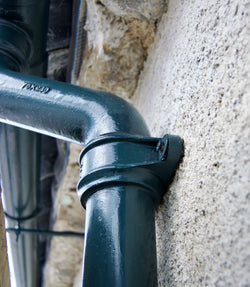
Sound pointing, functioning gutters and downpipes, appropriate copings, flashings and effective water-shedding details remain the primary defence against rain penetration.
Hydrophobic Treatment Is Not a Cure for Damp
SP Plus should not automatically be applied because an internal wall appears damp.
Moisture can arise from many sources, including:
- defective gutters and downpipes;
- open pointing;
- cracked render;
- leaking roofs;
- defective flashings;
- high external ground levels;
- plumbing leaks;
- groundwater;
- and condensation.
The cause of the moisture should be investigated before deciding whether reducing external rain absorption is an appropriate intervention.
Can Hydrophobic Treatments Trap Moisture?
Beeck SP Plus maintains very low resistance to water-vapour diffusion while reducing liquid-water absorption.
However, this does not mean that applying SP Plus guarantees that moisture can never become trapped within a wall.
Moisture may still enter from other sources or directions.
The complete wall construction and moisture conditions should therefore be considered.
When Should SP Plus Not Be Used?
SP Plus should not be treated as a universal waterproofing product.
It is not intended as a solution for:
- active rising damp;
- groundwater pressure;
- standing water;
- horizontal surfaces exposed to water;
- significant structural cracks;
- failing render;
- or defective rainwater details.
These problems should be addressed separately.
Surface Preparation
Successful hydrophobic treatment depends heavily on the condition of the background.
The substrate should generally be:
- sound;
- clean;
- sufficiently dry;
- absorbent;
- and free from contamination that could prevent penetration.
Biological growth, loose material and dirt should be removed using appropriate cleaning methods.
Defective masonry and pointing should normally be repaired before SP Plus is applied.
Why Carry Out a Test Area?
A representative test area should be completed before treating an entire façade.
This allows the installer and client to assess:
- substrate absorption;
- approximate product consumption;
- visual appearance;
- compatibility;
- and the effectiveness of the treatment.
This is particularly important on historic masonry where different stone types, old repairs or replacement mortars may absorb the treatment differently.
Appearance After Treatment
SP Plus is designed to provide a visually unobtrusive treatment rather than a decorative coating.
However, natural masonry surfaces vary considerably.
A trial area should always be used to confirm that the finished appearance is acceptable before treating a complete elevation.
Application
Beeck SP Plus is applied generously to suitable porous mineral substrates to achieve adequate penetration.
The objective is to allow the active treatment to penetrate the pore structure rather than creating a thick layer on the surface.
Application conditions, consumption and technique should follow the current Beeck technical specification.
Historic & Conservation Buildings
Hydrophobic treatment can have a useful role in conservation where excessive driving rain is contributing to repeated wetting of porous masonry.
It should not automatically be applied simply because a building is historic or exposed.
Before treatment, consider:
- why the masonry is becoming wet;
- the condition and porosity of the substrate;
- existing salts;
- previous surface treatments;
- the condition of the mortar joints;
- and the existing drying behaviour of the wall.
On historically significant masonry, a representative trial area is particularly important.
Service Life
The performance of any hydrophobic treatment will gradually change through exposure and weathering.
The service life depends on factors including:
- substrate;
- porosity;
- quantity applied;
- exposure;
- orientation;
- and environmental conditions.
The façade should therefore be monitored over time rather than assuming one fixed replacement interval for every building.
Frequently Asked Questions
What is Beeck SP Plus?
Beeck SP Plus is a colourless silane/siloxane-based hydrophobic impregnation for porous mineral exterior façades.
Is Beeck SP Plus breathable?
Yes.
Beeck states an Sd-value of approximately 0.03m, meaning the treatment retains very low resistance to water-vapour diffusion.
Does SP Plus make a wall waterproof?
No.
SP Plus significantly reduces capillary rainwater absorption but does not turn the entire wall or building into a completely waterproof structure.
Can Beeck SP Plus be used on lime render?
Yes, on suitable sound, sufficiently cured and absorbent lime render.
A representative test area should be carried out before full application.
Can Beeck SP Plus be used on natural stone?
It can be used on suitable porous natural stone.
Stone porosity varies considerably, so the substrate should be assessed and a test area completed first.
Can SP Plus be used on brick?
Yes, on suitable porous brickwork.
Defective mortar joints and cracks should be repaired before treatment.
Can SP Plus be applied over Beeck mineral paint?
Yes, SP Plus can provide additional water-repellent protection over suitable Beeck active silicate coatings after the coating has been allowed to cure appropriately.
Will SP Plus solve a damp wall?
Not necessarily.
SP Plus can help where excessive wind-driven rain absorption is contributing to the moisture problem.
Other moisture sources should be investigated and corrected first.
Does SP Plus prevent moisture from escaping?
SP Plus is designed to maintain very low resistance to water-vapour diffusion while reducing liquid-water absorption through the treated surface.
Will SP Plus change the appearance of the wall?
It is designed to remain visually unobtrusive on suitable mineral substrates, but a test area should always be completed because natural materials can react differently.
Can SP Plus be used on a historic building?
It can be appropriate on selected historic masonry where excessive driving rain is a concern.
The masonry, moisture conditions and significance of the building should be assessed before treatment.
Need Help with an Exposed Façade?
If you are considering Beeck SP Plus for stone, brick or lime render, contact Roundtower Lime with photographs and details of the substrate, exposure and moisture problem.
Our technical team can help assess whether hydrophobic treatment is appropriate before the wider façade is treated.