Technical Services for Traditional & Breathable Buildings
Choosing suitable materials for a traditional or moisture-sensitive building can require more than selecting a product from a technical data sheet.
The condition of the existing masonry, exposure, moisture sources, original materials and the interaction between different wall, floor and roof layers can all influence the final specification.
Roundtower Lime provides technical services to help clients develop more informed repair and retrofit solutions.
Mortar Analysis
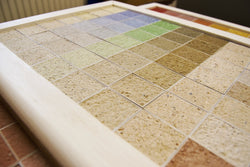
Mortar Analysis can provide valuable information when repairing historic stonework, brickwork, lime render or plaster.
The purpose is not simply to match the colour of an existing mortar.
A useful analysis can help develop a better understanding of characteristics such as the:
- binder;
- aggregate;
- aggregate grading;
- texture;
- appearance; and
- general nature of the original material.
This information can then assist with the development of a compatible repair mortar or plaster specification.
Why Analyse an Existing Mortar?
Historic mortars can vary significantly between buildings and even between different construction phases within the same building.
Choosing a replacement mortar solely because a property is old can result in an inappropriate specification.
Mortar analysis can be particularly useful where:
- the building is historically significant;
- the existing mortar is unusual;
- a close visual match is required;
- previous repairs appear excessively hard or incompatible;
- several different mortar types are present;
- or an architect or conservation professional requires additional information before specifying repairs.
Mortar Matching
Mortar matching should consider more than binder colour.
The aggregate can have a major influence on the appearance and behaviour of the finished mortar.
Particle size, grading, mineral colour and texture can all contribute to the character of an historic joint.
The objective should be to develop a replacement material that is visually appropriate while also remaining compatible with the existing masonry.
Specification Support
Roundtower's Specification Support Service assists with the development of practical wall, floor and roof build-ups for traditional, retrofit and modern construction.
Projects can include:
- internal wall insulation;
- external wall insulation;
- insulating lime plaster;
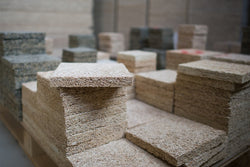
- wood fibre insulation;
- calcium silicate systems;
- limecrete floors;
- lime render and plaster;
- airtightness and vapour-control systems;
- roof insulation;
- breathable mineral paints;
- and repair mortars.
The complete build-up is considered rather than treating each material in isolation.
Traditional Solid-Wall Buildings
Traditional solid stone and brick buildings often behave differently from modern cavity construction.
Their walls can absorb, store, redistribute and release moisture, so retrofit materials need to be selected with this behaviour in mind.
Important considerations can include:
- wall thickness;
- stone or brick type;
- mortar condition;
- rainfall exposure;
- external ground levels;
- existing moisture;
- internal heating;
- ventilation;
- insulation thickness;
- and drying potential.
A material that works well in one traditional building may not necessarily be appropriate for another.
Internal Wall Insulation Support
Internal wall insulation can improve thermal performance and comfort, but it also changes the temperature and moisture conditions within the original wall.
Roundtower can help compare systems such as:
- Roundtower SuperTherm;
- wood fibre insulation;
- calcium silicate;
- insulating lime plaster;
- and other vapour-open insulation approaches.
The most appropriate solution depends on the wall, exposure and performance objectives rather than simply choosing the material with the lowest thermal conductivity.
Limecrete Floor Specifications
Roundtower can assist with limecrete and breathable floor build-ups.
This can include consideration of:
- GLAPOR foam-glass insulation;
- geotextile layers;
- limecrete slabs;
- underfloor heating;
- radon protection;
- floor finishes;
- wall-to-floor junctions;
- and finished floor levels.
Traditional floor refurbishment should be considered alongside the moisture behaviour of adjoining solid masonry walls.
Roof & Airtightness Specifications
Roof insulation requires careful coordination between:
- thermal insulation;
- airtightness;
- vapour control;
- breather membranes;
- ventilation;
- service cavities;
- and internal finishes.
Roundtower can assist with wood fibre, flexible insulation, intelligent vapour-control membranes and warm-roof or renovation build-ups.
The appropriate arrangement depends on whether the roof is new or existing, ventilated or unventilated and how the existing structure is constructed.
U-Value Calculations
A U-value calculation estimates the rate of heat transfer through a wall, floor or roof under standardised conditions.
Roundtower can use U-value modelling to compare:
- different insulation materials;
- alternative insulation thicknesses;
- proposed retrofit build-ups;
- and improvements over an existing wall or floor.
This can help clients understand the relationship between insulation thickness and thermal performance before the final specification is selected.
What a U-Value Does Not Tell You
A U-value alone does not assess every aspect of building performance.
It does not fully evaluate:
- moisture accumulation;
- rainfall exposure;
- air leakage;
- local thermal bridges;
- workmanship;
- or real-world heating and ventilation behaviour.
For moisture-sensitive construction, additional hygrothermal assessment may therefore be useful.
WUFI Hygrothermal Analysis
WUFI is a dynamic hygrothermal modelling tool used to simulate heat and moisture movement through building elements over time.
Unlike a simple steady-state condensation calculation, WUFI can consider changing climatic conditions together with factors such as:
- rainfall;
- solar radiation;
- moisture storage;
- vapour diffusion;
- liquid moisture transport;
- and seasonal drying.
This can provide a more detailed assessment of moisture-sensitive wall and roof build-ups.
When Is WUFI Analysis Useful?
WUFI analysis may be particularly useful for:
- internally insulated solid masonry;
- exposed stone and brick walls;
- highly moisture-sensitive construction;
- complex roof build-ups;
- thicker insulation systems;
- vapour-open retrofit;
- and situations where long-term drying potential needs to be examined.
It can also be used to compare alternative materials or insulation strategies.
WUFI Is a Design-Support Tool
WUFI modelling should not be interpreted as a guarantee of future building performance.
The quality of the output depends on the quality of the inputs.
Material data, climate files, exposure assumptions, initial moisture, internal conditions and information about the existing building can all influence the results.
For this reason, WUFI is best used as a design-support and comparative assessment tool.
Who Can Use Roundtower's Services?
Our technical services are relevant to:
- architects;
- architectural technologists;
- conservation professionals;
- engineers;
- building designers;
- contractors;
- energy consultants;
- homeowners;
- self-builders;
- developers;
- and heritage organisations.
The level of support required can range from product selection on a small refurbishment to more detailed analysis of a complex retrofit build-up.
What Information Should I Provide?
The more information available about the existing building, the more useful the assessment can be.
Depending on the service, helpful information can include:
- drawings;
- site photographs;
- wall thicknesses;
- existing floor or roof build-ups;
- product data sheets;
- masonry type;
- moisture readings;
- project location;
- orientation and exposure;
- heating and ventilation strategy;
- and proposed insulation or finishing systems.
Where important information is unavailable, assumptions should be identified clearly.
Frequently Asked Questions
What services does Roundtower Lime provide?
Roundtower currently provides Mortar Analysis, Mortar Matching and Specification Support, together with U-value calculations and WUFI hygrothermal analysis where required.
What is mortar analysis used for?
Mortar analysis helps develop a better understanding of an existing historic mortar, render or plaster so that a more appropriate repair material can be selected.
Can Roundtower match an existing mortar?
Yes.
Mortar analysis and visual assessment can assist with developing a repair mortar that is appropriate in colour, aggregate character and material type.
Can you help specify insulation for an old stone wall?
Yes.
Roundtower can assist with internal wall insulation options including insulating lime plaster, wood fibre and calcium silicate systems.
Do you provide U-value calculations?
Yes.
Roundtower can calculate and compare the estimated thermal performance of wall, floor and roof build-ups.
What is WUFI analysis?
WUFI is a dynamic hygrothermal modelling method used to assess heat and moisture movement through a building element over time.
Do all projects require WUFI?
No.
Many projects can be developed using established system guidance and conventional thermal calculations.
WUFI is particularly useful where the construction or moisture conditions are more complex.
Can Roundtower prepare wall, floor and roof specifications?
Roundtower can provide specification assistance, product recommendations and outline material build-ups that can support the project design.
The appointed project designer remains responsible for the overall design and statutory requirements.
Can homeowners use the specification service?
Yes.
The service is available to both construction professionals and homeowners developing traditional, retrofit and breathable-building projects.
Discuss Your Project With Roundtower
If you require Mortar Analysis, Specification Support, U-value modelling or WUFI hygrothermal analysis, contact Roundtower Lime with details of the existing building and proposed work.
Our technical team can review the available information and advise which level of support is most appropriate for the project.