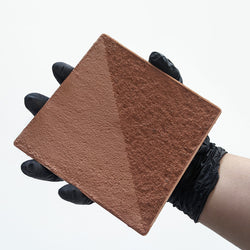
Thermal Plasters: Which to Choose?
Thermal Plasters: Which to Choose?
A Homeowner’s Guide to Breathable Internal Insulation
If you live in a stone cottage, rubble-built farmhouse, or any older solid-wall building, improving comfort and insulation can feel overwhelming. Traditional homes weren’t built with modern insulation in mind - and using wrong materials (like cement renders, rigid foams or plastic membranes) can trap moisture, cause damp problems, and damage historic fabric.
That’s why breathable, lime-based thermal plasters are often the safest retrofit solution for homeowners who want to upgrade comfort without compromising the health of their building. Two leading options from Roundtower Lime - Roundtower Insulating Plaster and Roundtower SuperTherm - both allow moisture regulation and improved thermal performance, but are best suited to slightly different needs. This guide shows how they work, where each makes most sense, and how to choose between them.
Why Breathable Insulation Matters in Traditional Buildings
Traditional masonry walls (stone, rubble, brick) rely on vapour movement and capillary drying. They absorb and release moisture naturally. When you seal or “tank” them with cement or plastic-based materials, moisture becomes trapped, leading to issues such as:
-
Rising damp, salt migration, mould, and decay.
-
Heat loss: wet masonry transfers and loses heat much faster than dry, breathable masonry. (Implicit in guidance on breathable retrofit solutions.)
-
Long-term damage to historic fabric - especially for older buildings where lime mortars and renders were originally used.
In contrast, lime-based, vapour-open plasters:
-
Allow vapour to pass freely, enabling walls to dry naturally inside and out.
-
Buffer moisture - absorbing humidity when indoor RH rises, and releasing it when RH drops. This can help regulate indoor climate and reduce condensation or mould risk.
-
Are flexible and compatible with movement and thermal expansion/contraction in older buildings, reducing the risk of cracking compared to rigid cement renders.
Because of these qualities, breathable thermal plasters often represent the most sympathetic both-energy-and-conservation approach to improving comfort in older masonry homes.
Roundtower Insulating Plaster vs Roundtower SuperTherm - What works for what
What they share
-
Both are lime-based, vapour-open, breathable systems.
-
Free from cement, foams or impervious membranes - so compatible with traditional masonry, soft stone or heritage walls.
-
Light enough for internal use and suitable for a variety of masonry types (stone, brick, rubble, mixed).
-
Able to buffer moisture and support a healthy indoor climate.
Because of these shared traits, both plasters avoid the risks associated with non-breathable, cementitious or rigid insulation systems.
Roundtower Insulating Plaster -The Flexible All-Rounder
Best for: uneven stone/rubble walls, simple thermal upgrades, users who want minimal intervention or maximum preservation of internal space.
Why it works well:
-
Acts as a levelling plaster: old stone/rubble walls are often irregular- with hollows, protruding stones, uneven surfaces. Insulating Plaster smooths and evens the surface, creating a breathable, stable base suitable for finishes or further insulation.
-
As a standalone upgrade: even without additional insulation boards, Insulating Plaster improves internal comfort compared with a standard lime plaster -by adding thermal resistance, reducing draughts and cold spots, and helping to retain heat. (λ ≈ 0.095 W/mK)
-
Space-saving & heritage friendly: no need for additional framing, battens or board thickness -useful where preserving interior dimensions or avoiding loss of floor/room space is important.
-
Buildability: can be applied with a single coat up to ~ 25-30 mm (sometimes thicker depending on application), either by trowel or machine; no mesh required under normal internal use.
-
Moisture buffering: as a lime-based, vapour-open plaster, it absorbs and releases moisture with changing indoor humidity- helping prevent condensation, stabilising relative humidity and improving indoor air quality.
Optional add-on: once the wall is levelled with Roundtower Insulating Plaster, you also have the option to continue the insulation build-up using a breathable board (e.g. wood-fibre). In that case, the plaster acts as a breathable base coat giving excellent adhesion, vapour-open continuity and a stable substrate for a board-based internal insulation system.
Summary verdict: For many older homes, especially with uneven masonry or where minimal alteration is preferred, Insulating Plaster offers a simple, effective, and breathable thermal upgrade - whether used alone or beneath board insulation.

Roundtower SuperTherm- High-Performance Plaster for Deeper Thermal Upgrade
Best for: colder rooms, north-facing walls, damp-prone interiors, or retrofit projects where significant energy savings are required without sacrificing breathability or internal space.
Why it works well:
-
Low thermal conductivity (λ ≈ 0.0395 W/mK): similar to high-quality natural insulation boards - offers strong insulation per mm of plaster applied.
-
Lightweight (~260 kg/m³): reduces structural load on older walls/masonry, making it suitable for soft stone or heritage buildings.
-
High breathability and moisture regulation: remains fully vapour-open and lime-based - allowing moisture to move and evaporate safely, preventing condensation or damp issues typical with impermeable insulation.
-
Thicker build-up possible (~30-50mm per coat up to 120mm total): allows substantial depth - enabling stronger U-value improvement without bulky board systems.
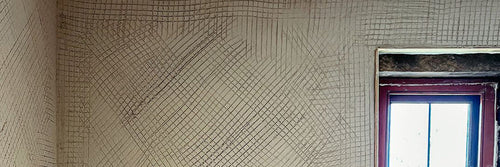
Buildability & usability: multiple thin coats recommended (with reinforcing mesh when needed), producing a fine, lime-based internal finish suitable for heritage, conservation, or high-performance retrofit projects.
Summary verdict: When maximum thermal performance is needed -especially in damp-prone or cold areas- SuperTherm offers one of the best lime-based internal insulation options: efficient, breathable, and space-saving.

Which to Choose - At a Glance
| What you need | Best option |
|---|---|
| Levelling uneven stone/sand-rubble walls & simple thermal upgrade | Insulating Plaster |
| Minimal intervention, preserving room size, heritage fabric | Both |
| Immediate comfort + low-cost upgrade with breathable lime finish | Insulating Plaster |
| Significant insulation gain with minimal thickness | SuperTherm |
| Deep retrofit, cold rooms or damp-prone walls, energy upgrade | SuperTherm |
| Heritage building where boards are not permitted | SuperTherm (or Insulating Plaster if minimal insulation needed) |
Why Thermal Plasters Often Outperform Board Systems (Cost, Labour & Usability)
-
No framing or battens: plaster applies directly onto masonry- saves time, materials and preserves floor/ceiling space.
-
Handles irregular walls easily: reduces complexity on uneven rubble or stone walls.
-
Single trade operation: one plasterer can level, insulate and finish- no need for joiners or board installers.
-
Faster installation: fewer fixings, less complex detailing around windows/doors- less labour and fewer risk points.
-
Breathable and low maintenance for homeowners: natural material; compatible with lime finishes or mineral paints; easy to repair if needed; no hidden moisture risk behind impermeable boards.
For many homeowners, that means a retrofit process that’s simpler, faster, and kinder to traditional building fabric - while still improving comfort and energy efficiency.
Reference websites for this information if you wish to continue your research:
Retrofit of traditional buildings - West Cork People
Performance of a range of thermal insulations in a historic building - Engineers Ireland
Improving-Energy-Efficiency-Cover-in-Traditional-Buildings.pdf
Into the limelight - passivehouseplus.ie
Kerry Building Conservation Guidelines
Moisture buffering and mould growth characteristics of naturally ventilated lime plastered houses